We've Expanded Our Fire Damage Detection and Odor-Elimination Equipment
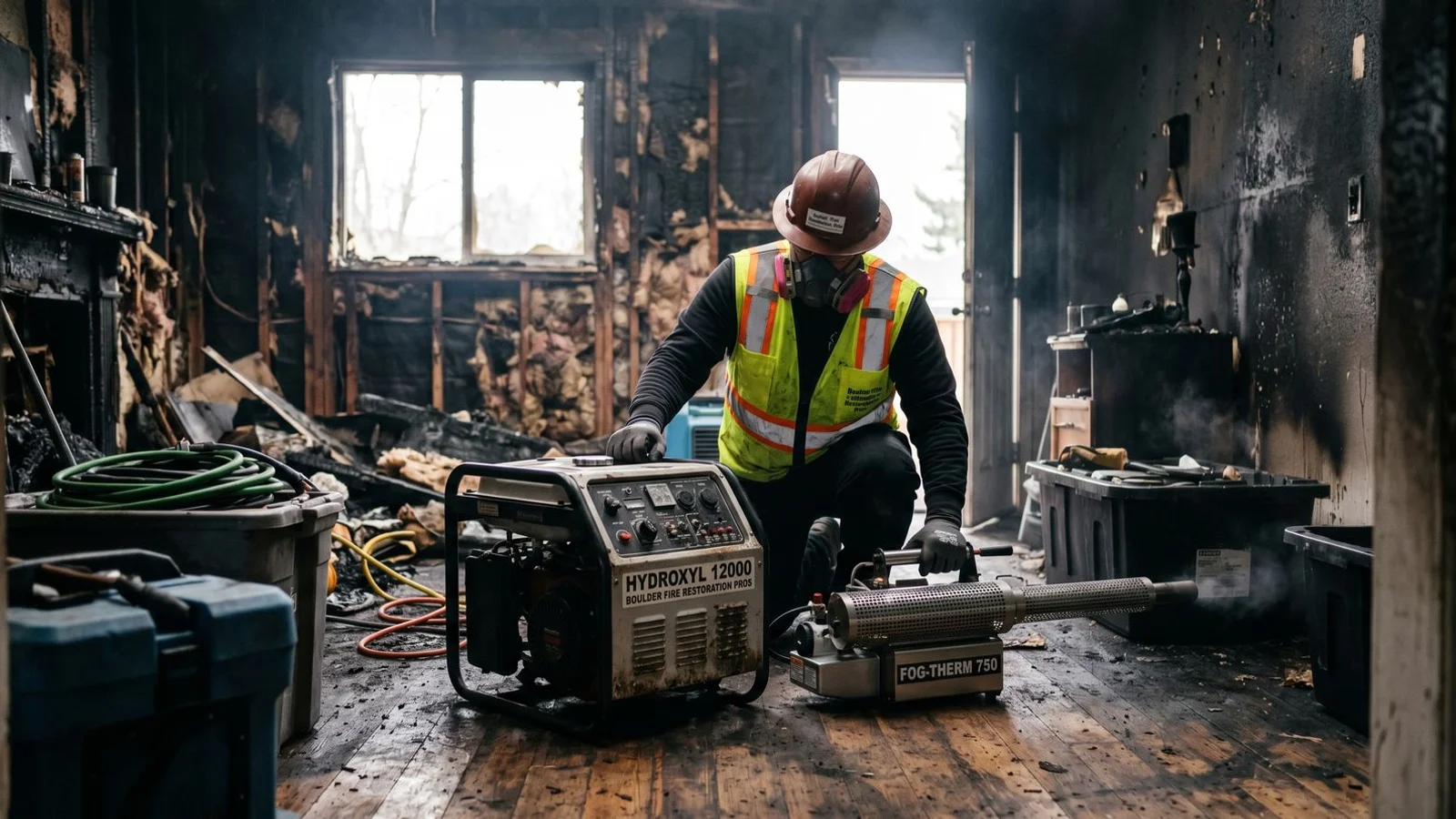
Boulder Fire Restoration Pros has added industrial hydroxyl generators, advanced thermal foggers, and thermal imaging for hidden fire damage — strengthening our 100% odor guarantee.
Better tools, faster results
We’ve made a meaningful equipment investment over the past quarter, and the result is faster turnaround and stronger outcomes on the smoke-odor and hidden-damage work that’s at the core of fire restoration. This post explains what we’ve added and why it matters for our Boulder County clients.
What we added
Three pieces of equipment, each addressing a specific gap in fire restoration capability:
Industrial hydroxyl generators
We’ve added several new units to our hydroxyl fleet. Hydroxyl generators produce hydroxyl radicals — the same compounds that naturally neutralize odor in outdoor air — at controlled levels inside an affected space. The radicals chemically break down smoke odor molecules in the air and on surfaces.
Why hydroxyl matters: it’s safe to run with people, pets, and plants in the home, which means treatment doesn’t require relocation. Ozone is more aggressive but requires sealed unoccupied spaces. Hydroxyl runs continuously while the family stays in place, which compresses project timelines.
Advanced thermal foggers
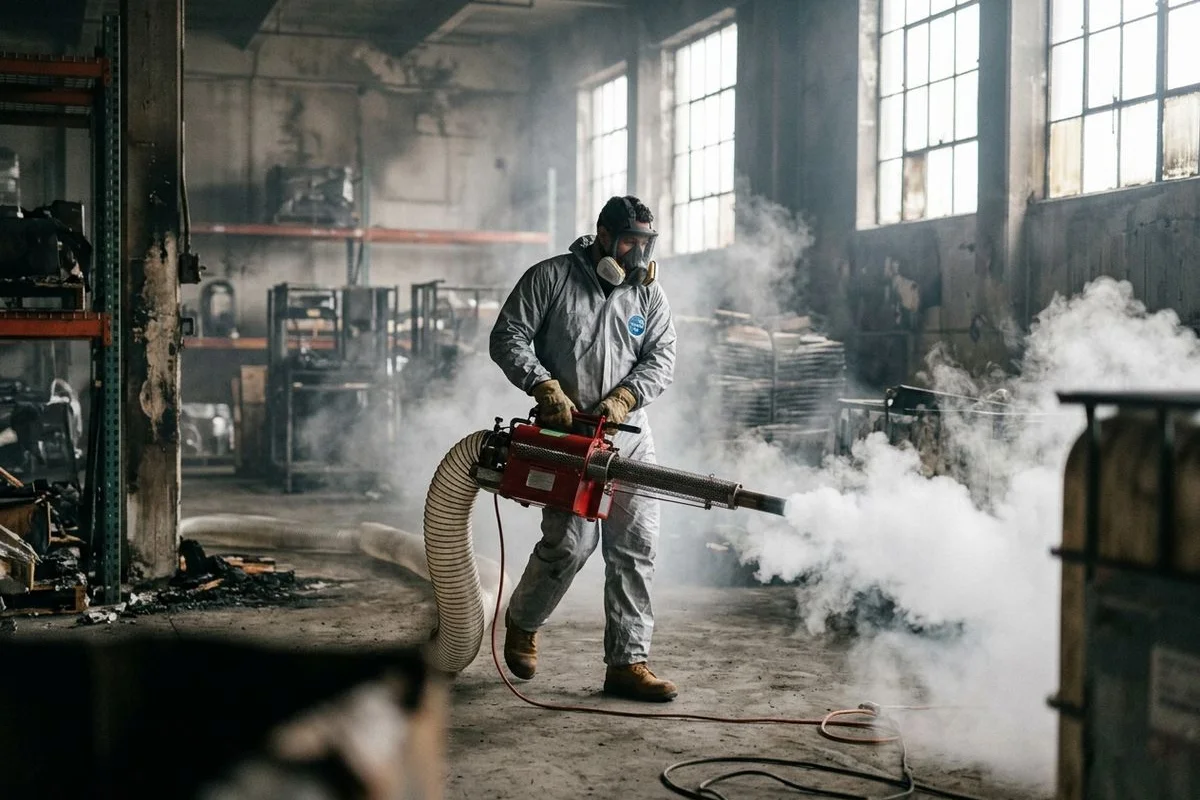
Thermal fogging is the technique that drives deodorizer molecules into the same porous materials smoke originally reached. New higher-output foggers cover more square footage per run and produce finer particle sizes that penetrate deeper.
For larger projects — a whole-house fire with multiple zones — this is a real timeline reduction. Three rooms used to need three passes. Now it’s often two.
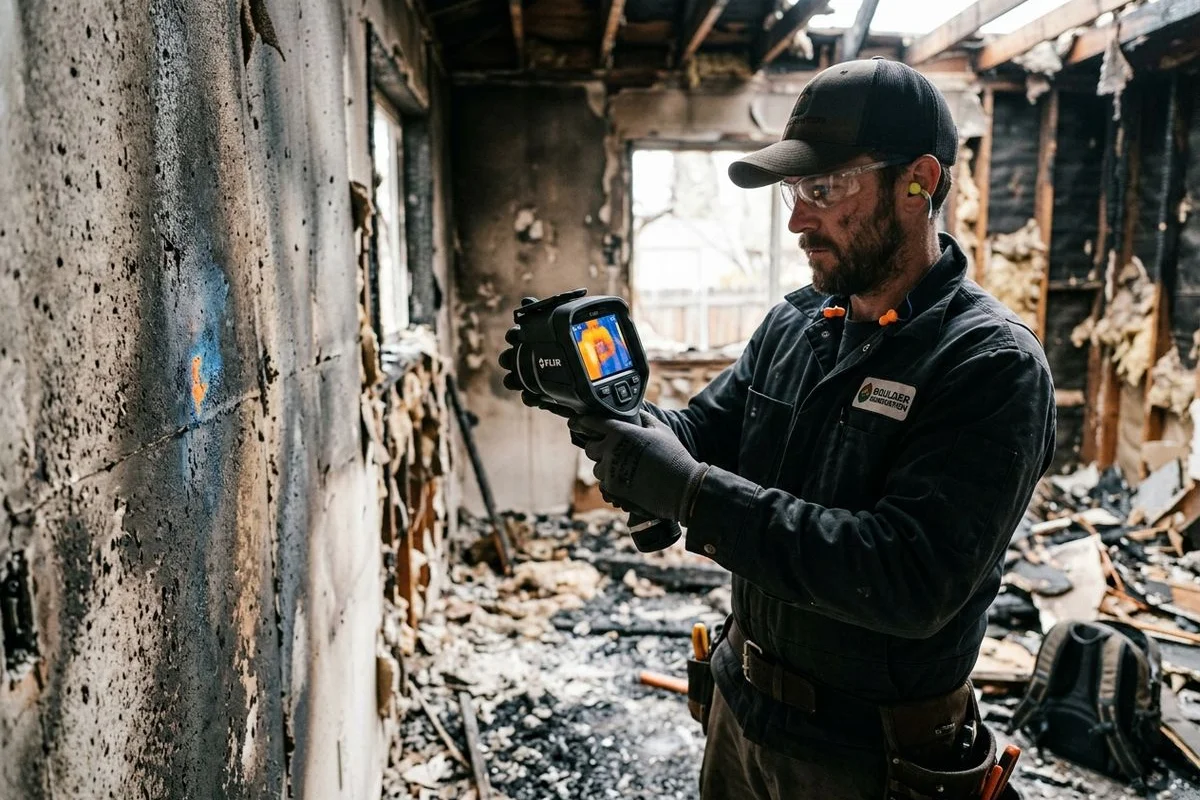
High-resolution thermal imaging cameras
Thermal imaging matters for two distinct uses:
- Hidden moisture detection during structural dry-out. Wet zones appear as cooler regions because evaporating water carries heat away. Earlier-generation cameras showed wet zones in broad strokes; new high-resolution units show them in detail.
- Hidden fire and heat damage assessment. After a fire is out, smoldering can continue in cavities. Thermal imaging finds heat sources that would otherwise be missed until they reignited.
For homeowners, this means faster confidence that the structure is genuinely safe and faster identification of moisture conditions that could drive mold within 48 hours.
What this means for clients
Three practical improvements:
- Faster project completion. Smoke odor work that used to run 5-7 days for moderate severity now often runs 4-5 days. For severe cases, we save more.
- Less family disruption. Hydroxyl runs in occupied homes; thermal fogging finishes faster. Many odor projects no longer require even partial displacement.
- Stronger guarantee confidence. Our 100% Smoke Odor Elimination Guarantee (re-treat free within 30 days if odor returns) is rarely tested. Better equipment makes it even more reliable.
Why we invested
The simple version: smoke odor work is the most differentiating capability in fire restoration. Most contractors handle the visible work (surface cleaning, drywall, paint) competently. The thing that separates a real fire restoration from a partial one is whether the home actually smells genuinely clean at the end. Our equipment investment is targeted exactly there.
We’ve also leaned into thermal imaging because we keep running into projects where the previous contractor’s missed-moisture problem became our mold problem. Better imaging catches more conditions earlier, which saves the homeowner money and saves us scope-creep headaches.
What’s next on the equipment roadmap
A few more additions planned for the back half of 2026:
- Additional commercial dehumidifiers for larger structural dry-out projects (especially commercial properties)
- Expanded HEPA air scrubber fleet for whole-house wildfire smoke remediation
- Dry-ice blasting equipment for non-abrasive framing and masonry cleaning on reconstruction projects
Each addition targets a specific capability gap we’ve seen on real projects. Nothing speculative; nothing for show.
When you’d notice
If you’re an existing client, you may have already worked with our new equipment — we’ve been rotating it in over the past 90 days. If you’re a new client, the equipment shows up in faster timelines and tighter scope alignment with your adjuster.
For more on the underlying methodology, see our smoke odor removal service page and our firefighting water extraction workflow. For the broader fire damage restoration timeline, see our timing guide.
Dealing with fire or smoke damage in Boulder?
24/7 emergency dispatch and free assessments across Boulder County.