Smoke odor is a chemistry problem, not a fragrance problem
Have you noticed how that stubborn campfire smell simply refuses to leave your house after a fire? Proper smoke odor removal is a frustrating challenge for many families.
You are definitely not imagining things.
The lingering scent you notice is actually not smoke at all. It is a mix of volatile organic compounds (VOCs) continuously leaking from microscopic soot particles.
Did You Know? A 2025 study from the University of Colorado Boulder confirmed that toxic chemicals like benzene can off-gas from your drywall for months after a burn.
These acidic residues bury themselves deep inside your wall framing and air ducts. Our team at Boulder Fire Restoration Pros has spent over two decades clearing fire and smoke damage from homes along the Colorado Front Range.
Grab a cup of coffee, and let’s go through the permanent solution together.
What permanent smoke odor elimination actually requires
Real smoke odor elimination follows the strict guidelines of the ANSI/IICRC S700-2025 standard for professional fire restoration. We follow a precise five-layer process to guarantee success. Skipping a single step allows the bad smells to sneak right back in.
- Source soot removal. Every visible and hidden soot deposit gets cleaned with soot-type-specific methods (dry, wet, protein, or oil). You can’t deodorize on top of soot. The Environmental Protection Agency (EPA) warns that leaving these deposits compromises your indoor air quality and poses long-term health risks.
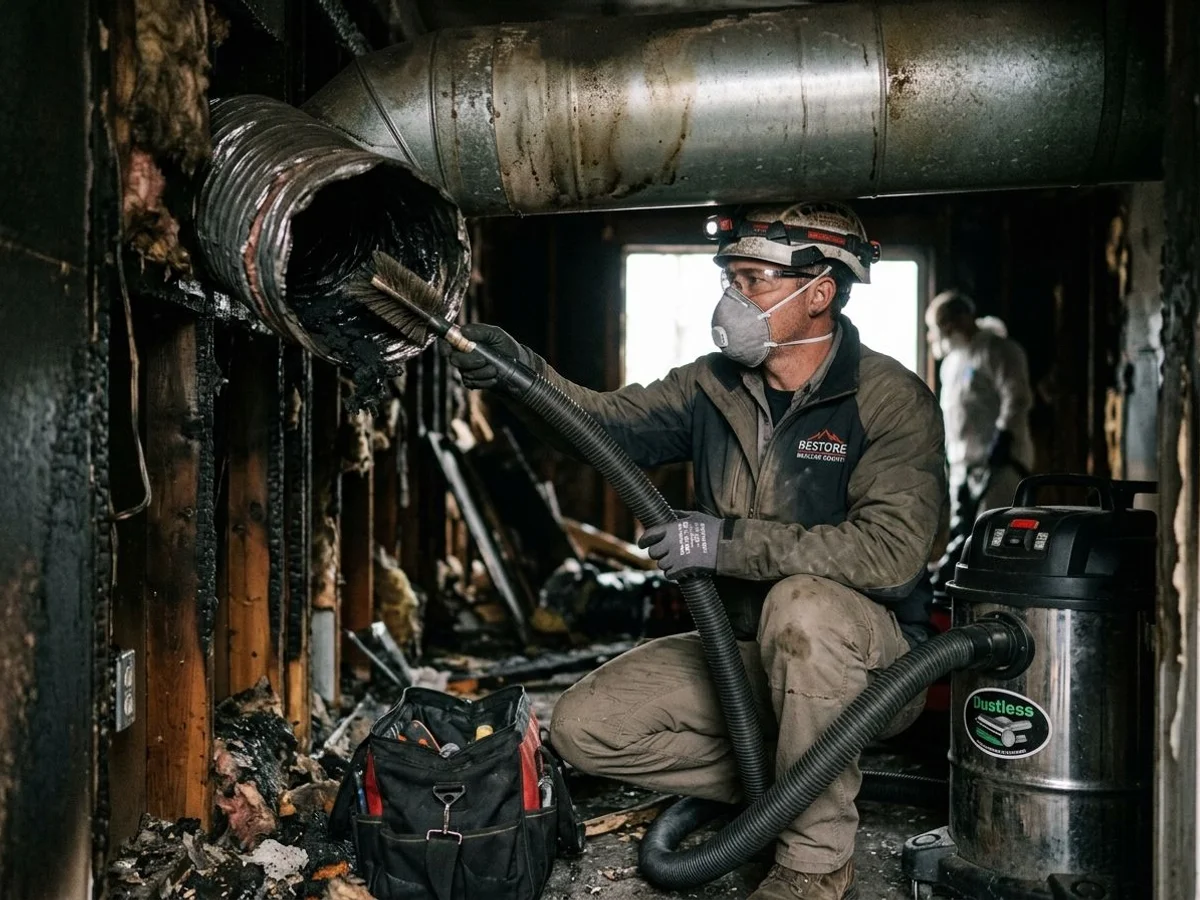
- HVAC and air-duct decontamination. Smoke moves through the same channels air does. Cleaning the home but leaving contaminated ductwork means the system blows the smell right back through every vent. Standard MERV filters are completely ineffective at trapping microscopic VOC gases.
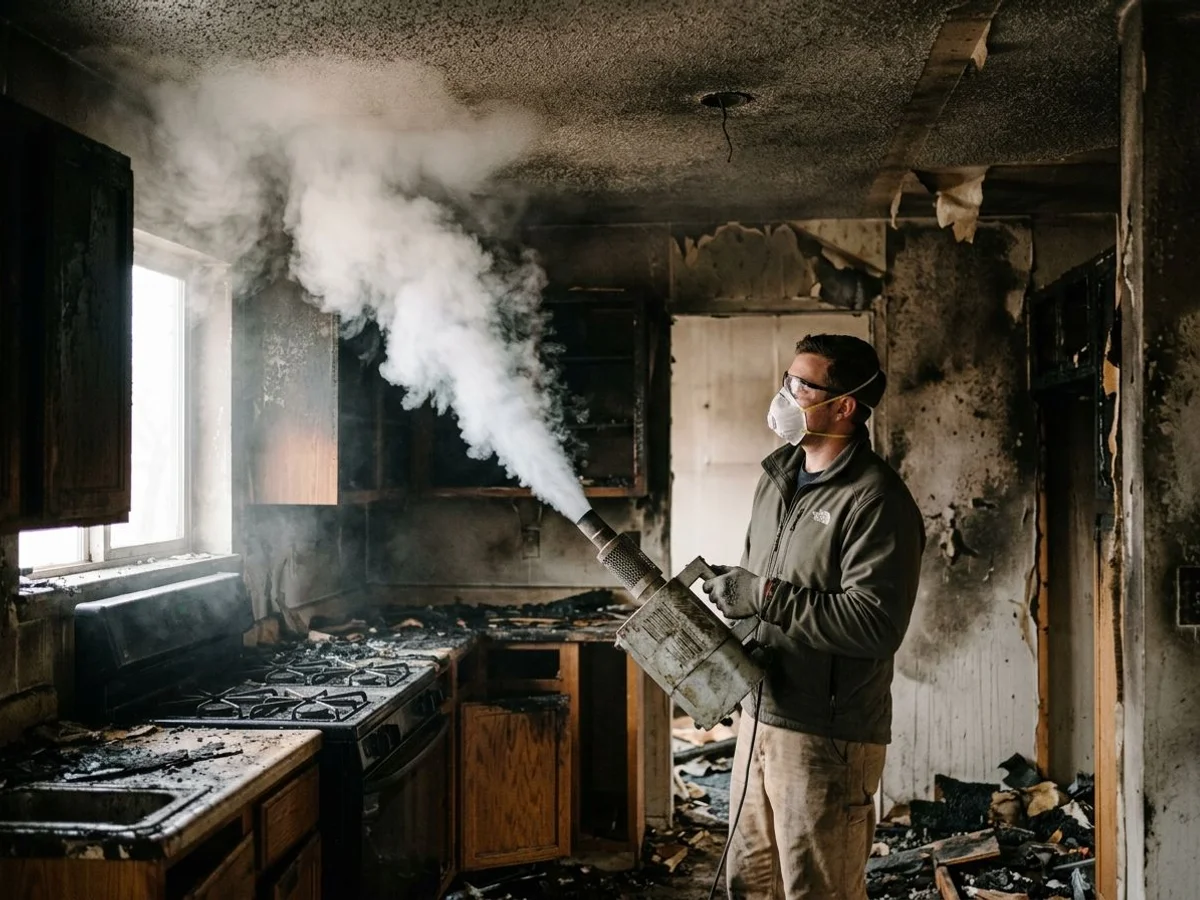
- Thermal fogging. A heated deodorizer is converted to a fine fog that follows smoke’s original travel path, penetrating cracks, porous walls, and recessed cavities a wet sprayer can’t reach. Our thermal fogging equipment produces particles between 0.5 and 50 microns in size. This exact sizing mimics the physical behavior of a fire, driving the neutralizer deep into the exact same wood pores where the smoke originally hid.
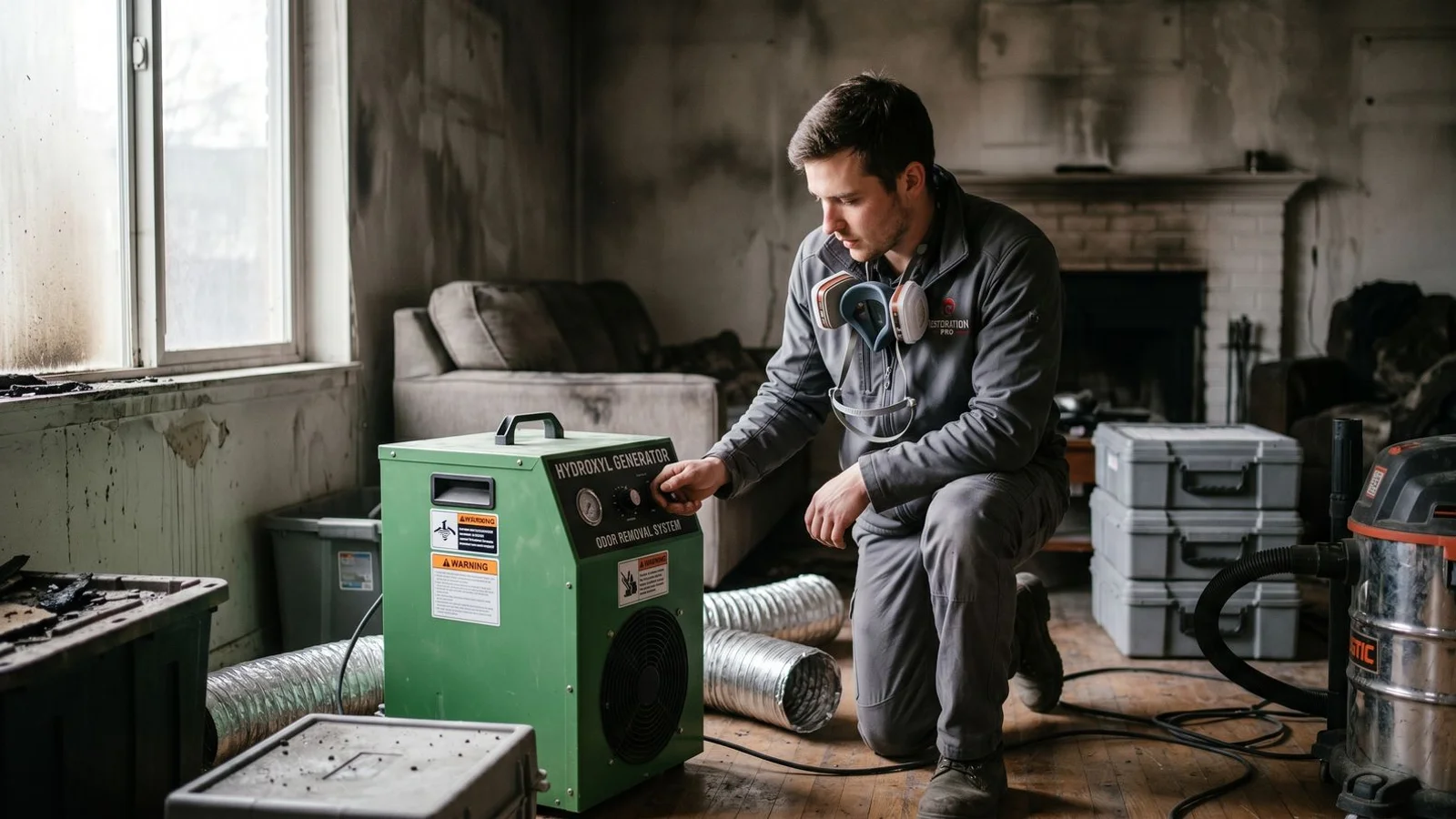
- Hydroxyl or ozone treatment. Hydroxyl generators safely produce hydroxyl radicals in occupied spaces, neutralizing odor molecules in the air and on surfaces. Ozone is reserved for unoccupied, severe cases. These chemical oxidation methods break the molecular bonds of the odors so they cannot return.
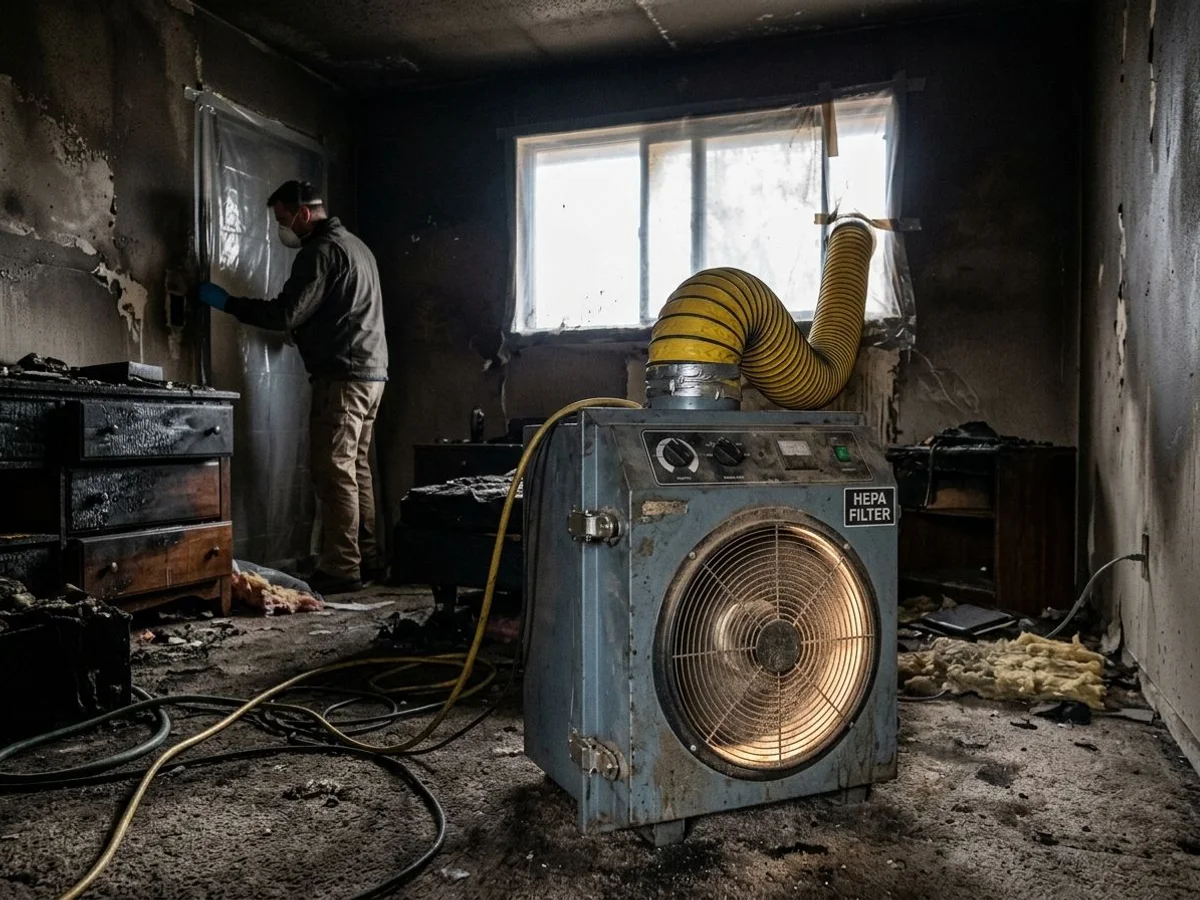
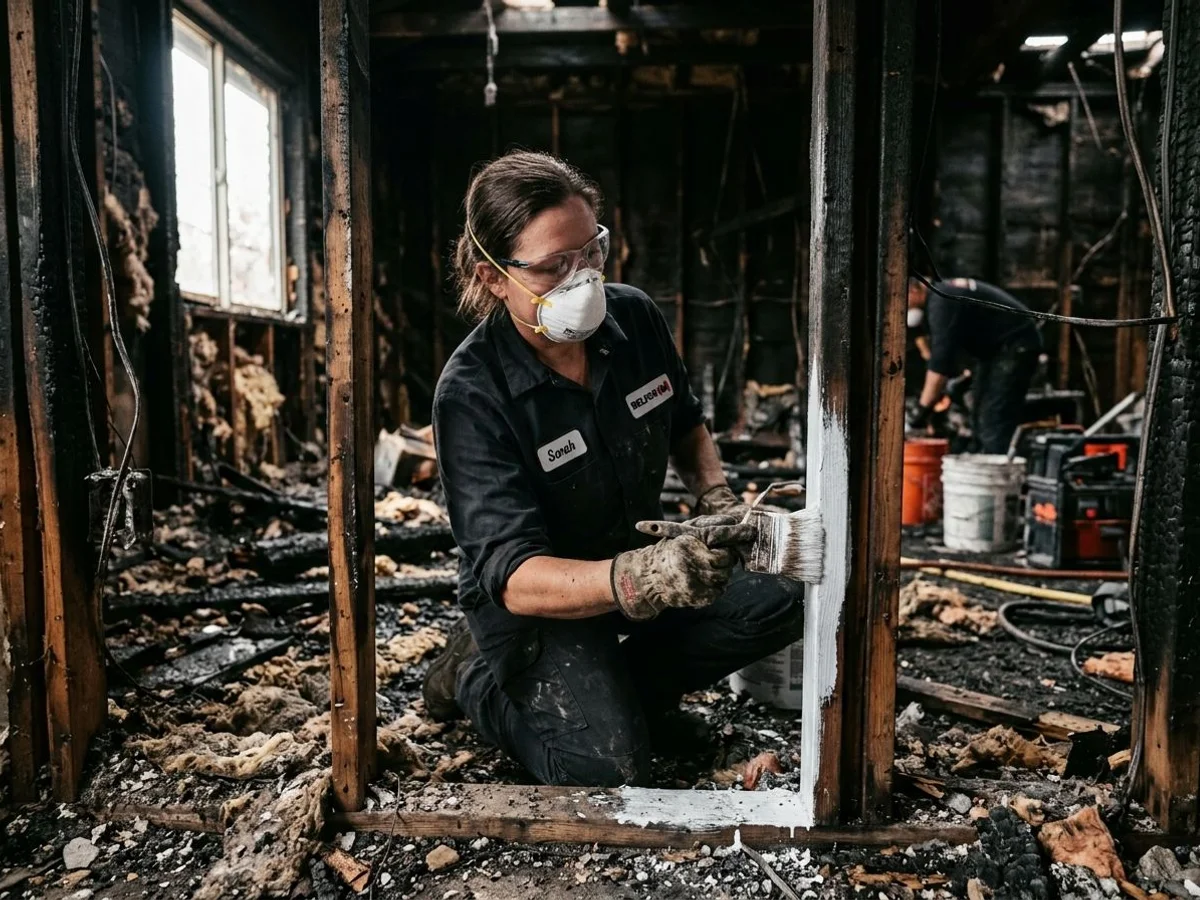
- HEPA air scrubbing and sealing. Final particulate is filtered out of the air, then encapsulation sealants lock down any residual off-gassing on framing or substrate. This creates a permanent barrier that protects your family from future chemical leakage.
| Treatment Method | Penetration Level | Particle Size | Best Used For |
|---|---|---|---|
| Surface Wiping | Surface Only | N/A | Removing visible ash |
| Air Purifiers (HEPA) | Air Only | 0.3 microns | Trapping floating dust |
| Thermal Fogging | Deep Structural | 0.5 to 50 microns | Neutralizing hidden VOCs |
Why DIY and “deodorizer” approaches fail
It is incredibly tempting to grab a spray bottle and tackle the smell yourself. We see a lot of frustrated families who have spent small fortunes on temporary fixes. The truth is that store-bought remedies simply mask the problem.
- Air fresheners and candles add a stronger smell on top of the smoke. The brain compares the two and reports “improvement,” but the smoke compounds are still being released. This phenomenon is called “nose blindness,” where your olfactory senses simply tune out the underlying toxic odor.
- Painting over smoke stains without sealing locks soot under the paint and the off-gassing continues. Sometimes this happens through the new paint film within weeks. The trapped chemicals will eventually blister the paint and release ghost odors when your house warms up during the summer.
- Running the HVAC to “air it out” actually distributes soot particulate through the duct system, making the contamination worse and adding cost to the eventual professional cleanup. Pushing air over unsealed soot can easily turn a localized, single-room cleanup into a highly expensive whole-house problem.
Pro Tip: Never turn on your ceiling fans or central air immediately after a kitchen fire. This common mistake forces microscopic soot directly into your return vents, contaminating your entire air system.
If your home smells like smoke days or weeks after the fire, calling emergency board-up and full smoke damage cleanup first is the right sequence. Odor work always follows source removal.
What our 100% Smoke Odor Elimination Guarantee means
Every smoke odor project we do is covered by a written 30-day guarantee. If the campfire smell returns within 30 days of completion, our team will come back and re-treat your property at no charge.
Temperature fluctuations usually reveal hidden off-gassing within the first few weeks. We want to ensure your home stays fresh regardless of the weather outside. You will never have to worry about hidden fees or complicated paperwork.
The guarantee includes:
- Zero deductibles for re-treatments.
- No fine print or confusing exclusions.
- Prompt scheduling without the tired excuses.
Our process works because it eliminates the actual chemistry of the soot. Combined with our fire content restoration for soft goods and our HVAC decontamination, this promise is genuinely achievable on virtually every single project.
Boulder County and Front Range coverage
We dispatch 24/7/365 across Boulder, Longmont, Lafayette, Louisville, Erie, Superior, Broomfield, and the rest of Boulder County. The devastating Marshall Fire left over 13,000 “standing homes” in the burn area exposed to heavy particulate infiltration.
Our technicians have helped countless families fully reverse this deep, structural contamination. If you are not sure whether your smell is from a localized kitchen accident or broader neighborhood infiltration, our wildfire smoke damage remediation page covers the exact differences.
Pricing for professional smoke odor removal depends heavily on the size of the affected area. Recent 2026 market data shows that full-home remediation typically ranges from $2,000 to $12,000. Minor treatments for a single room start around $400 to $500 for light-smoke jobs. Your final cost will scale with the square footage, the severity of the burn, and the necessary HVAC scope.
| Service Scope | Estimated Price Range |
|---|---|
| Single Room Treatment | $400 to $1,500 |
| HVAC Duct Cleaning | $250 to $1,200 |
| Whole-Home Remediation | $2,000 to $12,000 |
Insurance usually covers professional smoke odor removal as part of a standard fire claim. We make this process easy by billing your carrier directly using industry-standard Xactimate documentation.
You do not have to live with the constant reminder of a fire.
Reach out today to schedule an inspection, and let us help you breathe easily again.