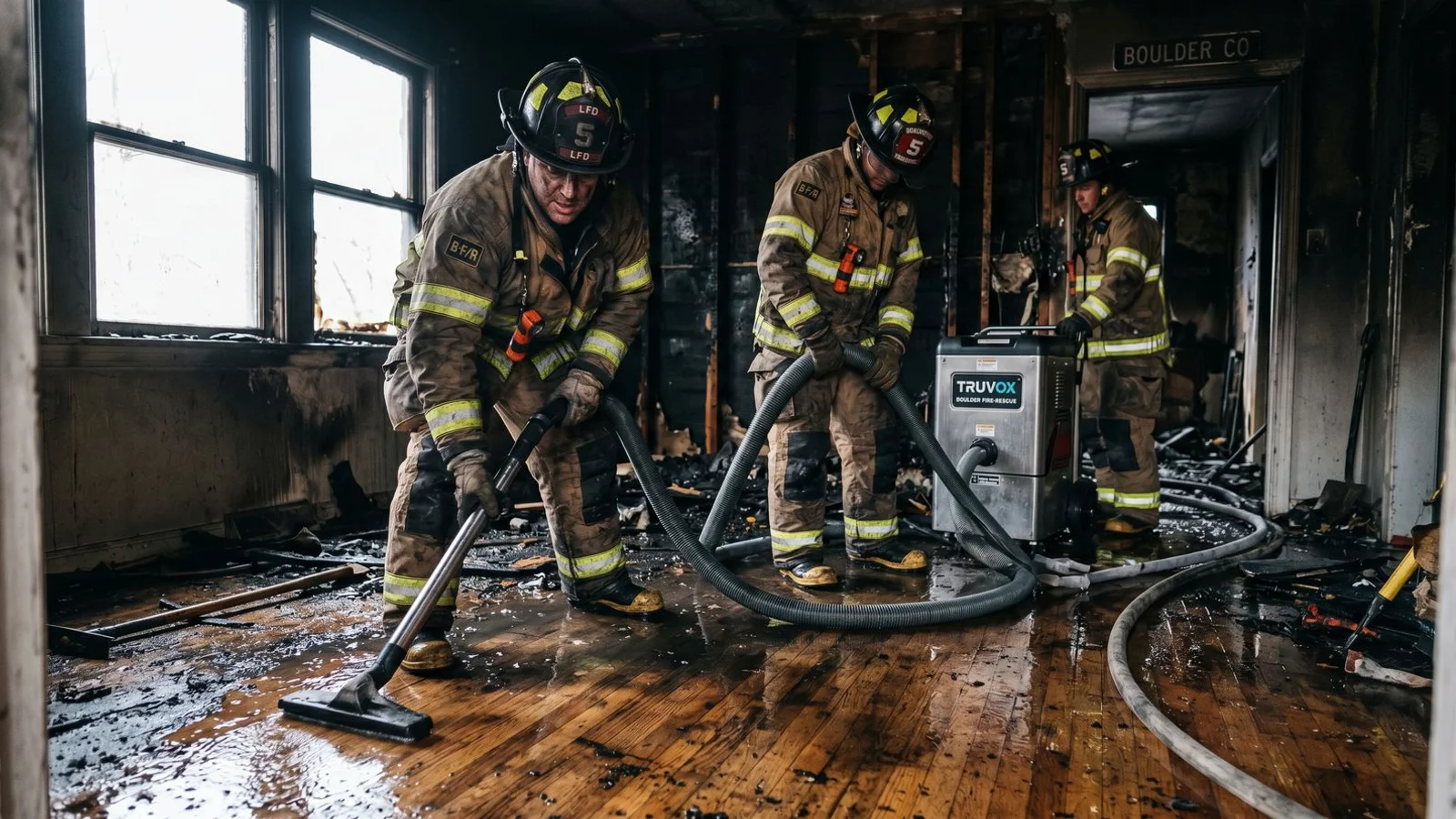
The water comes with the fire, and it’s its own emergency
Have you ever wondered how much water it actually takes to save a burning house? It is an overwhelming thought for any homeowner standing in a soaked living room.
We see this shock on our clients’ faces constantly.
Our team at Boulder Fire Restoration Pros has served the Colorado Front Range for over two decades, and we know most people do not realize the sheer volume of water involved until they see the wet carpets.
According to a landmark 15-year Scottsdale Report, firefighters use an average of 2,935 gallons of water to control a typical home fire. We often explain that a standard fire hose pumps out up to 150 to 200 gallons every single minute.
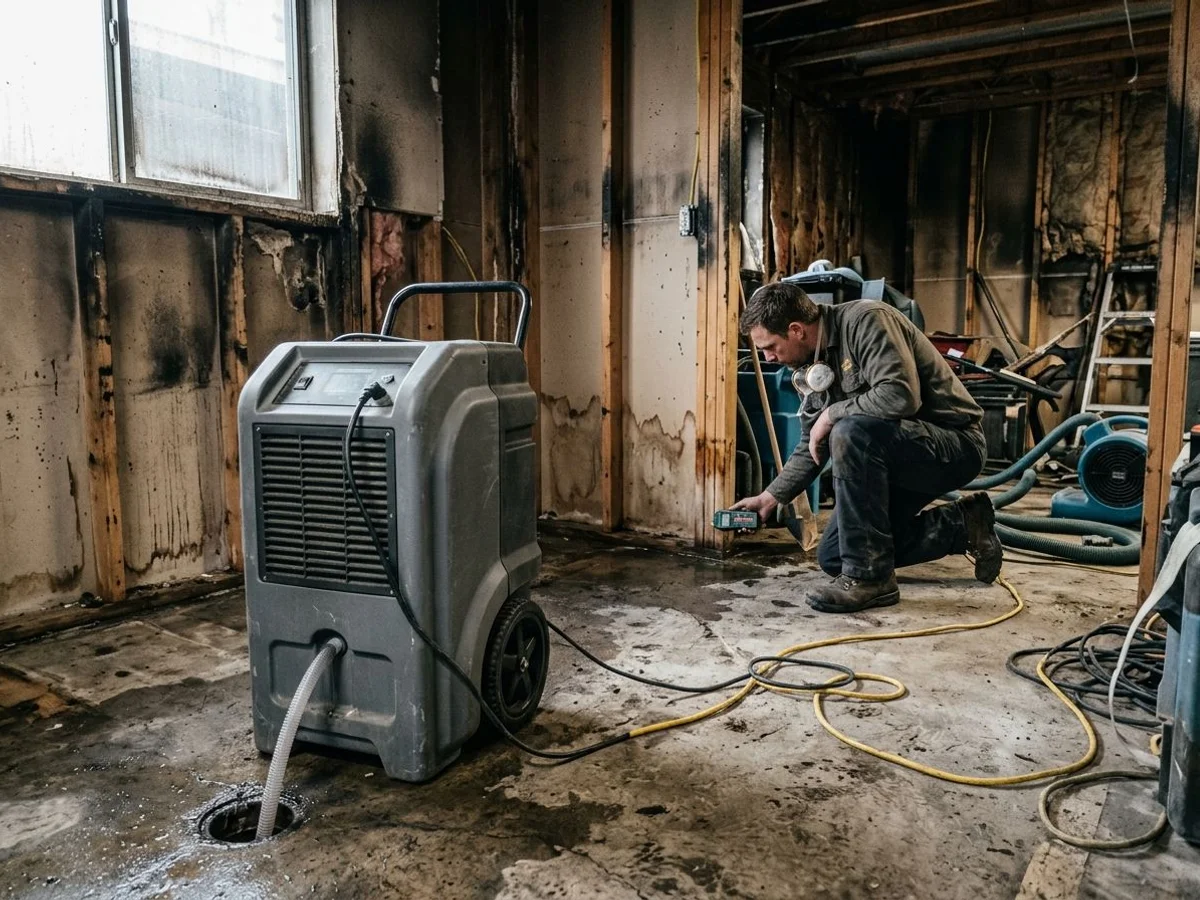
The fire department eventually declares the scene safe and heads back to the station. Our restoration crews then step in to find water pooling on the slab and flooding the basement.
This hidden moisture creates a dangerous ticking clock for your property.
We always warn homeowners about the Environmental Protection Agency rule that mold begins colonizing damp surfaces in just 24 to 48 hours. Local data for 2026 shows that severe structural mold remediation costs can easily exceed $10,000.
Our complete Firefighting Water Extraction & Dry-Out process runs right alongside the smoke damage cleanup to save you time and money.
Grab a cup of coffee, and let’s walk through the exact steps needed to dry out your home correctly.
What ANSI/IICRC S500 actually requires
The industry rulebook for water mitigation is the ANSI/IICRC S500-2021 standard. We rely on this manual because it is incredibly specific about what proper dry-out looks like.
It outlines the exact acceptable conditions required before any walls can go back up. Our technicians document every single step to ensure compliance and protect your insurance claim.
Here are the key requirements dictated by the standard:
- Standing water extracted with truck-mounted equipment: Residential wet-vacs simply lack the suction power needed.
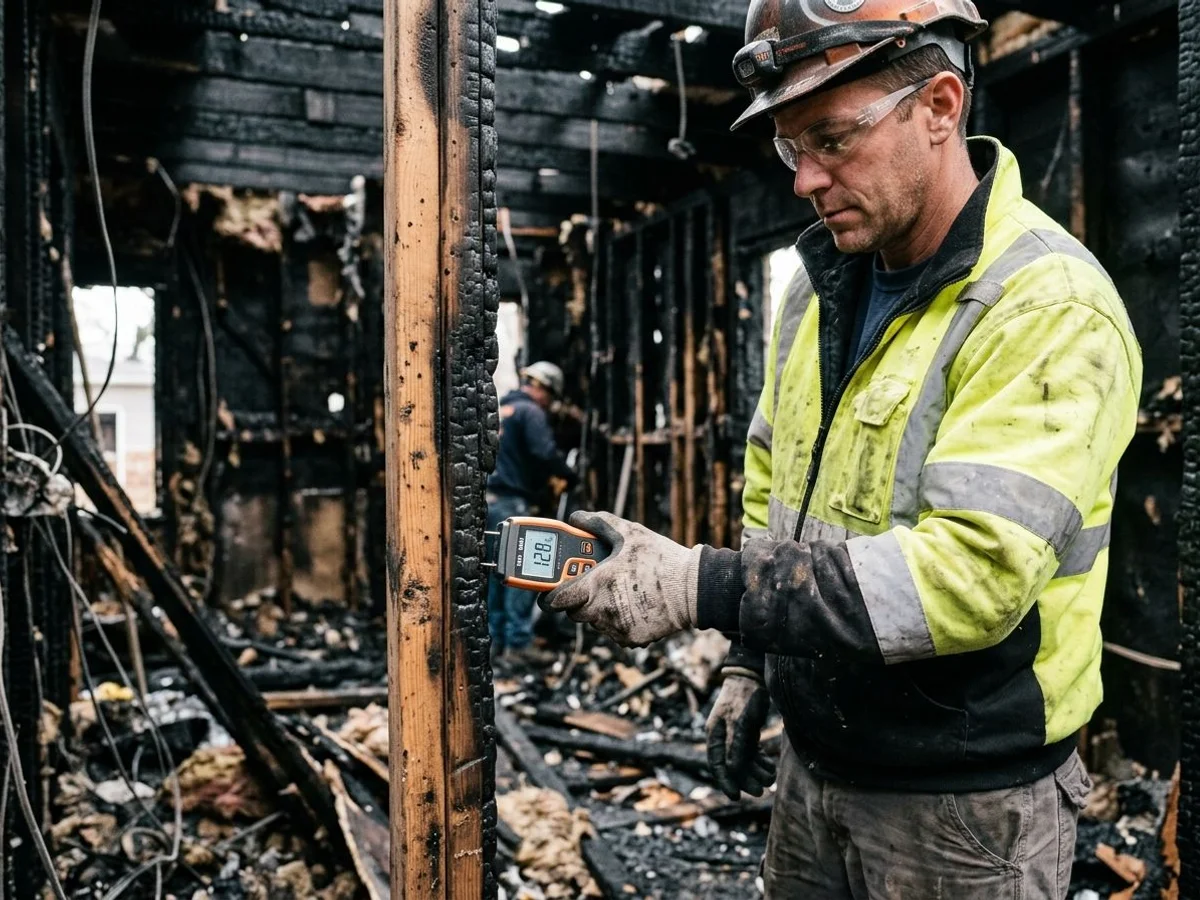
- Moisture content of structural materials documented daily: Readings must be taken using professional penetrating meters and thermal imaging.
- Drying environment maintained continuously: Commercial-grade dehumidifiers and air movers must be sized precisely to the water load.
- Materials brought down to a documented dry standard: This is based on the equilibrium moisture content for your local climate.
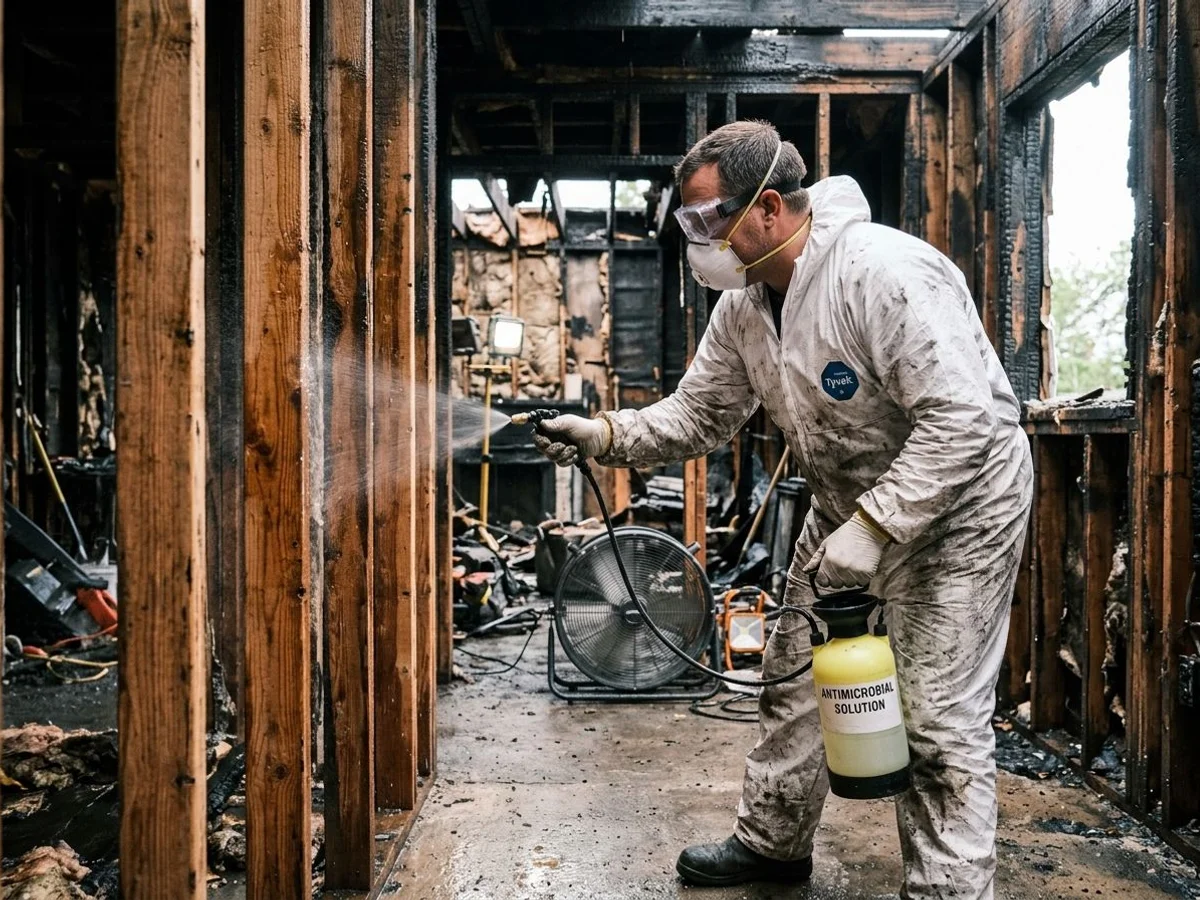
- Antimicrobial treatment applied promptly: This stops growth when conditions put mold risk above acceptable thresholds.
Regional climate makes a massive difference in these calculations. We know from experience that wood in Colorado’s dry, high-altitude environment must reach an equilibrium moisture content of just 6 to 9 percent.
Gulf Coast states sit much higher at 12 to 14 percent. Our daily moisture readings get logged directly into the insurance claim file.
The dry-out timeline is signed off by your adjuster to keep the project moving. We ensure that the rebuild phase never starts until the structure is verified completely dry.
Hidden moisture is the part that kills jobs
The water you can easily see on the floor is straightforward to handle. We worry much more about the water you cannot see.
Hidden moisture lurks behind drywall, underneath flooring, and inside wall cavities. Our teams often find it soaked deeply into the bottom plate of a stud wall.
This trapped water is exactly what causes failed dry-outs and surprise mold problems six weeks later.
Mapping the Invisible Damage
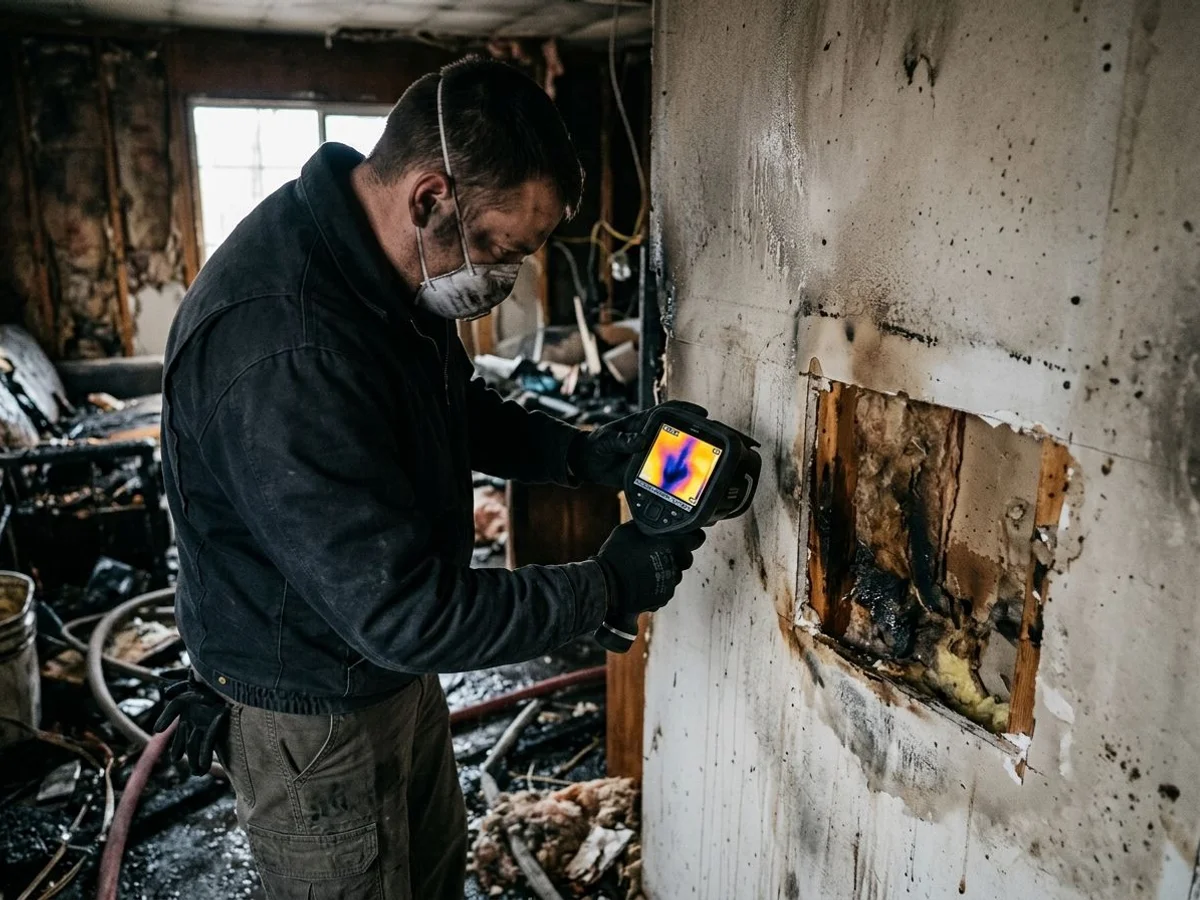
High-resolution thermal imaging is absolutely mandatory for a successful project. We use advanced FLIR thermal cameras to show wet materials as distinct colder zones.
Evaporating water carries heat away from the surface, creating a clear map of the damage. Our specialists can then see exactly where to focus the extraction and drying efforts.
Why You Need Two Specific Tools
A thermal camera alone is not enough to verify a dry space. We pair the visual map with a high-end Delmhorst or Wagner penetrating moisture meter to quantify the exact dampness percentage.
Without both of these tools working together, the dry-out process is just a dangerous guess.
| Tool Type | Primary Function | Why It Is Essential |
|---|---|---|
| Thermal Imaging Camera | Maps temperature differences | Shows exactly where the hidden water is located. |
| Penetrating Moisture Meter | Measures exact water content | Proves the materials have reached the safe 6-9% threshold. |
Drilling for Success
Sometimes, getting the water out requires a bit of strategic demolition. We will drill controlled inspection holes where needed to extract trapped water from sealed wall cavities.
A small, quarter-sized hole is very easy to patch during the final reconstruction phase. We prefer making a tiny hole today over cutting out a massive wall section two months from now because mold took over the space.
How Firefighting Water Extraction & Dry-Out fits into the broader fire job
Water extraction is the very first task that begins immediately following the emergency board-up. We run this critical phase concurrently with all other initial recovery efforts.
Speed is your best friend when fighting secondary water damage. Our specialized crews arrive on the scene and immediately separate into dedicated board-up, water extraction, and soot assessment teams.
Working in parallel ensures the home is stabilized as fast as humanly possible.
The Single-Vendor Advantage
This simultaneous workflow is the strongest argument for using a single vendor across your entire fire restoration job. We constantly see homeowners lose precious time trying to manage multiple different companies.
Coordinating between a water-only mitigation franchise, a separate fire cleaning crew, and an outside rebuild contractor guarantees expensive scope gaps. Our integrated approach uses one single project manager for the whole event.
Having one cohesive, documented dry-out file all the way through to the final paint job keeps the project moving without delays.
Your Next Steps
Every minute counts when your belongings are soaking wet. We urge you to make extraction your first phone call after the fire department clears the scene.
The damage timer started the exact moment the firefighters shut off their hoses.
Our emergency response team is ready to begin your Firefighting Water Extraction & Dry-Out process and help you save your home right now.