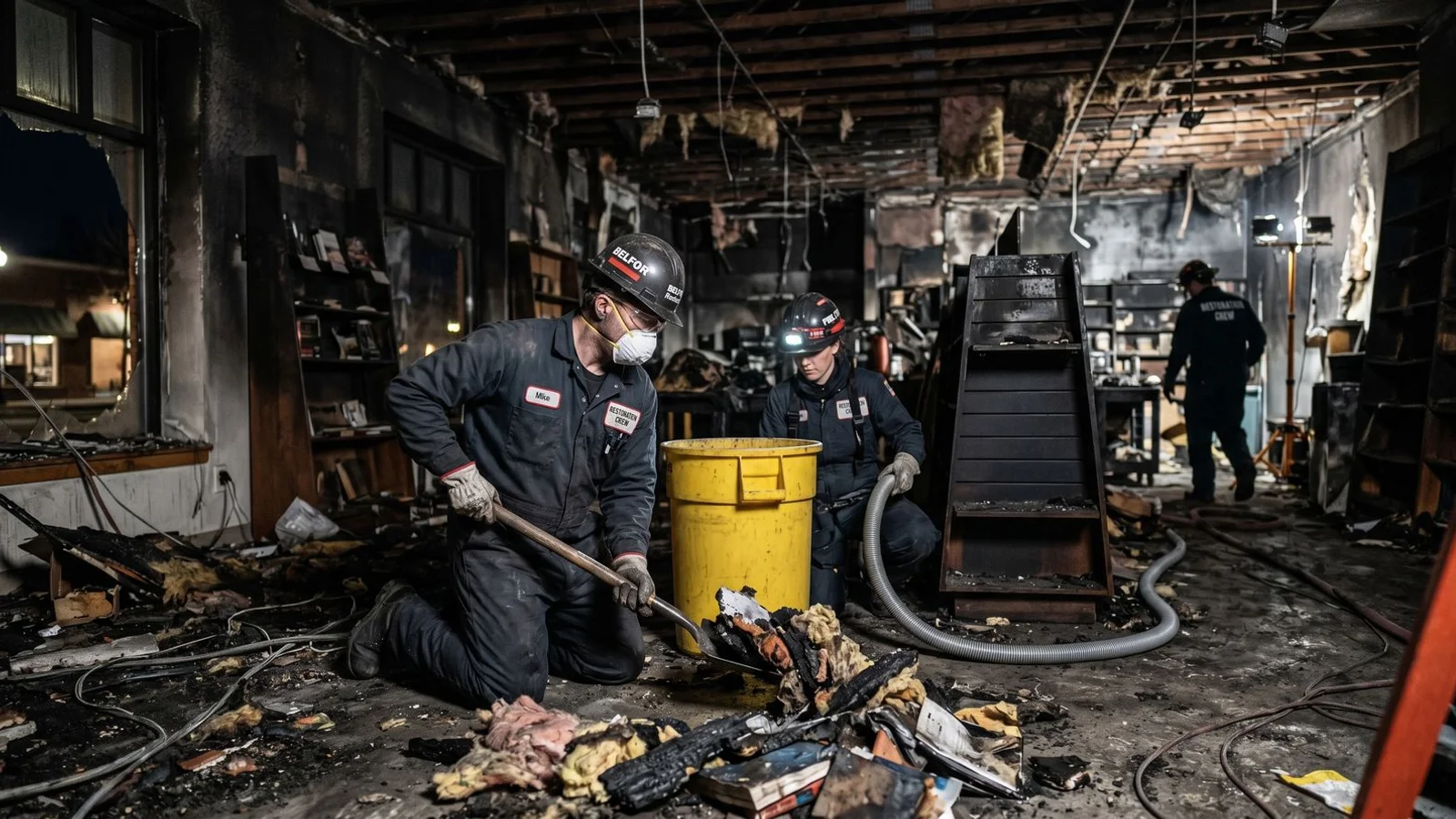
For a commercial property, every closed day is real money
A commercial fire feels just as personal as a home fire, doesn’t it? Over our two decades exclusively handling fire and smoke restoration along the Colorado Front Range, we have watched business owners carry this immense stress. The stakes are entirely different from a residential disaster.
A residential fire halts your personal life. A commercial fire stops your payroll, pauses your rent collection, and chokes off revenue while a relentless clock keeps ticking.
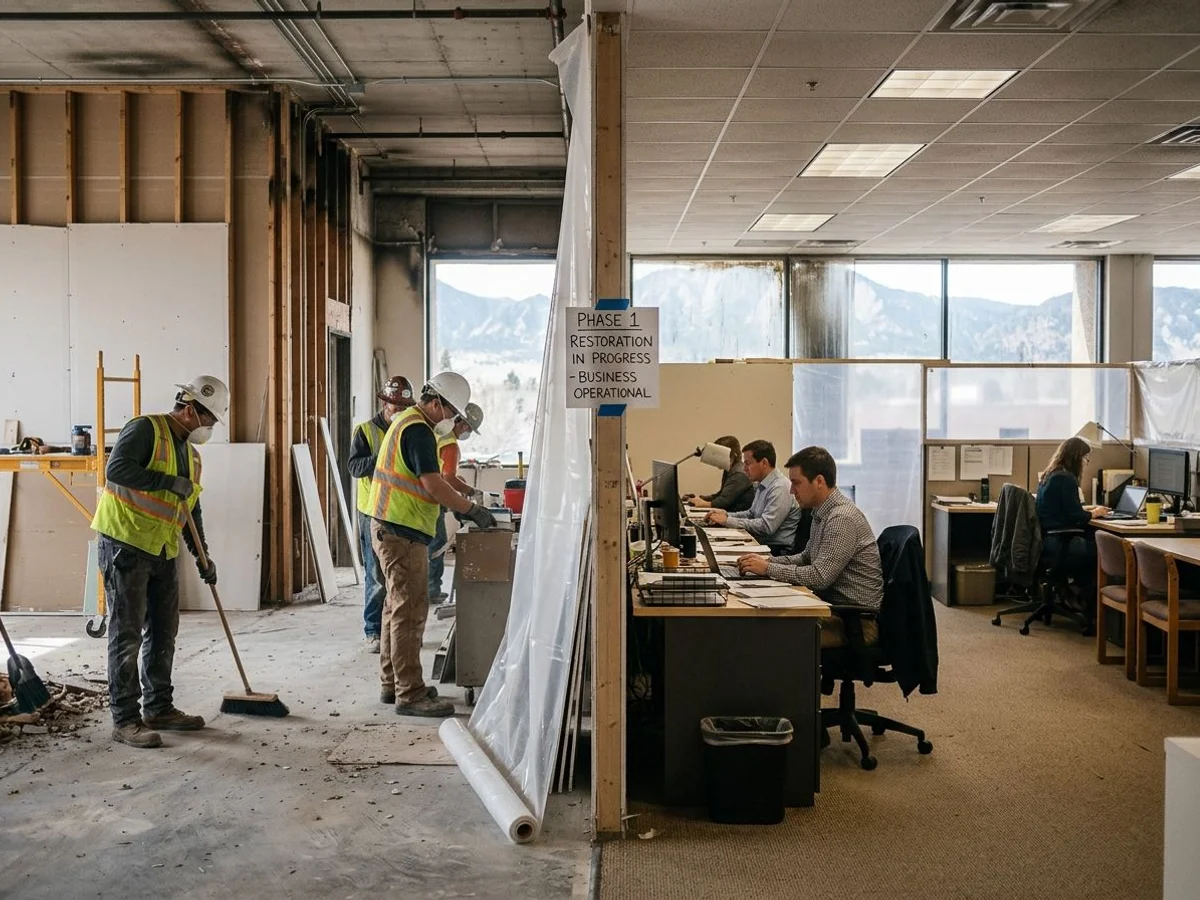
Our primary goal is to compress that scary timeline. This specialized approach allows vital parts of your business to keep running while the rest gets restored.
That financial reality completely changes how a project is scoped.
For a home, the main question is simply how to return it to pre-loss condition. For a commercial property, the question shifts to how we achieve that pre-loss condition with the absolute fewest closed days. Different questions require a completely different plan.
What “phased restoration” actually means
Suppose you have a 6,000-square-foot office, and only the eastern third was affected by a kitchen fire. You absolutely do not need to shut down the whole building.
According to 2026 industry data, the average cost of downtime for a small-to-medium business ranges from $10,000 to $50,000 per hour. Closing your entire operation for a localized issue throws away money unnecessarily.
We keep your doors open using a strict phased approach:
- Contain the affected zone. Heavy-duty negative-air containment and HEPA scrubbing ensure smoke and dust never migrate to working areas.
- Sequence the work. Disruptive phases like heavy demolition and dry-out happen before the quieter drywall, finishes, and deodorization stages.
- Schedule noisy work after hours. Restaurants see work overnight, retail gets handled outside store hours, and offices get weekend options.
- Reopen sections immediately. Once a zone passes its cleanliness verification, it returns to your operation while restoration continues elsewhere.
Our crews turn what would normally be a six-week total closure into six weeks of partial restriction. The business operates and generates revenue throughout the entire process.
Multi-unit buildings and tenant coordination
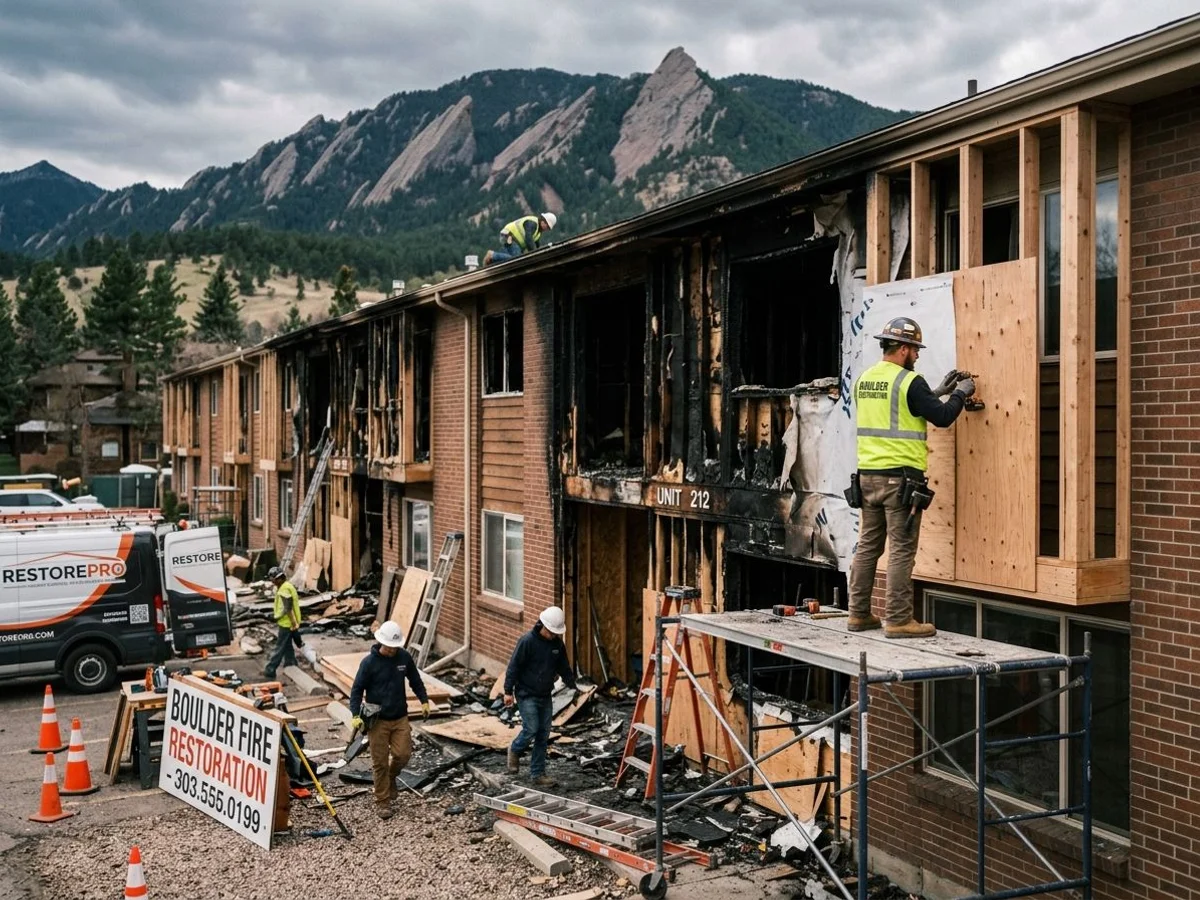
Multi-unit residential and mixed-use buildings add a heavy layer of coordination most contractors simply cannot handle. A single fire might involve three or four different insurance carriers.
You have the building owner’s master policy, individual unit owners’ HO-6 policies, commercial tenant coverages, and the HOA board all wanting a say. Each carrier assigns their own adjuster with a preferred scope of work. Tenants in unaffected units constantly ask when the noise will stop.
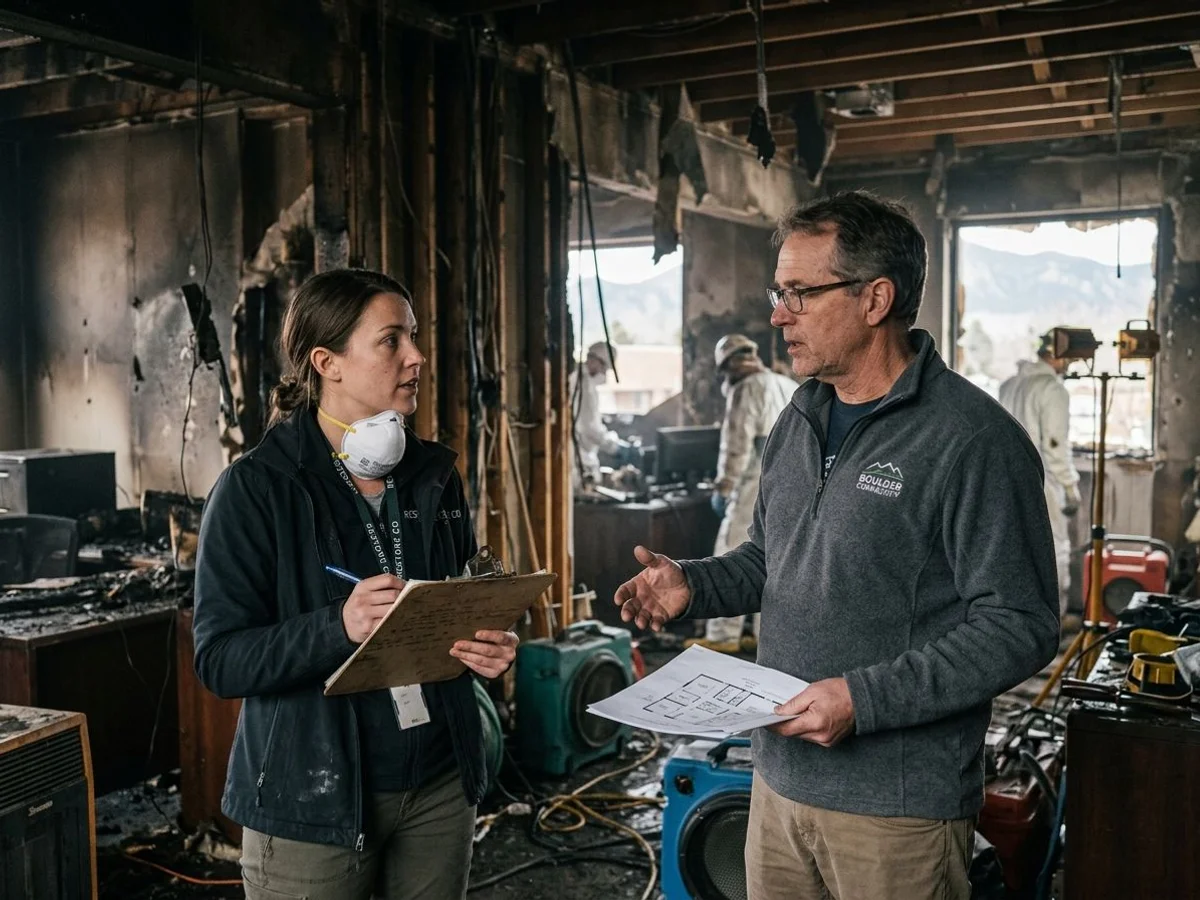
Our dedicated project manager owns all of that communication. One central person manages the schedule and keeps everyone informed. We coordinate directly with property managers and HOA boards to run weekly status calls.
Documentation must remain strictly separated to keep claims moving.
| Policy Type | Who It Covers | What It Typically Restores |
|---|---|---|
| Master Policy | HOA / Building Owner | Core structure, common areas, roof, exterior. |
| HO-6 Policy | Condo Unit Owner | Interior walls, personal property, temporary housing. |
| Commercial Tenant | Business Renter | Business equipment, inventory, specialized fixtures. |
This clear separation ensures each claim resolves cleanly without cross-carrier disputes. Affected tenants get rapid relocation guidance, and property owners avoid endless legal headaches.
Commercial-grade equipment, not stretched residential gear
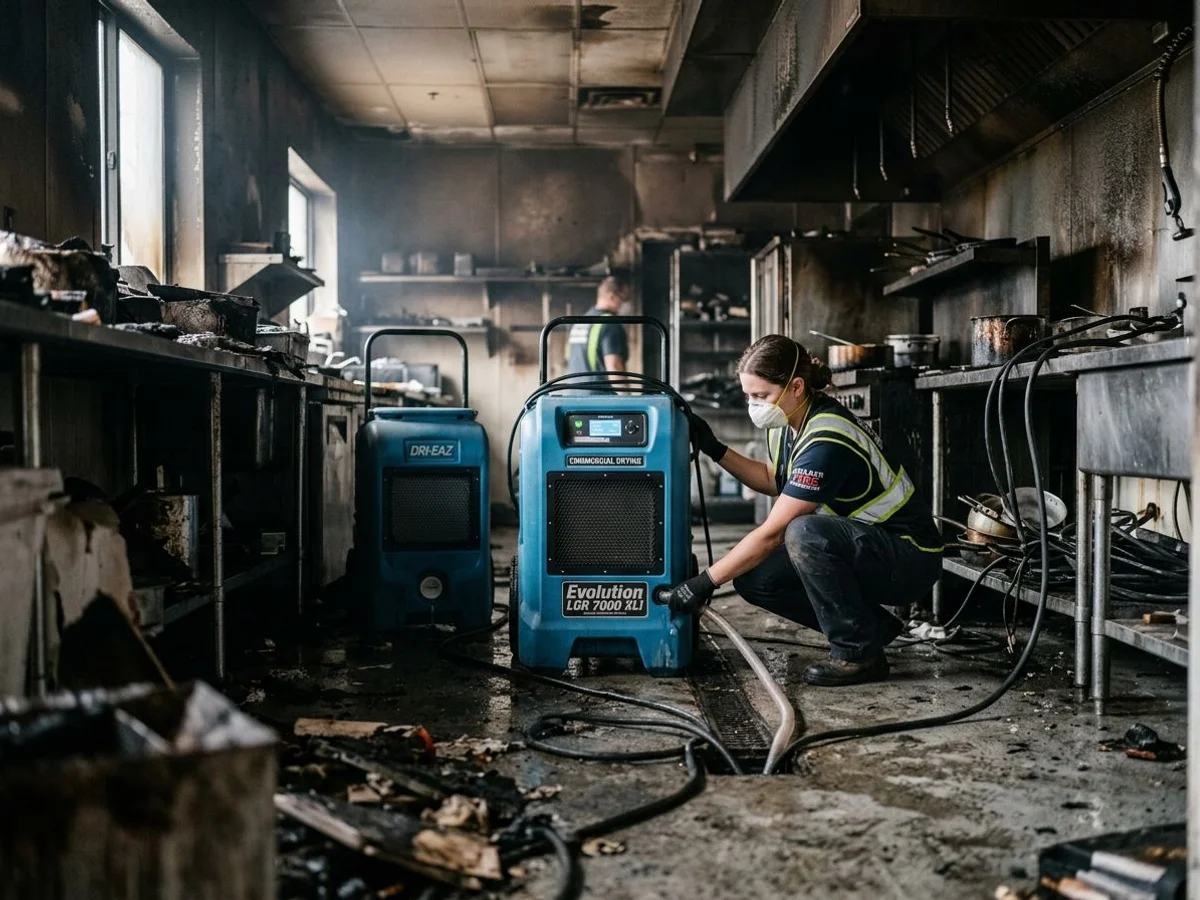
Drying a 4,000-square-foot retail space with residential equipment takes over a week. The exact same job using true commercial-grade equipment takes two days.
That massive time difference translates directly into saved revenue. We bring the right equipment scaled for massive properties to get you back in business fast.
A standard hardware store dehumidifier pulls about 30 to 70 pints of moisture per day under ideal conditions. Commercial LGR (Low Grain Refrigerant) units extract over 150 pints per day, even in freezing temperatures or low humidity.
| Feature | Consumer Equipment | Commercial Equipment |
|---|---|---|
| Moisture Removal | 30-70 Pints Per Day | 150+ Pints Per Day |
| Airflow Speed | Low CFM | High CFM (Often 600+) |
| Operation | Needs manual emptying | Continuous automatic pump-out |
Our crews deploy multiple LGR dehumidifiers and high-capacity HEPA air scrubbers sized to finish strictly on schedule.
Smoke odor ruins inventory and drives away customers. We completely eliminate these smells using advanced Odorox Boss XL3 Hydroxyl Generators.
These machines break down smoke and volatile organic compounds at the molecular level. Unlike old ozone generators that require building evacuation, hydroxyl technology is completely safe to run while your staff and customers are inside the building.
For larger reconstruction needs, the workflow integrates directly with our fire damage reconstruction capabilities under one single project. For emergency board-up of damaged storefronts, crews mobilize 24/7 from the exact same dispatch line.
Business-interruption documentation
Most commercial property policies include business-interruption coverage to pay for lost revenue during a closure period. This money acts as a vital lifeline, but collecting it requires flawless paperwork.
Standard policies often enforce a 48 to 72-hour waiting period before this coverage even kicks in. Maximizing the payable portion of your claim depends entirely on proving your exact losses.
We provide the three specific things adjusters demand:
- A highly realistic restoration schedule that the insurer actually accepts.
- Daily, time-stamped progress documentation showing active work.
- Clean, verifiable coordination between necessary scope changes and timeline impacts.
Our detailed reporting proves exactly why a space remained closed on any given day.
If you are staring at a fire-damaged commercial property in Boulder, Longmont, Louisville, Lafayette, Broomfield, or anywhere on the Front Range, the first 24 hours set the tone for the next 60 days. Call us before signing a contract with anyone else. We will map out a concrete continuity plan together.