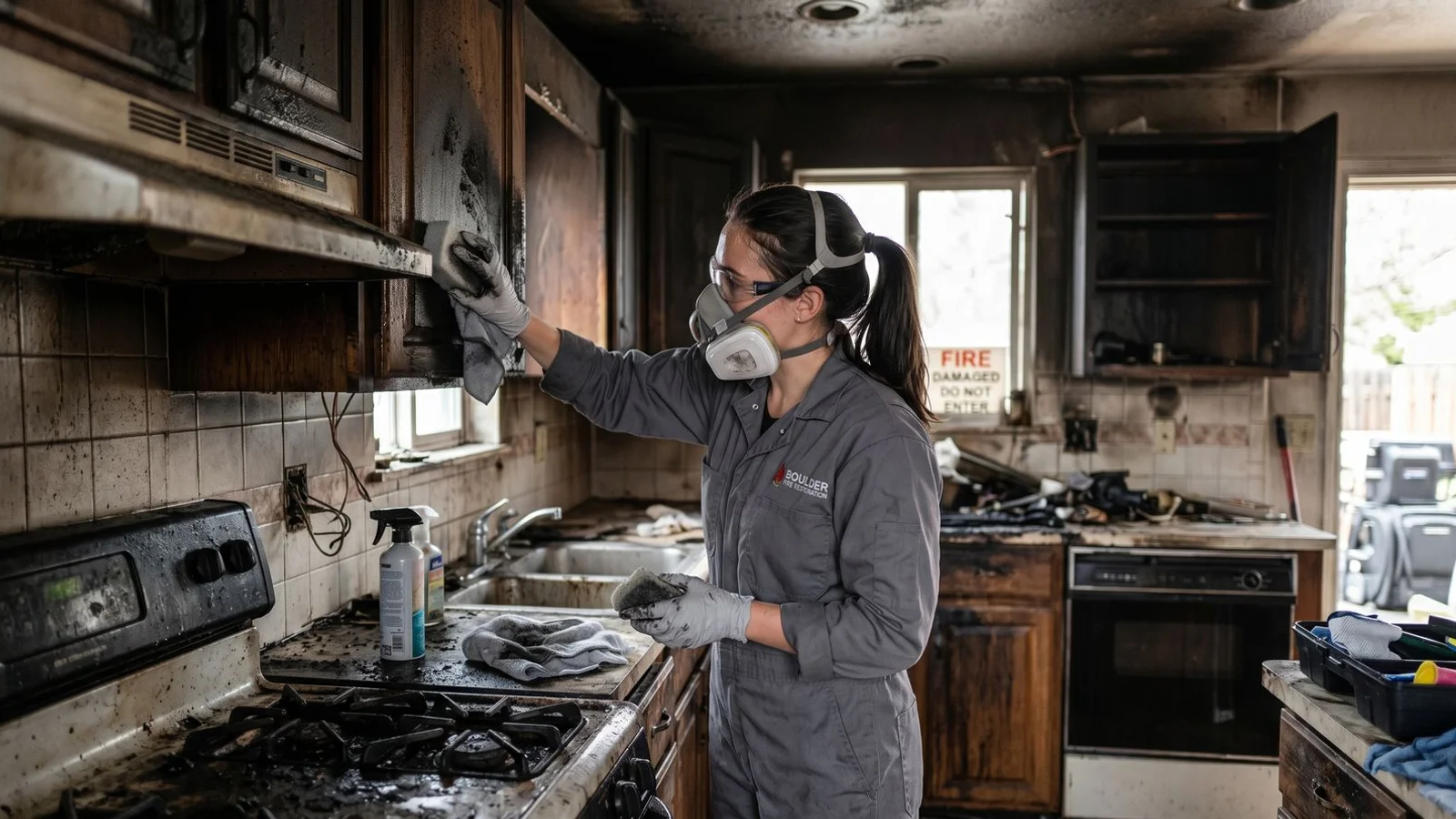
Kitchen fires are the most common home fire, and the most misunderstood
Have you ever stepped away from the stove for just a minute, only to return to a smoking pan? It happens to the best of cooks.
Unattended cooking actually causes about 49 percent of all residential fires in the US, according to recent National Fire Protection Association data. A forgotten broiler or cooking oil hitting a 400-degree smoke point can escalate incredibly fast.
Fortunately, most folks contain these everyday accidents quickly.
The lingering issue is what gets left behind. You might wipe down a slightly discolored stove area and think the job is done. A couple of days later, a strange smell fills your home and refuses to leave.
That stubborn odor is protein soot doing its quiet work. The financial impact is surprising, with US insurance providers noting average kitchen fire claims exceeding $73,000 in recent years.
We are Boulder Fire Restoration Pros, and we have served the Colorado Front Range for over two decades, specializing exclusively in kitchen fire restoration and smoke damage recovery. Seeing families struggle with this invisible residue is tough. I will walk you through exactly what this soot is and how you can get your home back to normal.
What protein soot actually is
When meat, grease, or oils combust, they release proteins and amino acids that condense onto every cool surface in the area. This residue deposits far beyond the kitchen.
The film is sticky, oily, and chemically aggressive. It is so thin that you can run a finger across a wall and feel absolutely nothing.
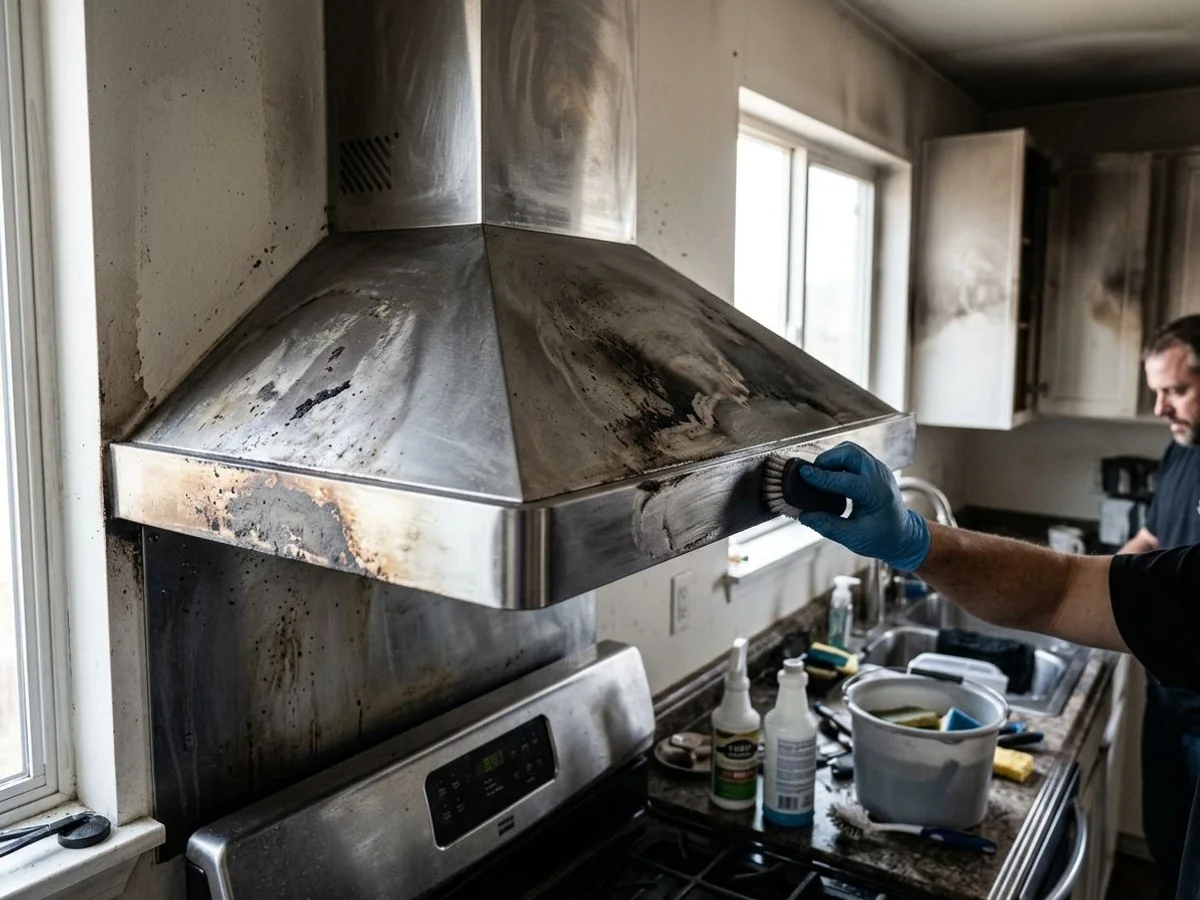
This invisible layer deposits everywhere the smoke traveled. You will find it on cabinet faces, cabinet interiors, the inside of the range hood, and the ceiling above the cooktop. It even reaches drawer interiors three rooms over and coats the inside of your HVAC ductwork.
The invisible chemistry of a grease fire
Smoke particles from a cooking fire are incredibly small, often measuring between 0.1 and 2.5 microns in size. To put that in perspective, these particles are tiny enough to bypass standard air filters easily. These aerosols are tacky by nature, acting like a glue that binds soot and odor molecules to your paint and cabinets.
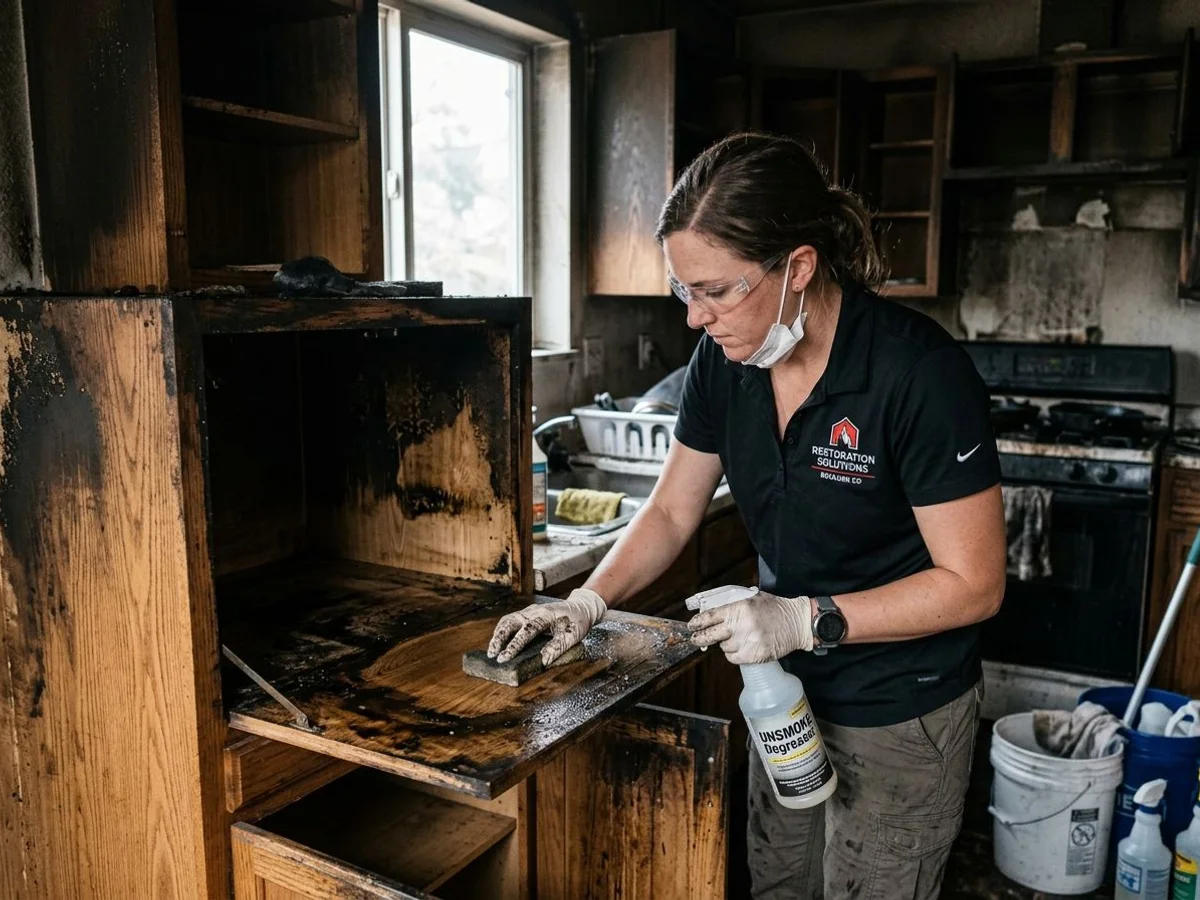
Our team often sees homeowners make things worse with ordinary cleaning. Wiping protein soot with a standard household cleaner usually smears it deeper into the surface. The friction releases more odor as it warms up and leaves visible, ugly streaking.
Why standard cleaners fail
The chemistry required to break down this mess is highly specific. You need a specialized, heavy-duty degreaser with a high alkaline pH, often level 12 or 13. Products like Serum SR or commercial-grade Krud Kutter are formulated to cut through this acidic, sticky residue.
The cleaning process must happen in a strictly defined sequence per surface. Using the right tool and chemical combination neutralizes the acids before they can permanently damage your home.
Why kitchen fires affect the whole house
The kitchen is usually a high-traffic, well-ventilated area, which is exactly why kitchen-fire smoke travels so far. Within minutes of the fire being put out, smoke residue has already started moving through the home.
Acidic soot begins etching surfaces and tarnishing metals within the first 24 hours. The migration happens through several common pathways:
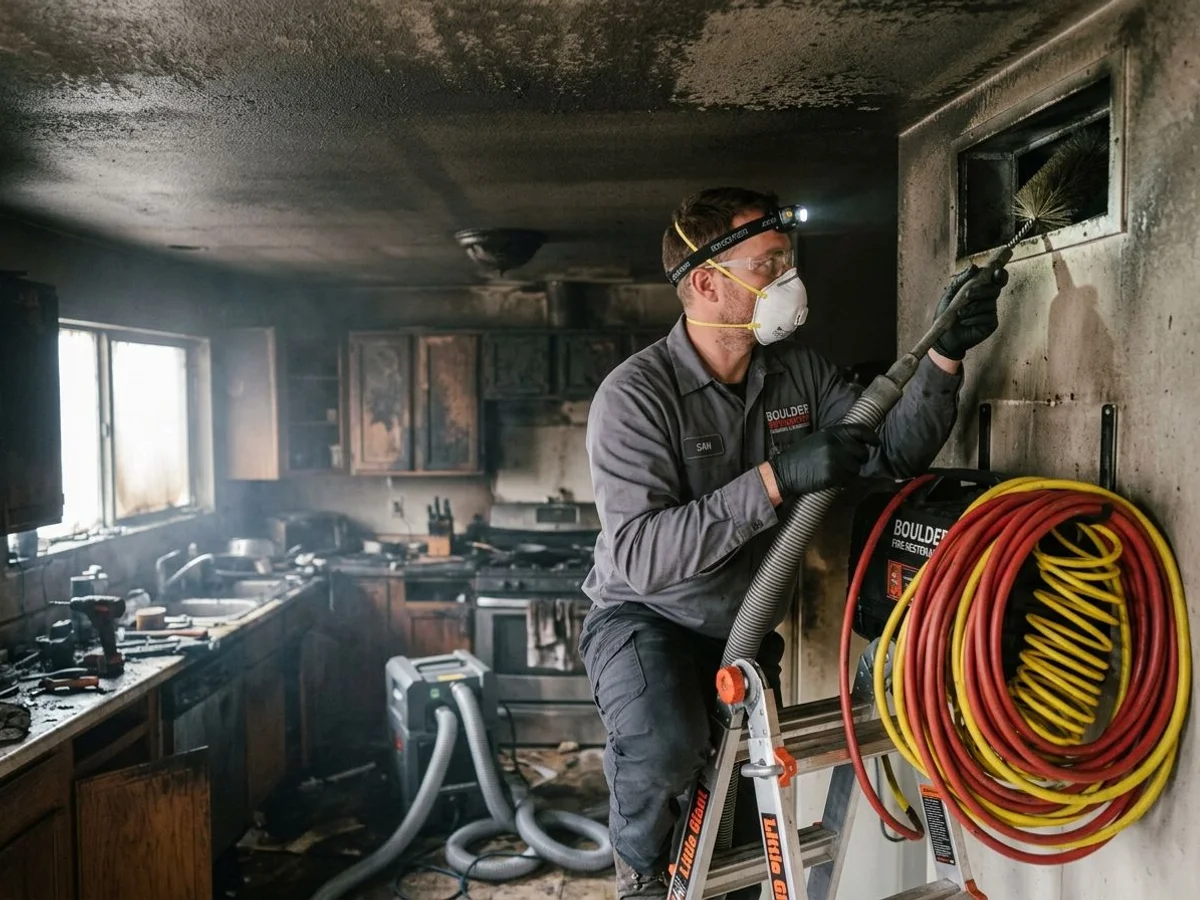
- The HVAC system. If the furnace or AC was running, smoke pulled into the air return and distributed throughout the house. Standard MERV 8 filters cannot stop fine smoke particles, allowing them to freely migrate through duct openings even with the system off.
- Open doorways. Anywhere there was airflow, smoke easily followed. A closet on the other side of the house often shows significant residue.
- Soft materials. Curtains, upholstery, bedding, and clothing all absorb the protein-soot odor far worse than hard surfaces do.
- Cabinet interiors. Smoke gets inside cabinets, drawers, and pantry items. The kitchen contents claim is often a meaningful part of the total US insurance loss.
This rapid spread is why our scope for kitchen fires always includes whole-house odor assessment, HVAC decontamination, and contents triage. Focusing solely on the visible burn area is a common, costly mistake.
Upgrading your home filter to a MERV 13 rating during the cleanup can help capture a meaningful share of the airborne particulates. Catching those lingering odors early makes a massive difference in your indoor air quality.
Cabinet, appliance, and countertop decisions
The biggest question on a kitchen-fire claim is usually about saving the cabinets. Often, the answer is a resounding yes.
Solid-wood cabinet boxes can typically be degreased, sealed, and beautifully refinished. Doors and drawer fronts can sometimes be cleaned, while other times they need individual replacement.
The financial impact of saving cabinets
A full kitchen cabinet replacement in the US currently averages between $15,000 and $30,000. Professional refacing or refinishing usually ranges from $4,000 to $9,500, offering a massive savings opportunity. Particleboard cabinetry that absorbed grease and moisture is usually the exception and requires full replacement.
We document the decision cabinet-by-cabinet for your insurer to maximize your budget. Providing detailed evidence prevents the insurance adjuster from defaulting to a full kitchen replacement when a simple, cost-effective refinishing works perfectly well.
Assessing appliances and countertops
Appliances follow a very similar logic. Range hoods almost always need replacement after a stovetop fire due to melted wiring and deep soot packing.
Ranges, ovens, and microwaves usually clean up beautifully unless the fire reached the internal electrical components. Refrigerators usually clean up well, but the rubber gaskets and any food inside require a separate decision.
Your countertops depend heavily on the material involved. Natural stone usually cleans up nicely, while laminate often does not survive the heat.
How the work ties together
Our kitchen fire restoration process combines smoke damage cleanup, smoke odor removal, and fire content restoration under one focused project. The cleanup crew tackles the heavy protein soot in the kitchen and the adjacent rooms.
The odor team treats the HVAC system and any porous materials that absorbed the smell. Simultaneously, the contents team handles cabinet contents, pantry items, and soft goods that need specific pack-out or replacement decisions.
Phased restoration timeline
A structured timeline prevents secondary damage from ruining your home. If untreated firefighting water sits for 48 to 72 hours, it quickly turns into a serious mold problem.
| Restoration Phase | Typical Timeline | Action Required |
|---|---|---|
| Emergency Mitigation | First 24 Hours | Board-up, water extraction, and ventilation. |
| Acidic Soot Removal | Days 1 to 3 | Deep chemical cleaning of surfaces and metals. |
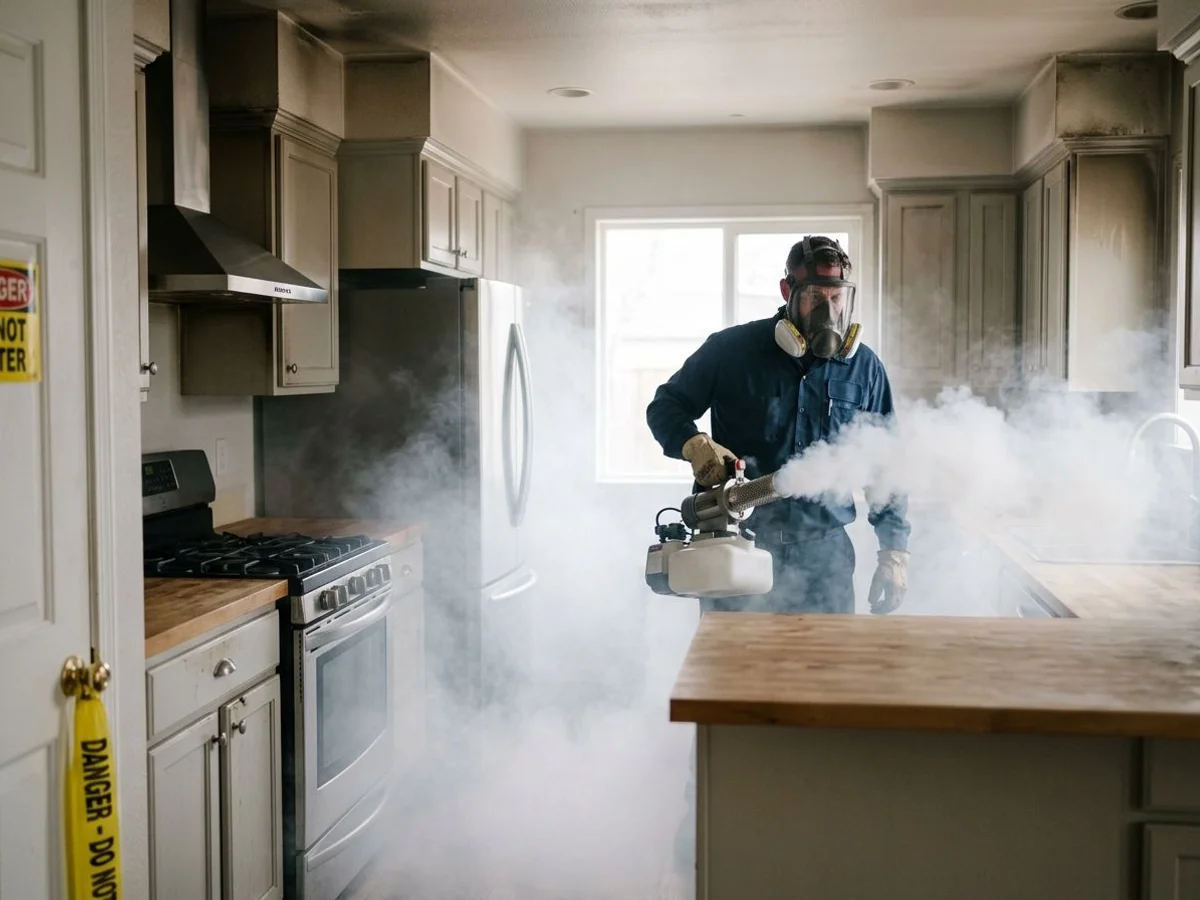
| Odor Neutralization | Days 3 to 5 | HVAC decontamination and thermal fogging. |
| Structural Repairs | Weeks 2 to 6 | Cabinet refacing and drywall patching. |
If the fire reached structural components or required complete cabinet replacement, we smoothly extend the job into fire damage reconstruction on the exact same project. You get one dedicated project manager, one solid warranty, and one final walkthrough at the very end.
Don’t wait on a kitchen fire restoration project. The cleanup window where things stay easy is measured in days, not weeks.
Reach out to a professional immediately to protect your home and your peace of mind.