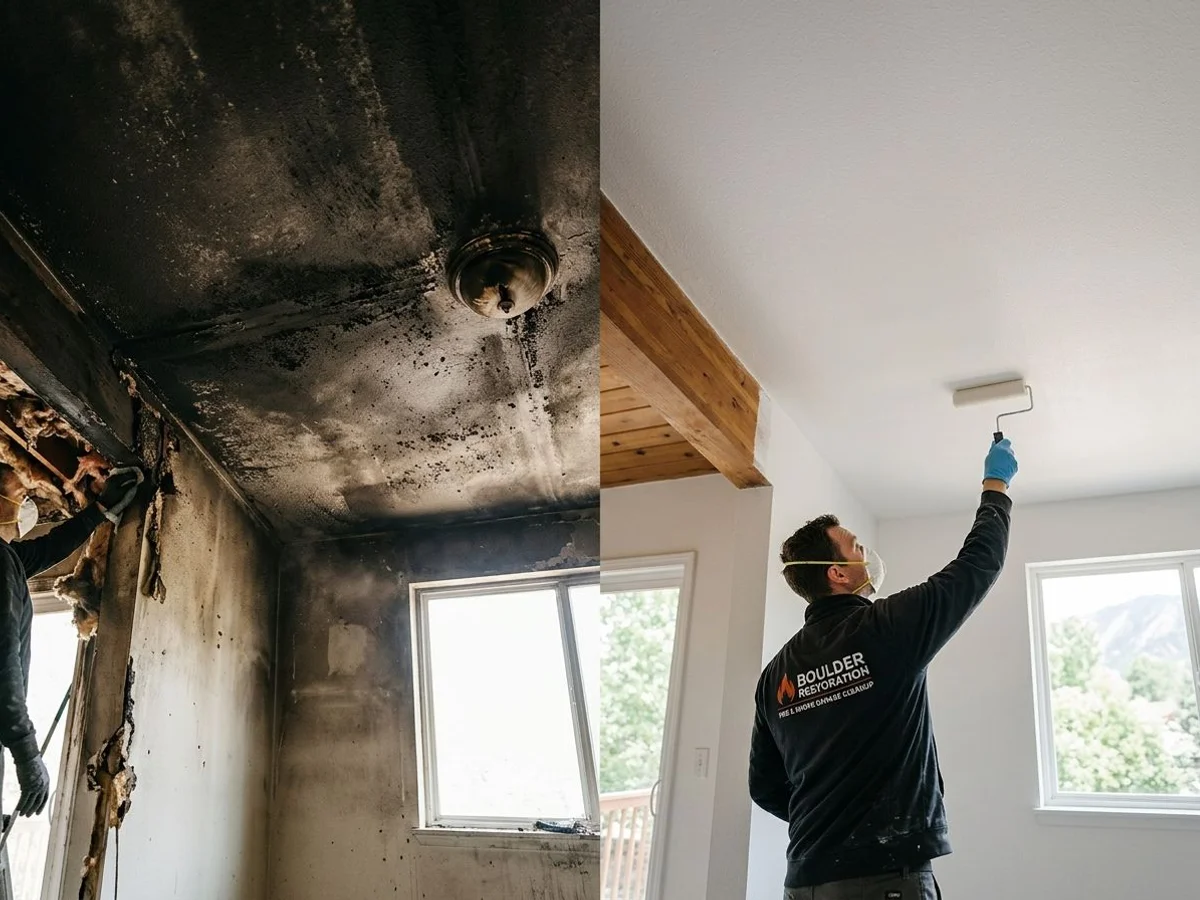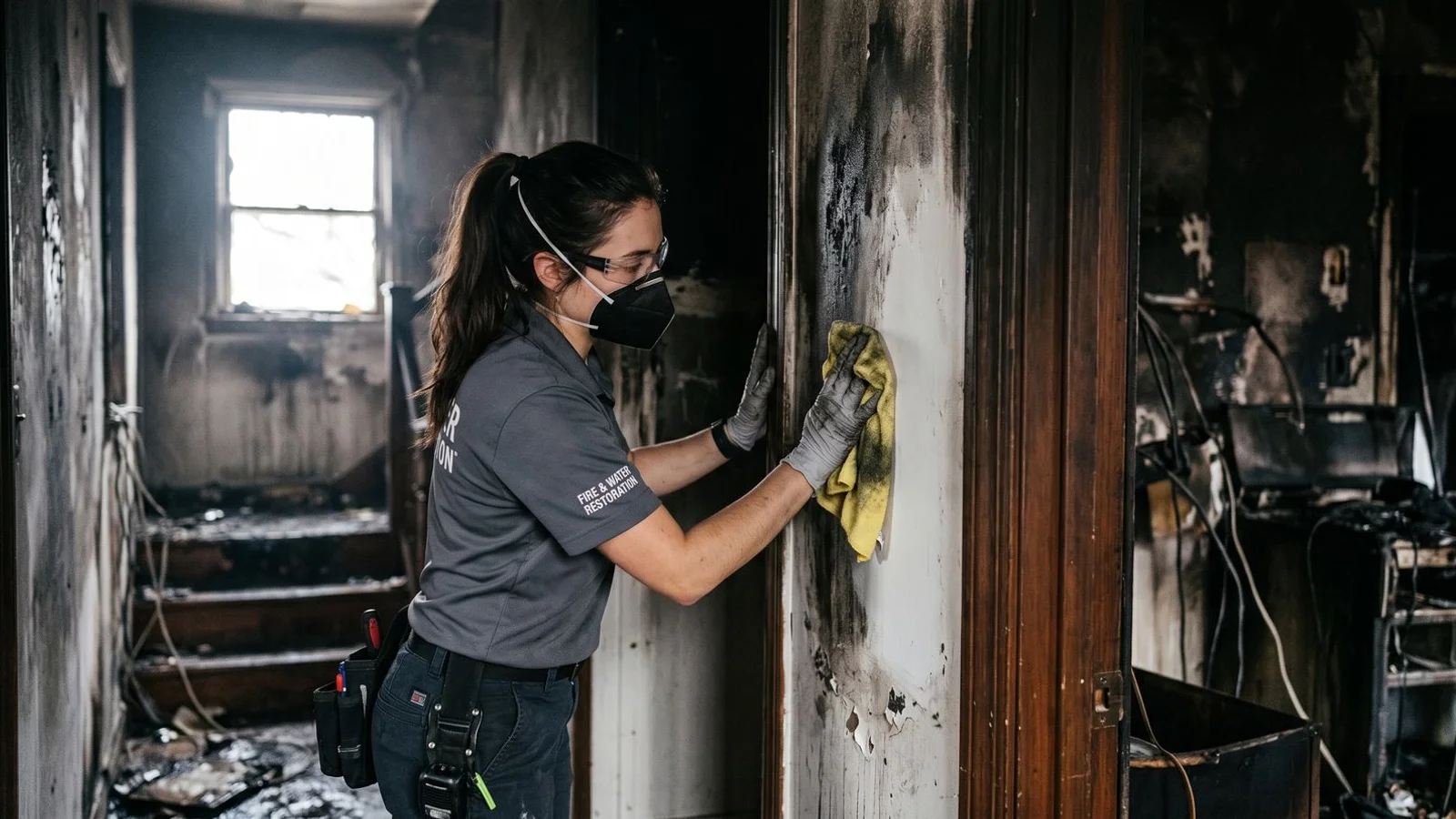
Have you ever walked back into your house after a small fire and thought the worst was finally over? It is a terrible feeling to see your space covered in a dark film. The biggest misunderstanding about Smoke Damage Cleanup is thinking soot is just a regular cleaning problem. It definitely is not.
Soot is actually the residue of incomplete combustion. Depending on what burned, this powdery layer can be highly acidic, oily, sticky, or all three.
Left alone for just 24 to 48 hours, this acidic residue begins to permanently etch glass and corrode uncoated metals like brass and aluminum.
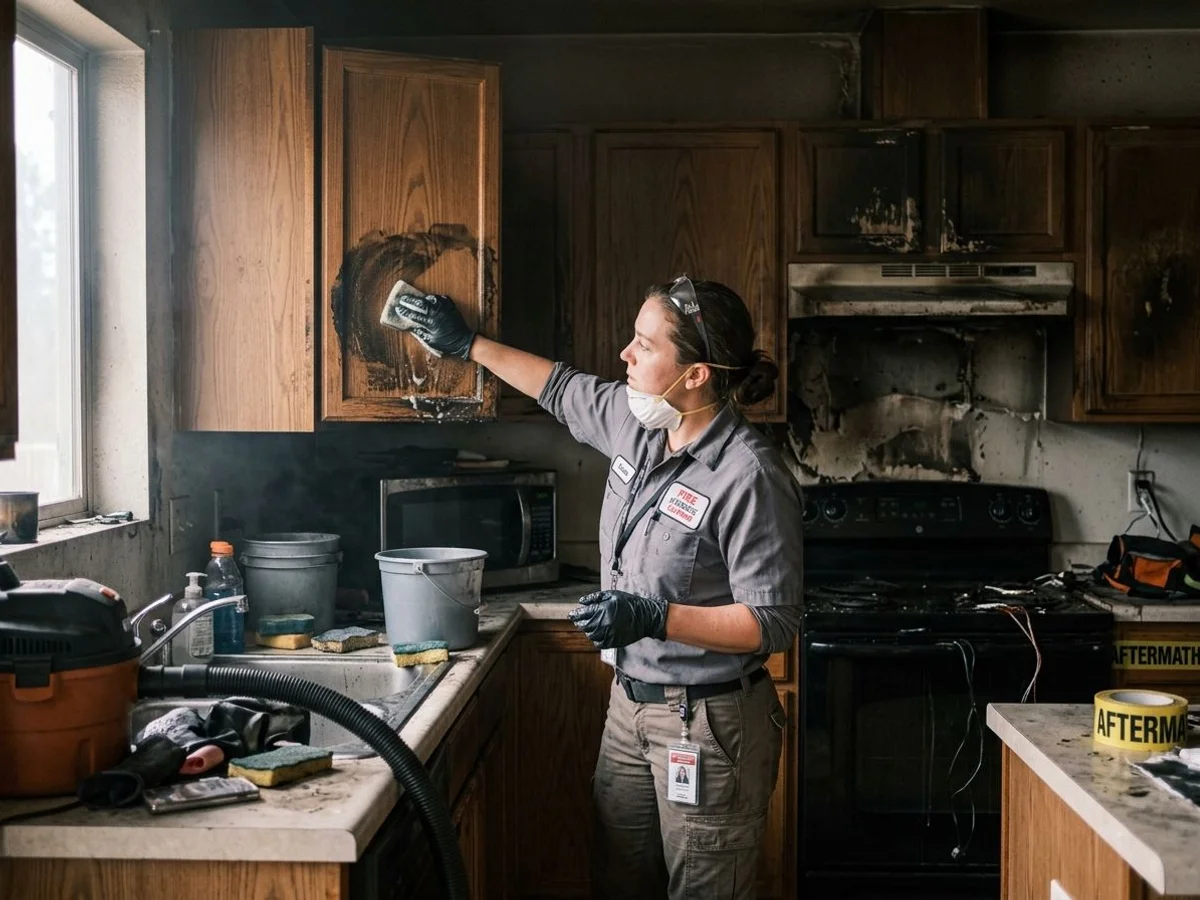
We understand how tempting it is to grab a wet rag and start wiping down the walls. Please do not do this. Scrubbing can smear the residue deeper into porous materials, making the stain permanent and sometimes even complicating your insurance claim.
Our team is here to guide you through the right way to handle the mess. Let’s walk through the exact steps you need to take to restore your home safely.
Soot type drives method
Our team always assesses the specific kind of fire you experienced before choosing a cleaning solution. The newly published 2025 ANSI/IICRC S700 Standard of Care provides strict industry guardrails for exactly which tools and chemicals to use. We know that using the wrong approach is a recipe for disaster. Walking into a fire-damaged home, the first thing technicians do is identify the residue. Our experts understand that applying a wet solvent on protein soot, or a dry sponge on wet soot, will just smear the black residue deeper into your drywall. There are four primary soot types, and each one requires a very specific approach:
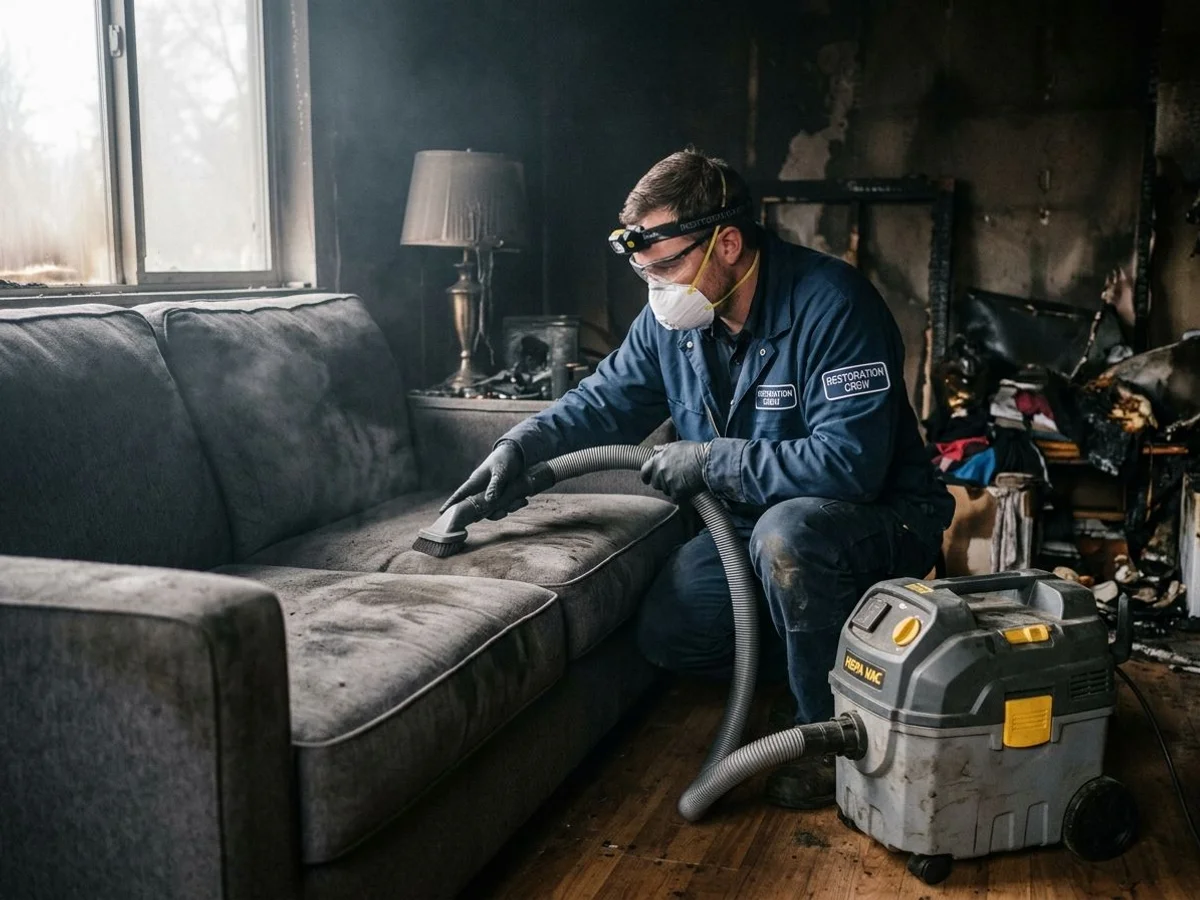
- Dry soot. Fast, high-temperature fires (like burning paper or wood) leave a powdery residue. We use a specialized dry-chemical sponge made of vulcanized rubber to lift this residue without pushing it into the paint.
- Wet soot. Low-temperature smoldering of synthetics and rubber leaves a sticky, pungent residue. Our technicians utilize high-alkaline degreasers (like Benefect Atomic Degreaser) for a much deeper clean.
- Protein soot. Kitchen grease fires leave an almost invisible protein film that ordinary cleaners cannot cut through. We strictly require specialized enzymatic cleaners because this film carries an intense odor that travels everywhere.
- Oil soot. Furnace puffbacks deposit heavy, sticky fuel-oil soot that contains harmful carcinogenic compounds. Our protocols make professional personal protective equipment mandatory, and surface restoration is highly technical.
Why HVAC decontamination is mandatory, not optional
We know you want the air in your home to feel fresh and safe again. Smoke always takes the exact same paths that your normal air takes. Our experience shows that a massive amount of soot residue is now sitting inside your ductwork, coating the air handler, and clogging the filter. If a system runs without a thorough cleaning, the trapped smoke residue can persist in your ductwork indefinitely, constantly off-gassing harmful particles.
We follow the strict ACR 2025 Standard set by the National Air Duct Cleaners Association (NADCA) to ensure your system is perfectly clear. If professionals clean every wall and ceiling but leave the duct system alone, the first time your furnace or AC kicks on, it blows that toxic residue right back into every room. Our Smoke Damage Cleanup process makes HVAC decontamination a mandatory part of every project. The first step always involves replacing all contaminated filters.
Setting the System Under Negative Pressure
We use advanced HEPA vacuums and heavy-duty brushes to scour the ductwork. The entire system is placed under negative air pressure during the cleanup. Our team relies on this critical step to ensure that the machine pulls dirty air safely outdoors instead of recirculating it into your living space. From there, the handoff to smoke odor removal is incredibly smooth. We provide the same dedicated crew and the same project manager to handle every detail.
Dry-ice and soda blasting for exposed framing
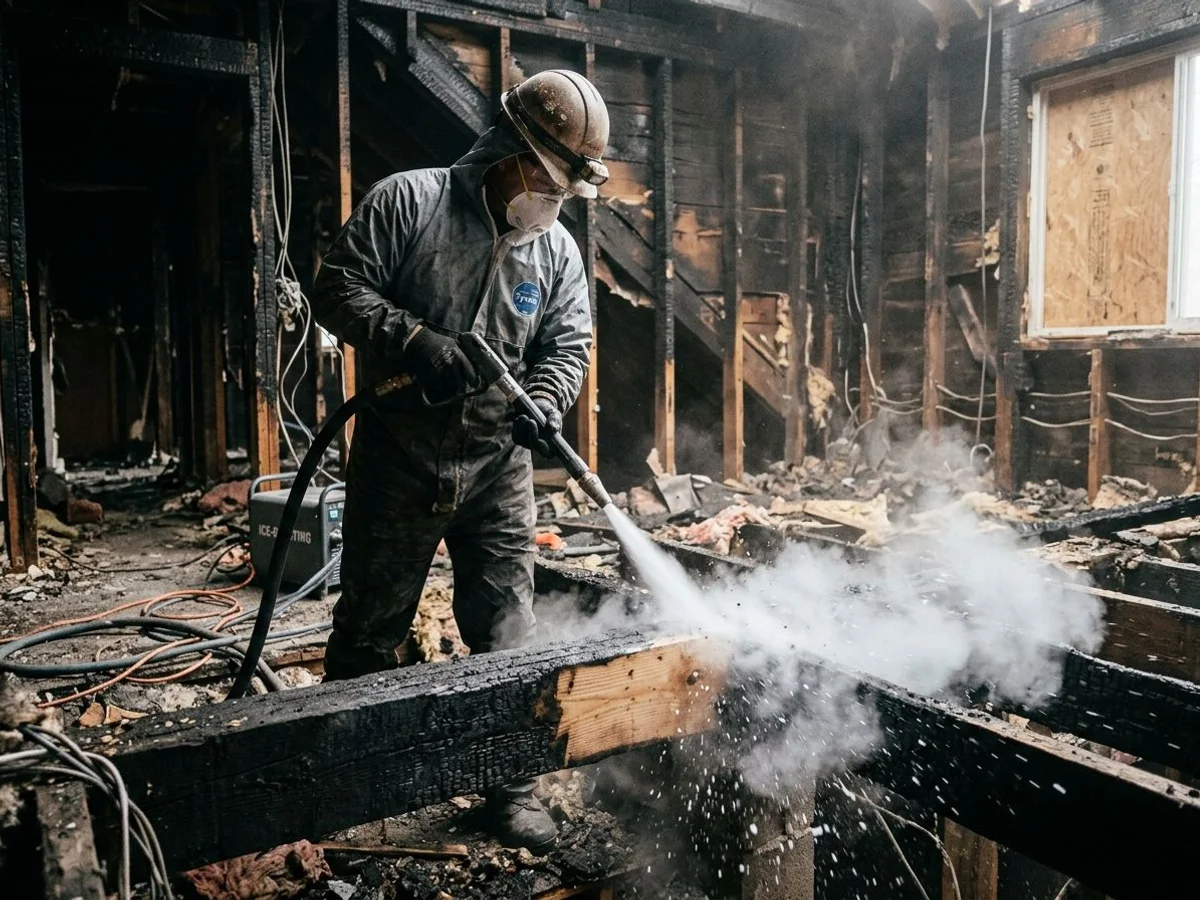
We often have to bring drywall down to the bare studs in cases of severe fires. The exposed wood framing itself is usually completely coated in a thick layer of soot. Our crews know that wiping this raw, porous lumber with chemical solvents is incredibly slow and rarely gets the job done right.
This is where advanced technology saves the day. We utilize dry-ice blasting, which uses solid CO2 pellets accelerated to supersonic speeds to blast the wood. When these freezing pellets hit the wood, they experience instant sublimation, turning immediately into a harmless gas. Our team loves this method because it creates zero secondary waste, unlike water or sandblasting. The kinetic impact and extreme cold lift the soot completely off the wood without grinding down or abrading the lumber.
| Cleaning Method | Restoration Speed | Secondary Waste Left Behind |
|---|---|---|
| Dry-Ice Blasting | 7 to 10 sq. ft. per minute | None (Instant Gas Sublimation) |
| Hand Sanding | Very Slow | Toxic Soot Dust |
| Chemical Wiping | Slow | Used Rags and Dirty Solvents |
We can leave your framing beautifully clean, fully deodorized, and perfectly prepared for sealing. If your fire required structural exposure, this dry-ice technique speeds up the entire reconstruction process by several weeks. Our project managers will simply coordinate this blasting directly into your fire damage reconstruction schedule.
What to do before we arrive
We want you to stay perfectly safe while you wait for the trucks to pull into your driveway. Please do not touch or wipe any soot-covered surfaces. Our insurance experts warn that scrubbing walls yourself can actually result in your insurance company denying a portion of your payout, as it is often viewed as altering the hidden damage.
Your phone is your absolute best friend right now. We highly recommend filming a slow, narrated video walkthrough of every affected room before you move a single item. Record the brand names, models, and visual condition of your ruined belongings. Our team suggests using a digital tool like the Scr.APP.book app, created by the National Association of Insurance Commissioners (NAIC), to quickly catalog your losses. Start building a detailed inventory list of any contents you know were affected.
Do not run your HVAC system or open windows unless the fire department explicitly instructed you to do so.
We rely heavily on the photos and videos you take on day one. This documentation rigor feeds directly into our insurance claims workflow, ensuring you get the maximum possible benefit from your policy. We are ready to start your Smoke Damage Cleanup today, so give our team a call right now to get the restoration process started.