What Is the Fire Content Pack-Out Process?
How fire content pack-out works — cataloging, digital inventory, climate-controlled storage, and the return process — documented for insurance.
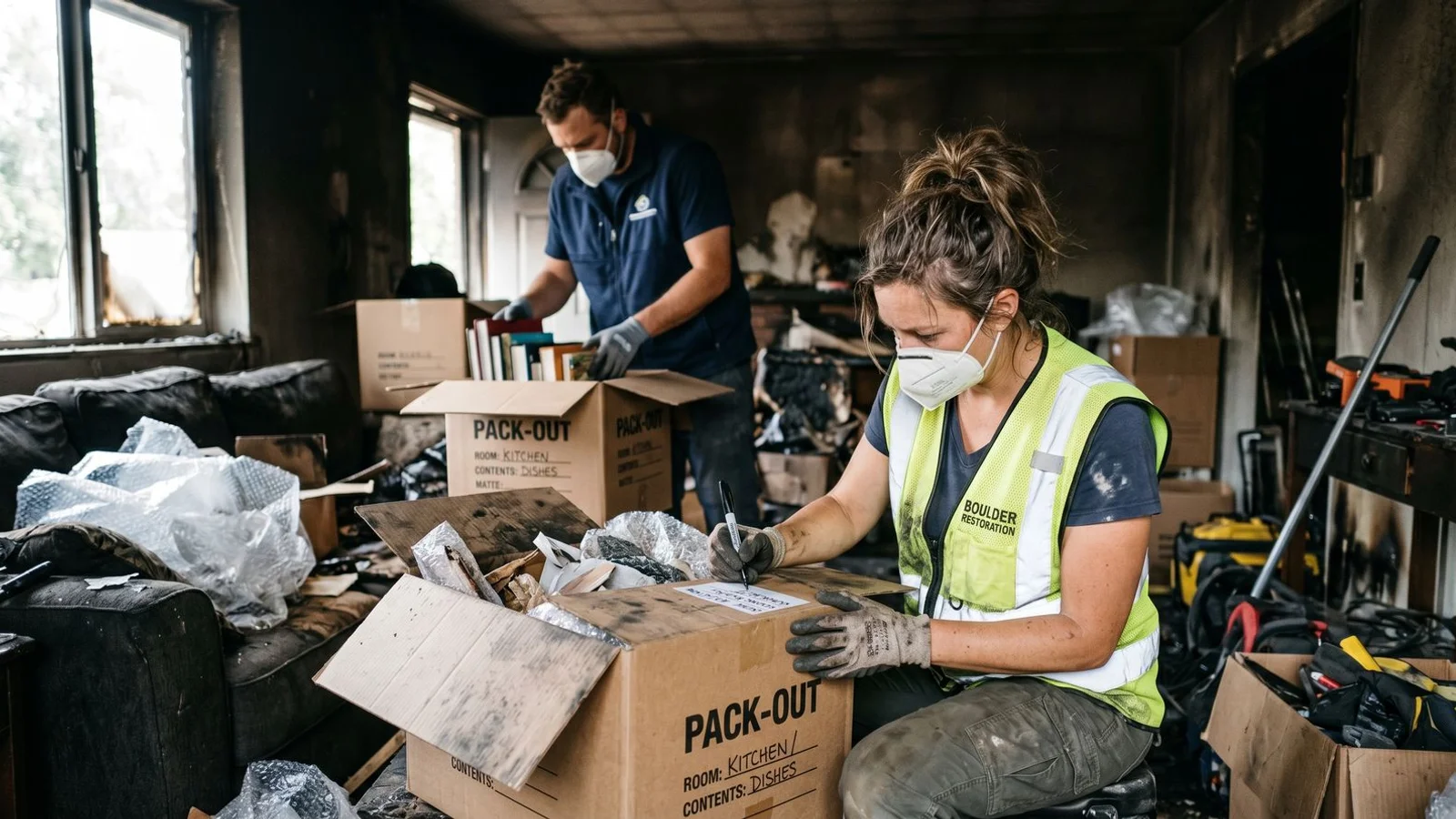
A pack-out is more than moving boxes
You know how quickly a kitchen flare-up coats the entire house in an oily film.
Our team at Boulder Fire Restoration Pros has seen soot start corroding metal on electronics in as little as 24 hours. The fire damage pack out process is the exact strategy used to stop that secondary destruction. Done right, a documented extraction is the single biggest predictor of how much of your stuff comes home intact.
We remove, inventory, and secure your belongings in a climate-controlled space before the structural work begins as a core part of our fire content restoration service. Let’s look at the data, what it actually tells us, and how this relocation protects your investments.
How the fire damage pack out process actually works
The removal process requires a strict sequence of steps to protect your belongings from further degradation. We follow five sequential phases to stabilize and document every item. Industry standards from the IICRC dictate this exact workflow for a successful recovery.
1. On-site triage
Before a single box is packed, a project manager walks the property with you to perform an initial assessment. We sort every item into three distinct categories based on cleanability. This triage phase aligns with 2026 IICRC S700 standards for prioritizing recovery efforts. Irreplaceable sentimental items get specialized priority handling so they avoid sitting in a contaminated environment.
Our crews immediately isolate high-priority targets like legal documents and financial instruments. Medications, passports, and a few personal essentials come out separately and stay with you. You should leave contaminated textiles behind for professional laundering.
We see many homeowners make the mistake of grabbing smoke-tainted clothing to take to a clean hotel room. This transfers sticky, highly acidic soot directly into your temporary living space. A clear separation prevents cross-contamination.
2. Digital inventory with photos
Modern documentation relies heavily on specialized software rather than clipboards and hand-written tags. We utilize advanced restoration platforms like Encircle or iCat Contents Management to photograph and barcode every single item leaving the property. These systems use artificial intelligence to pull exact model and serial numbers directly from data tag photos.
A digital inventory creates the exact line-item count that US adjusters require to process a Coverage C personal property claim. Our technicians capture pre-existing damage notes, assign unique QR codes, and share the cloud-based list with your insurance company. This verifiable chain of custody drastically reduces the chance of disputes over missing or damaged goods.
The software captures several critical data points for every packed box:
- High-resolution photos of the item and its current condition.
- A scanned QR label identifying the specific storage location.
- Extracted model numbers from electronic data tags.
- Categorization notes for the insurance carrier.
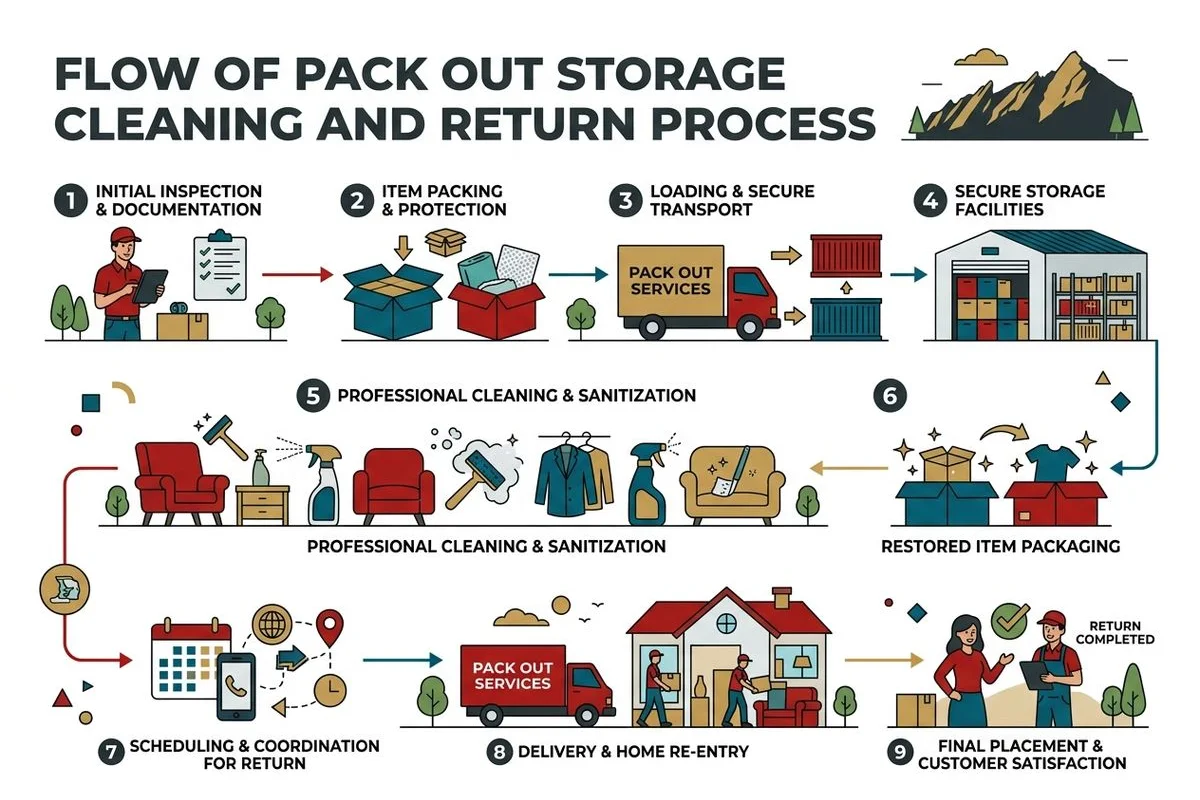
3. Pack-out to climate-controlled storage
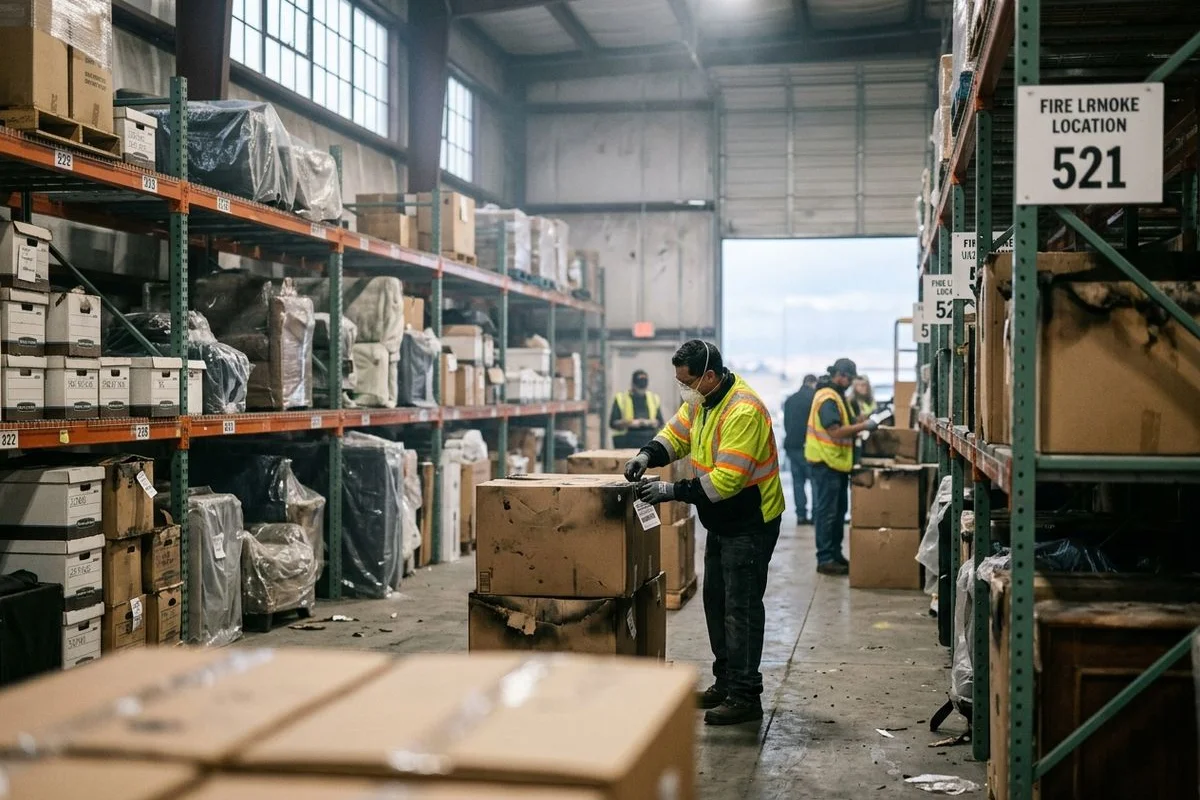
Standard self-storage units simply cannot provide the environmental stability required for fire-damaged goods. We crate, label, and transport everything to a specialized climate-controlled warehouse designed specifically for disaster recovery. Moving your possessions to a secure facility immediately halts the ongoing chemical reactions caused by smoke.
Uncontrolled humidity above 60 percent combined with acidic soot will aggressively corrode copper contacts on circuit boards within days. Our storage protocols maintain steady temperatures to stabilize sensitive electronics and artwork. A warm warehouse accelerates smoke absorption into porous materials and causes wood veneers to separate.
| Storage Condition | Standard Self-Storage | Climate-Controlled Restoration Storage |
|---|---|---|
| Temperature | Fluctuates wildly with outside weather | Maintained strictly between 65-75°F |
| Humidity Levels | Unregulated (exceeds 60% easily) | Kept below 50% to prevent mold and corrosion |
| Security & Tracking | Basic padlock access | 24/7 monitoring and barcoded inventory control |
Strict environmental regulation stops this secondary damage entirely. We monitor these indoor conditions around the clock. The regulated environment also prevents mold from colonizing on wet documents while structural restoration continues at your house.
4. Off-site cleaning
Every item goes through a highly specific decontamination process once it reaches the warehouse. We sort materials into dedicated runs to apply the correct chemical treatments and machinery. The technicians use specific technology for different asset classes:
- Ultrasonic Baths: Omegasonics machines use high-frequency sound waves to lift soot from intricate hard goods.
- Freeze-Drying Chambers: Wet documents and books are dried under a vacuum to prevent mold and ink bleed.
- Esporta Wash Systems: Specialized commercial laundering restores heavily soiled textiles and soft goods.
- De-ionized Washing: Electronics are carefully flushed to remove conductive soot before functional testing.
You should never turn on any electronic device after a fire, because unseen soot residue will instantly short out the motherboard. We make sure every item is re-photographed after its respective cleaning cycle to document the successful restoration. This proof of recovery satisfies the insurance requirements.
5. Return and re-placement
Your belongings stay safely warehoused until the structural repairs at your house are fully finished. We coordinate the return delivery so that freshly cleaned furniture and boxes arrive at a dust-free, fully restored home. The moving crew carefully places items back into their original rooms and configurations whenever possible.
The final phase involves verifying the success of the recovery. Our project managers guide you through a final walkthrough to review the condition of the delivered goods. You sign a chain of custody release to close out the digital inventory and confirm everything matches the documentation. This final signature acts as the definitive proof that the fire damage pack out process was successfully completed.
What pack-out documentation does for your insurance claim
A thoroughly documented inventory forces the insurance company to evaluate your loss accurately and fairly. We see adjusters approve Coverage C personal property claims much faster when they receive undeniable proof of ownership and condition. The 2026 inflation rates have driven replacement costs up significantly, making accurate claim payouts more crucial than ever.
Standard US homeowners policies usually cap personal property coverage at 50 to 70 percent of your total dwelling limit. Our digital reports provide the exact data the carrier needs to calculate these figures without guesswork. A professional pack-out inventory generates the following critical documentation:
- Photographic proof of every item, its pre-existing condition, and its damage category.
- A verifiable line-item count that directly maps to your specific policy coverage limits.
- Formal salvage determinations that definitively prove which items survived and which require replacement.
- A strict chain of custody tracking the item from the initial removal through the final return.
Incomplete documentation gives the insurance company leverage to settle for a depreciated actual cash value instead of the full replacement cost. We ensure your documentation is bulletproof so you never have to settle for less than your real loss. Proper records remove the burden of proving what existed before the disaster struck.
What stays with you, what comes with us
Certain essential items must remain in your possession during the temporary relocation. We always leave you with your daily medications, critical legal documents like passports, and any laptops necessary for remote work. Taking too many items from a contaminated home is a common trap that many families fall into.
A major mistake is packing up smoke-exposed clothing or bedding to take to your temporary housing. Our team highly recommends leaving all porous materials behind for immediate professional laundering. Tossing a soot-covered sweater into your car will instantly spread an aggressive, toxic odor to the vehicle’s upholstery.
You should keep a few specific personal essentials close by:
- Prescribed medications and medical devices.
- Passports, birth certificates, and property deeds.
- Clean electronics necessary for immediate remote work.
- Highly sentimental items that survived intact.
Everything else needs to go to the specialized facility. We manage the heavy lifting so you can focus on getting your family settled. For an in-depth breakdown of what typically survives, see what’s salvageable after a fire.
The scope of cleaning required depends heavily on the heat of the fire and the type of smoke produced. Our technicians can outline the exact recovery timeline for your specific situation, treating every asset class with the same documented care.
Taking immediate action protects your most valuable possessions from irreversible acidic damage.
We are ready to help you secure your property today. Call our dispatch center to schedule an emergency assessment and start your fire damage pack out process.
Frequently asked questions
What is a pack-out? +
A pack-out is the controlled removal, cataloging, and storage of your belongings during fire restoration. Items leave the property, get cleaned off-site, and return when restoration is complete — under documented inventory throughout.
Where are my belongings stored? +
In climate-controlled warehouse facilities, organized by your job and tracked by digital inventory. Climate control prevents further smoke absorption and damage during the restoration period.
Is pack-out covered by insurance? +
Typically yes. Pack-out, off-site cleaning, storage, and return are standard line items in fire restoration scoping under most homeowner policies. We document the entire process for your claim.
Need help with fire or smoke damage in Boulder?
24/7 emergency response with a 60-minute guarantee across Boulder County. Call our team — we'll secure your property and walk you through the next steps.