How Long Does Rebuilding After a Fire Take?
Fire rebuild timelines depend on scope, permits, and inspections. Phase durations, what causes delays, and how we keep milestones on track.
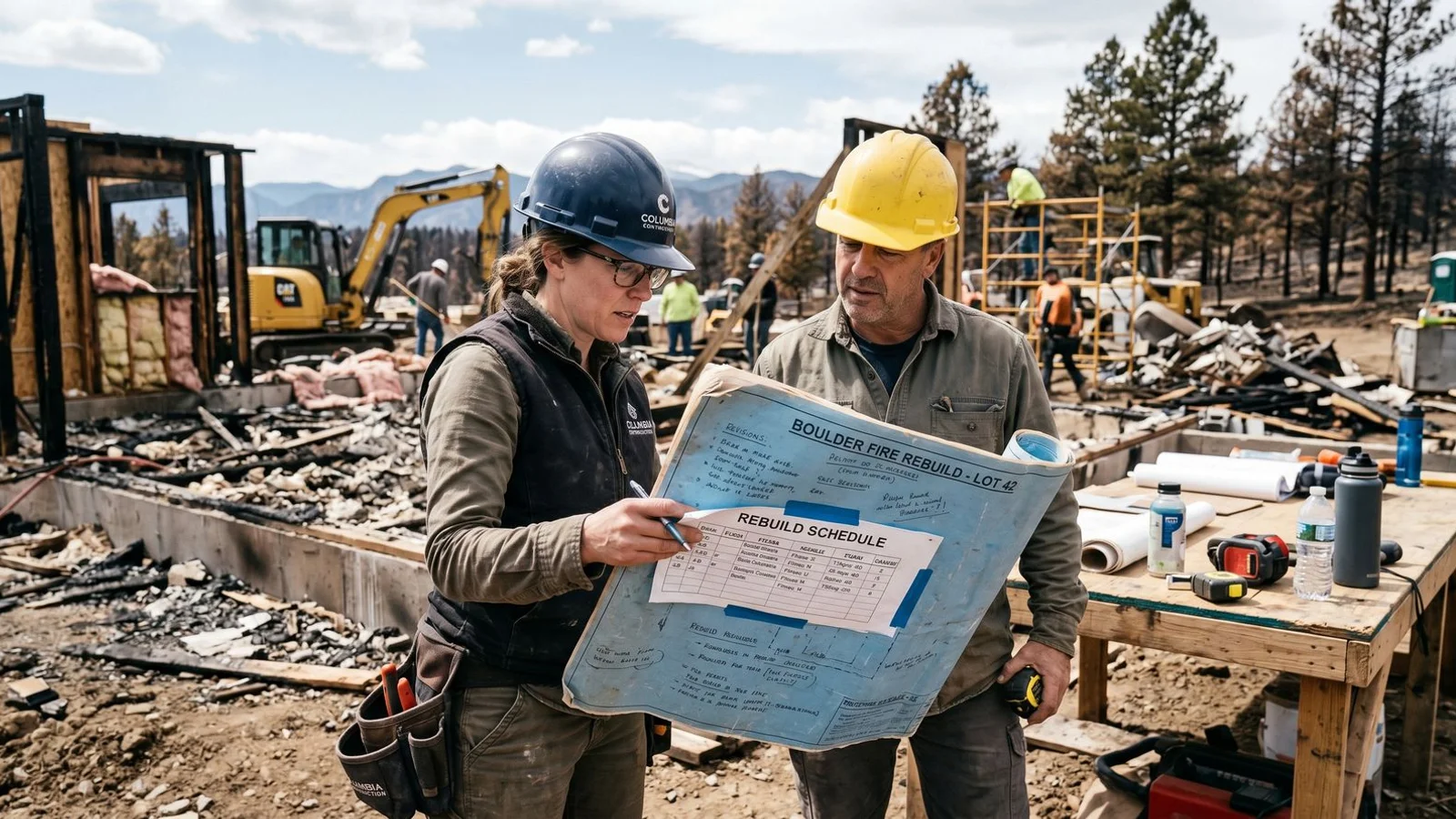
You are likely exhausted from the initial shock and just want to know how long to rebuild after fire damage. From what we have seen handling these claims, homeowners always want one single number, but the honest answer is a realistic range based on the scope. We know that ambiguity is frustrating.
However, treating the schedule as a flexible framework rather than a fixed deadline is the secret to avoiding constant disappointment. Let’s look at the actual timelines we are seeing in 2026, explain the variables that cause delays, and outline exactly how to track your progress.
Here is what to expect by scope.
How Long to Rebuild After Fire: Realistic Ranges by Scope
Our team sets baseline expectations using historical data from previous local projects. The table below outlines the general house rebuild time fire victims experience based on the damage severity.
| Damage Scope | Average Timeline | Typical Permit Requirements |
|---|---|---|
| Single-room cosmetic rebuild (no structural impact) | 2-6 weeks | Often minimal, trade-specific permits |
| Multi-room finish rebuild (drywall, flooring, finishes) | 6-10 weeks | Standard building permit |
| Major structural rebuild (framing replacement in part of the home) | 8-16 weeks | Structural engineering review |
| Whole-house structural rebuild | 4-7 months | Full review, potential Site Plan Review |
| Total-loss rebuild from foundation | 8-12 months | Complete teardown and new build permits |
We base these ranges on standard material lead times and current Boulder County permit processing speeds. Homeowners rebuilding the exact same structure lost in a fire can often expedite the permit process. Property owners committing to additional wildfire resiliency measures sometimes bypass the lengthy Site Plan Review entirely. Our experience shows that specialty scopes, like importing structural steel or unique tile, will always push these timelines to the upper end.
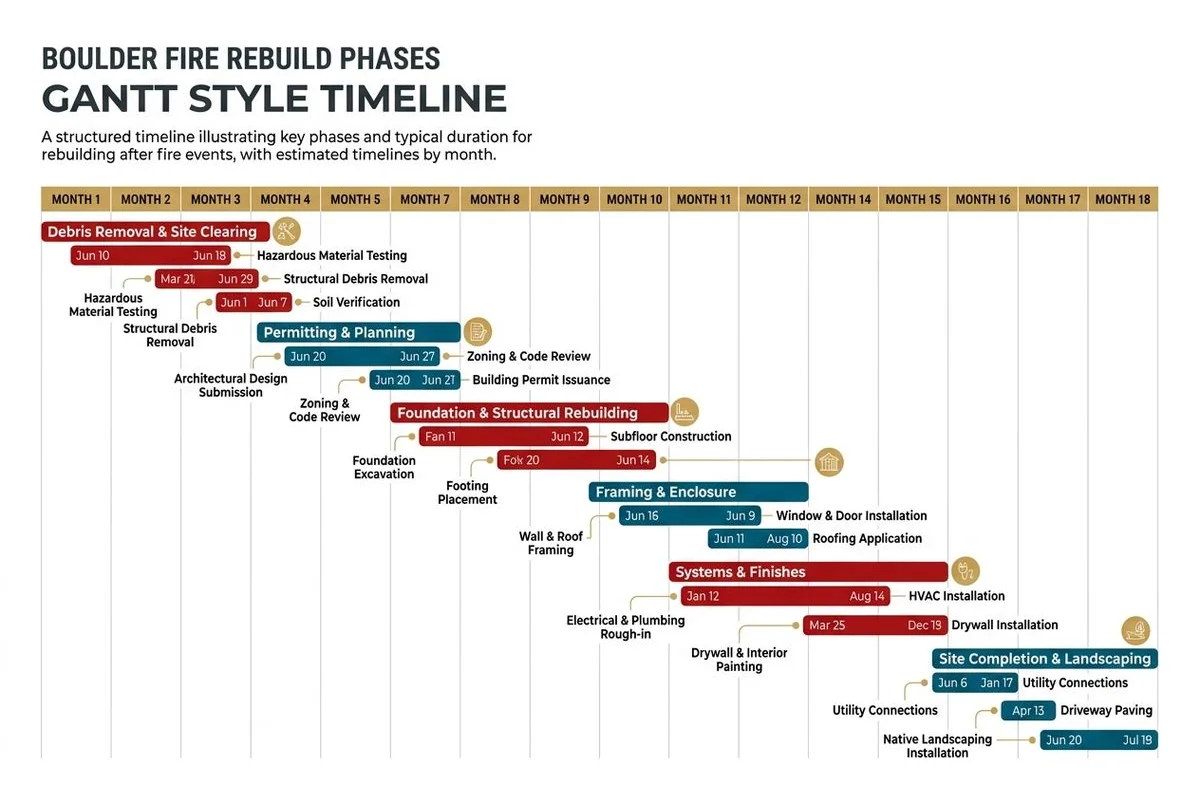
Phase-by-phase durations
Breaking a four-month project into distinct phases helps make the fire rebuild timeline feel more manageable. We always remind clients that many of these steps overlap. Your total project time is usually shorter than the sum of its parts.
Our project managers track these specific milestones to keep the build moving forward. The typical schedule breaks down roughly into two main categories.
Initial Clearance and Framing Phases
Getting the site safe and structurally sound is the first major hurdle. We must strictly follow Colorado Air Quality Control Commission Regulation 8 during the early demolition phase. This law requires a Colorado-certified inspector to test for asbestos if we remove more than 32 square feet of material. Discovering hazardous materials will temporarily halt the main crew while a certified abatement contractor safely removes the threat.
- Demo and assessment: 1-2 weeks to clear debris safely.
- Asbestos and lead handling: 1-2 weeks if triggered by state regulations.
- Permit pull and approval: 2-4 weeks, often running parallel with demolition.
- Framing and structural work: 3-5 weeks to rebuild the skeleton of the house.
Interior Systems and Finishing Phases
Once the framing passes inspection, the interior work begins to make the house look like a home again. Our primary goal during this half of the project is coordinating the various specialty trades to avoid downtime. Electricians, plumbers, and drywall installers follow a tight sequence. You will start to see rapid visual progress as the rooms take shape.
- MEP rough-in and inspections: 2-3 weeks for mechanical, electrical, and plumbing systems.
- Drywall, paint, and trim: 4-6 weeks to finish the interior walls.
- Flooring, kitchen, and bath finishes: 3-5 weeks for the final cosmetic details.
- Final inspections and punch list: 1-2 weeks to ensure perfect quality.
What slows projects down
Every construction project faces potential roadblocks. We proactively build buffer time into your original schedule, but specific variables can still cause delays. Understanding these bottlenecks early helps you make faster decisions during the rebuild.
Regulatory and Testing Delays
Our scheduling accounts for the fluctuating workload at the local building department. Complex structural repairs naturally take longer to approve than simple cosmetic fixes. We coordinate with local officials to push paperwork through as efficiently as possible. Older properties face additional hurdles with mandatory testing for lead and asbestos.
Discovery and Insurance Hurdles
We frequently discover compromised framing or hidden soot once the drywall comes down. Smoke and water from fire hoses often travel far beyond the initial visible damage. Our office immediately files a supplemental claim with your insurance provider when we find new issues. Adjusters must approve this revised scope of work before the crew can legally proceed.
Supply Chain and Material Wait Times
Our procurement team monitors material lead times constantly to prevent a stalled finish phase. Kitchen cabinets are consistently the biggest scheduling wildcard right now. We advise clients that fully custom kitchen cabinetry currently requires a 16-week lead time due to ongoing 2026 manufacturing backlogs. Standard or semi-custom cabinets are faster, typically taking four to eight weeks to arrive. Our project managers order these critical items the moment your design is approved.
How we communicate the schedule
Clear communication eliminates the stress of wondering what is happening at your property. We provide a detailed, written schedule outlining every major phase milestone before construction even begins. Industry data shows that 80 percent of top-performing builders now track daily job site progress digitally. Our team utilizes advanced project management software, like Buildertrend, to keep you completely informed.
You receive a secure login to a client portal where you can monitor progress, view photos, and track the budget in real time. We update this dashboard daily during active work and conduct formal weekly reviews to discuss any slippage or forecast changes. Your dedicated project manager owns this schedule from end to end. We ensure you never have to guess when a plumber is arriving or when the drywall goes up.
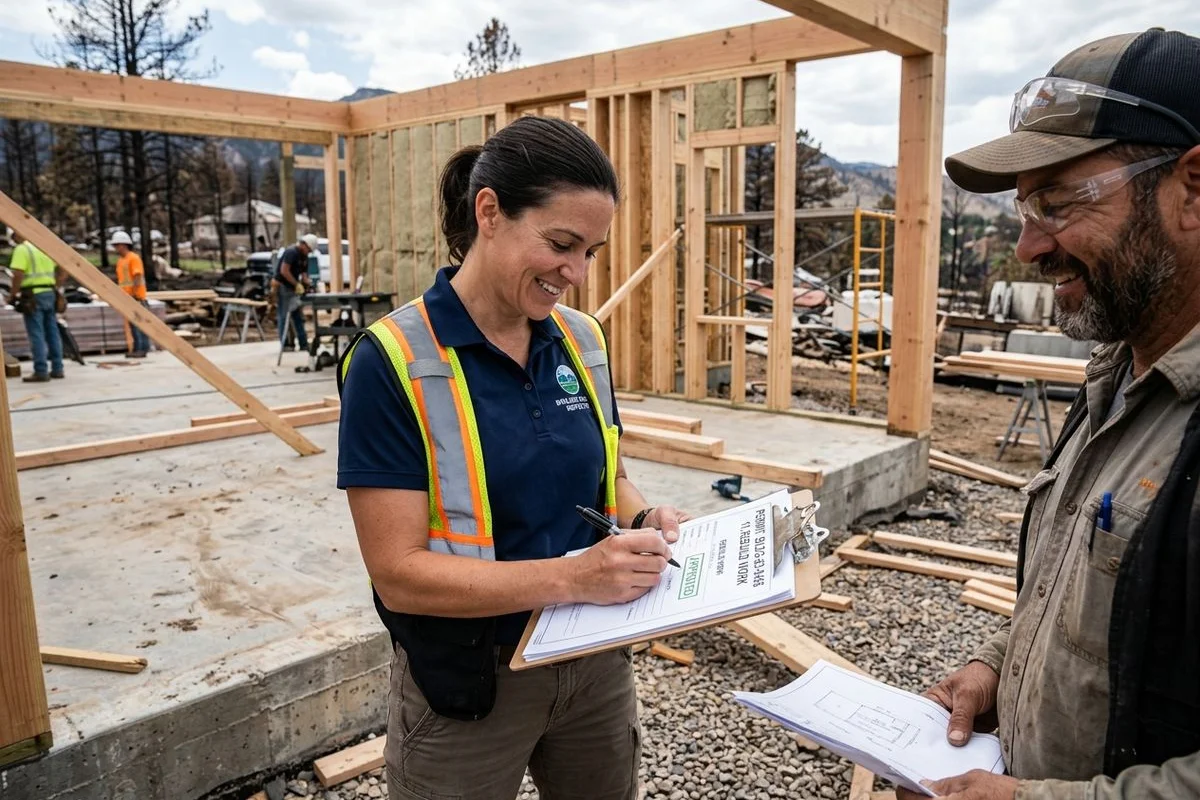
Every fire loss is unique, and getting a precise estimate requires professional evaluation. We offer a free on-site assessment that includes a personalized, phase-by-phase schedule for your home.
You can learn more about specific code requirements on our fire damage reconstruction service page. To understand how each of these phases fits together end to end, see our walkthrough of the fire damage reconstruction process.
Our estimators are ready to help you figure out exactly how long to rebuild after fire damage has occurred. Reach out to our office today to schedule your site visit.
We look forward to helping you get back into your home as quickly and safely as possible.
Frequently asked questions
How long does a full house rebuild after a fire take? +
Whole-house reconstruction typically runs 3-6 months in Boulder County. Smaller scopes (one or two rooms) often finish in 4-8 weeks. The biggest variables are permit timelines, structural complexity, and material lead times.
What causes rebuild delays? +
Permit waits, asbestos and lead testing on older homes, structural surprises discovered during demo, insurance scope negotiation, and supply lead times on cabinetry and specialty finishes.
Can a partial rebuild be faster? +
Yes. Single-room scopes can finish in 4-6 weeks. Multi-room scopes that don't involve structural framing can finish in 6-10 weeks. Full structural rebuilds are the longest.
Need help with fire or smoke damage in Boulder?
24/7 emergency response with a 60-minute guarantee across Boulder County. Call our team — we'll secure your property and walk you through the next steps.