Why Do Smoke Odors Persist After a Fire?
Smoke smell lingers because soot off-gasses from porous materials, HVAC, and hidden cavities. The science of smoke odor and why DIY fails.
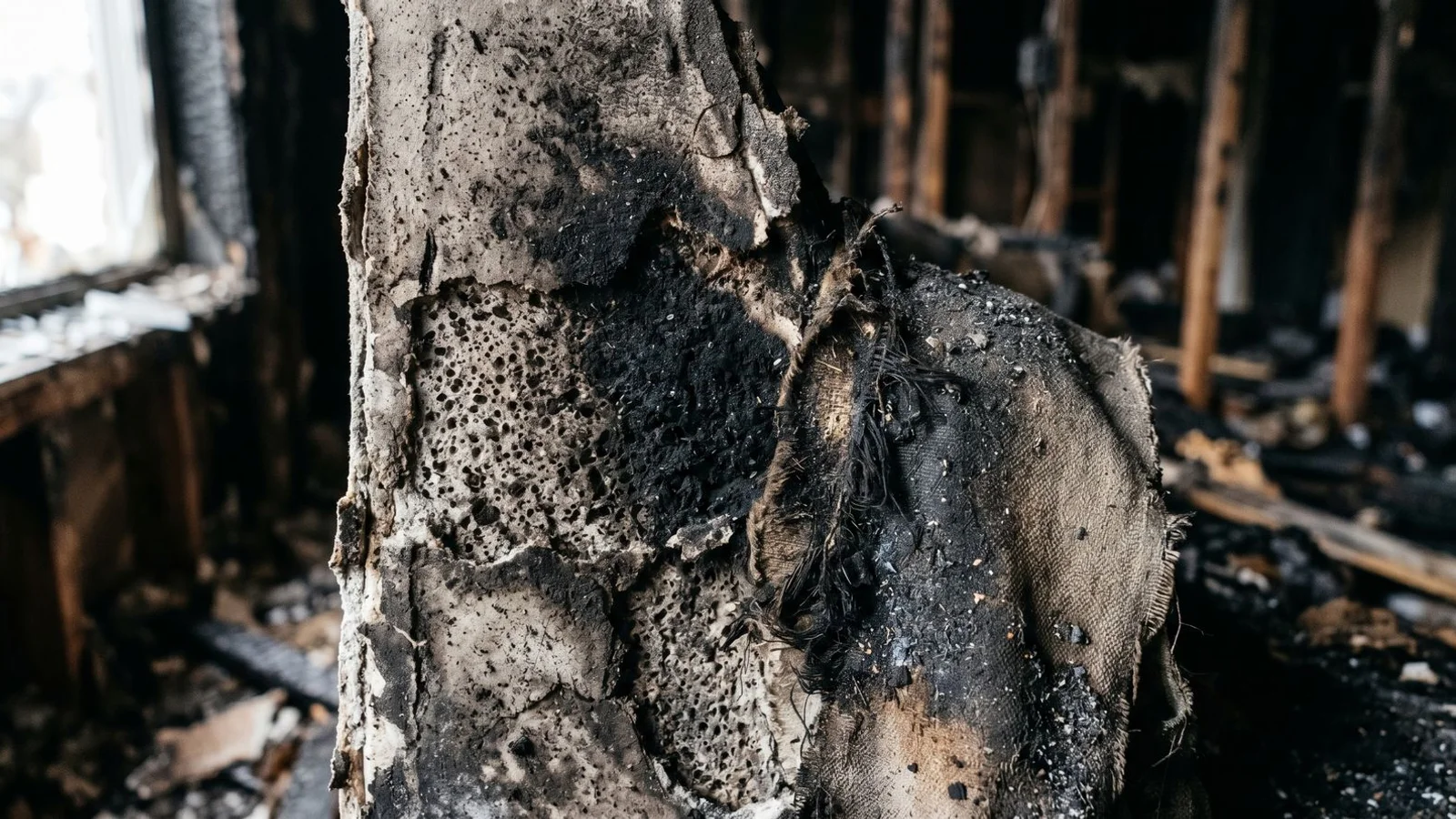
Smoke odor is a chemistry problem, not a fragrance problem
Why does the smell stay after a fire? The reason smoke smell lingers, sometimes for years, is that soot residue keeps releasing volatile organic compounds (VOCs) into the air long after the visible smoke is gone.
Our team at Boulder Fire Restoration Pros has served the Colorado Front Range for over two decades, specializing exclusively in fire and smoke damage restoration.
This extensive experience confirms that superficial fixes like air fresheners, baking soda, and open windows will never eliminate the smell. Those common DIY methods simply cover up a chemical reaction happening inside your walls.
Soot is the toxic leftover residue of incomplete combustion. Depending on the specific materials that burned, this microscopic soot contains complex organic compounds that off-gas at room temperature for months.
We see this chemical reality play out in homes constantly. You might walk into a fire-affected home weeks later and immediately notice the sharp, pungent scent. Those stubborn compounds are actively being released from the drywall, the wood framing, the inside surfaces of your HVAC ductwork, and your soft contents.
The four hidden reservoirs that keep odor going
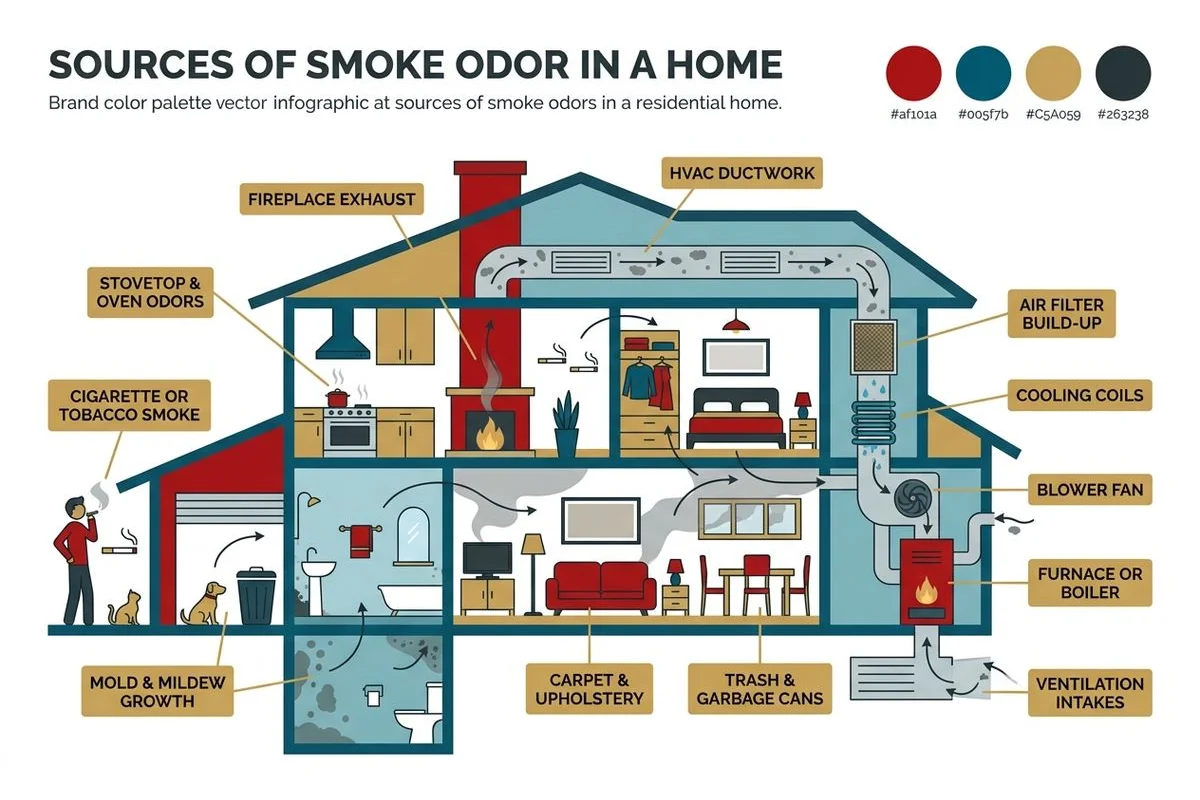
Where does the odor actually hide? Source removal must address four specific hidden places within your property to stop the smell at its root.
Smoke particles are incredibly small, often measuring around 2.5 microns or less in diameter. Our technicians know this microscopic size allows toxic VOCs to penetrate deeply into areas you cannot easily see.
Let’s examine the main culprits trapping these odors:
- Porous building materials. Drywall, plaster, wood framing, and ceiling tiles absorb smoke residue and become massive odor reservoirs.
- HVAC ductwork and the air handler. Smoke travels naturally with your home’s airflow. If your system was running during the fire, soot is now coating the inside of the ducts. Running the air conditioning later simply re-distributes that residue and odor.
- Hidden cavities. Wall cavities, the attic space above drop ceilings, and crawlspaces capture smoke anywhere airflow reached during the event.
- Soft contents. Sofas, curtains, mattresses, area rugs, and clothing absorb smoke far worse than hard surfaces. Polyurethane foam inside couch cushions locks in VOCs and continues to release odor for months.
Why DIY fails almost every time
Why won’t regular cleaning methods work? The standard DIY playbook of wiping down surfaces, running air fresheners, and painting over discoloration fails because it never touches the deep reservoirs mentioned above.
Surface cleaning only removes the visible portion of the greasy residue. The vast majority of the odor-causing soot remains trapped in the drywall, the framing, the ductwork, and the contents.
We frequently get calls from frustrated homeowners because, within days or weeks, that stubborn smoke smell won’t go away.
Painting without the correct chemical sealing actually makes the problem much worse. Standard latex paint creates a highly porous, thin barrier that off-gassing compounds eventually penetrate. By temporarily trapping the VOCs, the latex paint causes the next release to be highly concentrated and extremely unpleasant.
Our assessments reveal a clear pattern of why common DIY fixes fall short:
- Standard Latex Paint: Highly porous and allows microscopic VOCs to bleed right through the dried film.
- Baking Soda and Vinegar: Only masks light, temporary smells and cannot alter heavy soot chemistry.
- Consumer Air Purifiers: Most lack the commercial-grade carbon filters needed to capture high volumes of smoke molecules.
- Store-Bought Ozone Generators: The EPA warns that ozone levels required to kill odors are dangerous to breathe, and residential machines are often too weak to be effective anyway.
What actually eliminates smoke odor
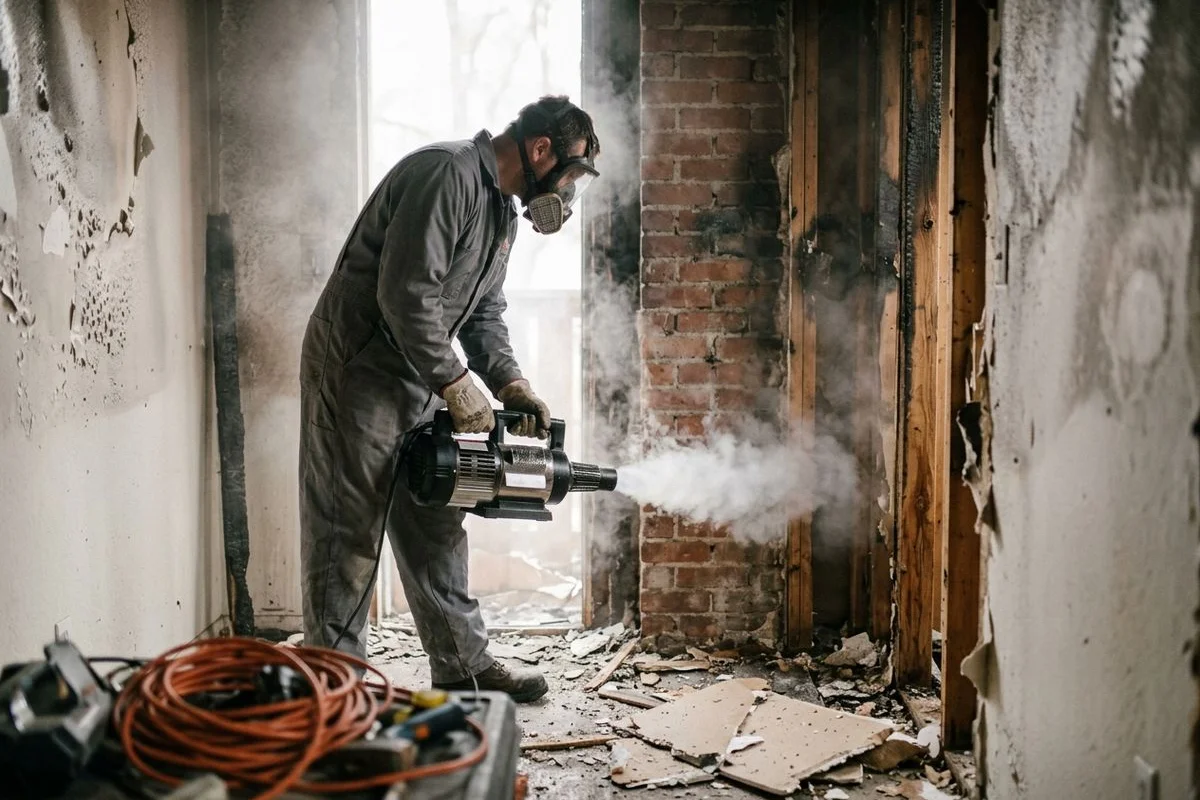
How do professionals permanently remove the smell? True elimination requires a strict, five-step chemistry-based approach that physically removes the source soot and chemically neutralizes remaining compounds.
This professional workflow must happen in an exact order to be successful:
- Remove the source soot. We use soot-specific cleaning methods, like specialized vulcanized dry chemical sponges, to lift greasy residue without smearing it into the paint.
- Decontaminate the HVAC. National Air Duct Cleaners Association (NADCA) standards dictate full source removal inside the ductwork so the system doesn’t re-distribute residue.
- Thermal fog. This step pushes deodorizing particles measuring 0.5 to 50 microns to follow the smoke’s original travel paths deep into porous materials.
- Hydroxyl or ozone treatment. Industrial hydroxyl generators neutralize residual molecules in the air and on surfaces safely, even in occupied spaces.
- Seal porous materials. Applying an industrial encapsulation primer, like Zinsser B-I-N Shellac-Based Primer, locks down the surface before any finish work begins.
Our full smoke odor removal workflow runs all five of these crucial steps. This comprehensive process backs the result with a 30-day re-treatment guarantee, and it explains how long smoke odor removal takes from the first cleaning pass to final verification.
If your home still smells like smoke despite your best cleanup efforts, the smartest next step is a free on-site odor assessment. We can inspect the property and tell you exactly which reservoirs were missed.
Frequently asked questions
Why does my house still smell after cleaning? +
Surface cleaning removes visible soot but not the residue embedded in drywall, framing, fabric, and inside HVAC ductwork. Those reservoirs keep off-gassing for months. Proper odor work treats those hidden sources, not just the surfaces.
Will smoke smell go away on its own? +
No. Untreated smoke odor can persist for months or years. The compounds in soot residue are stable — they continue to release into the air for as long as the residue is present.
Can painting seal the smell? +
Paint alone usually doesn't. You need source cleaning first, then a sealing primer (shellac- or oil-based) before topcoat paint. Painting over uncleaned smoke residue traps the off-gassing temporarily, but it re-releases through the paint film within weeks.
Need help with fire or smoke damage in Boulder?
24/7 emergency response with a 60-minute guarantee across Boulder County. Call our team — we'll secure your property and walk you through the next steps.