Documenting Fire Damage for Your Insurance Claim
Strong documentation maximizes your fire claim — photo evidence, line-item inventory, and Xactimate scoping. What adjusters require and how we deliver it.
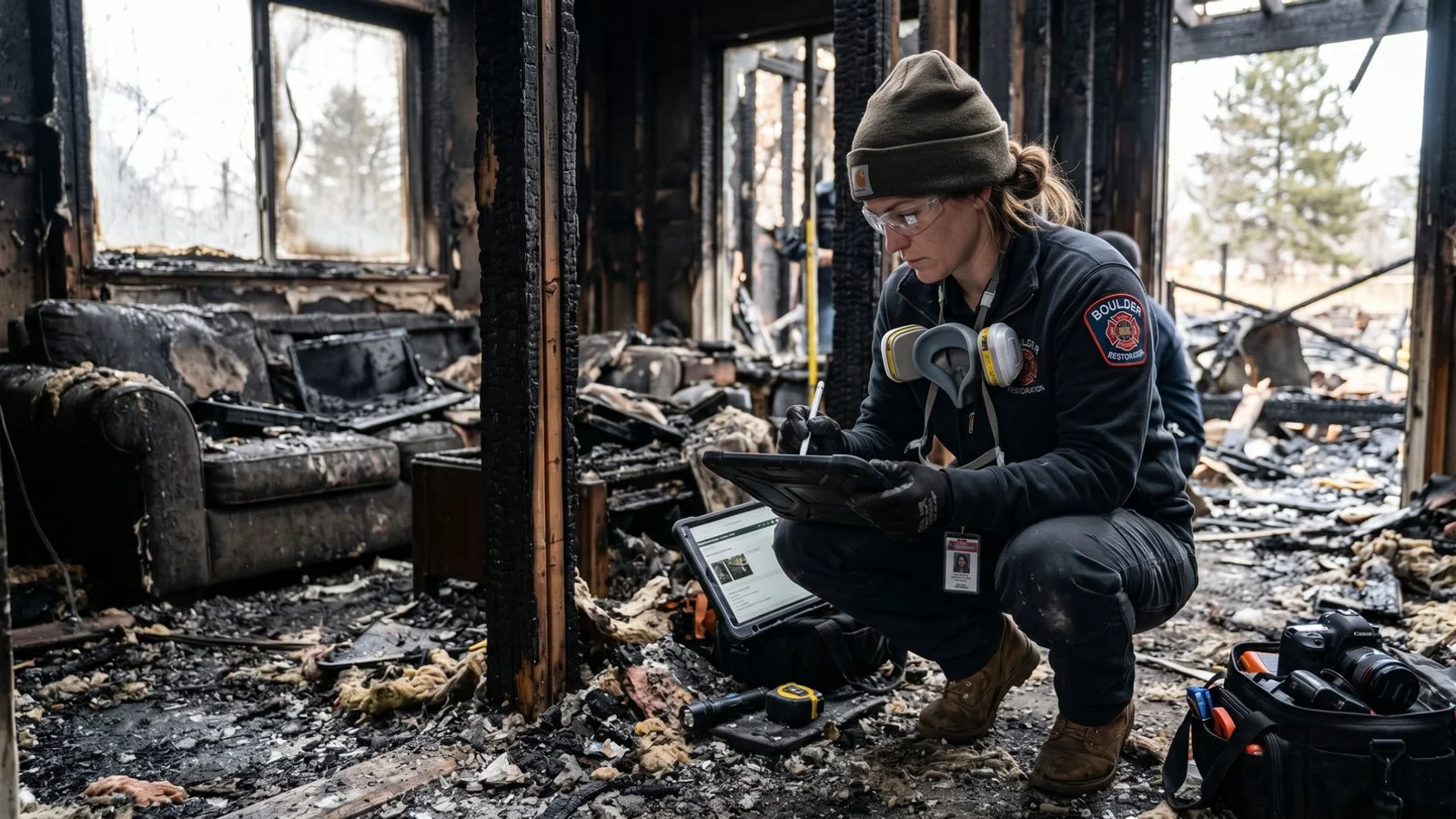
Documenting fire damage for insurance is what wins the claim
You know how a 680 credit score acts as the dividing line for a mortgage? That number separates the standard offers from the truly great ones. In the property restoration industry, your fire claim documentation acts as that exact same dividing line.
According to recent 2026 industry data, insurers deny roughly 30% of fire claims right out of the gate. This massive rejection rate usually traces straight back to poor proof. Our team has spent over two decades handling these specific crises along the Colorado Front Range.
Those missing details will absolutely ruin your payout.
A successful claim always requires three core elements:
- Perfect photographic proof.
- An exhaustive digital inventory.
- Exact pricing alignment.
We know strong evidence makes approvals easy, while light evidence makes the process heavily disputed. Documentation is the foundation of any successful fire damage insurance claims effort. Let’s look at the data and explore the exact steps to secure your settlement.
Photo documentation at every stage
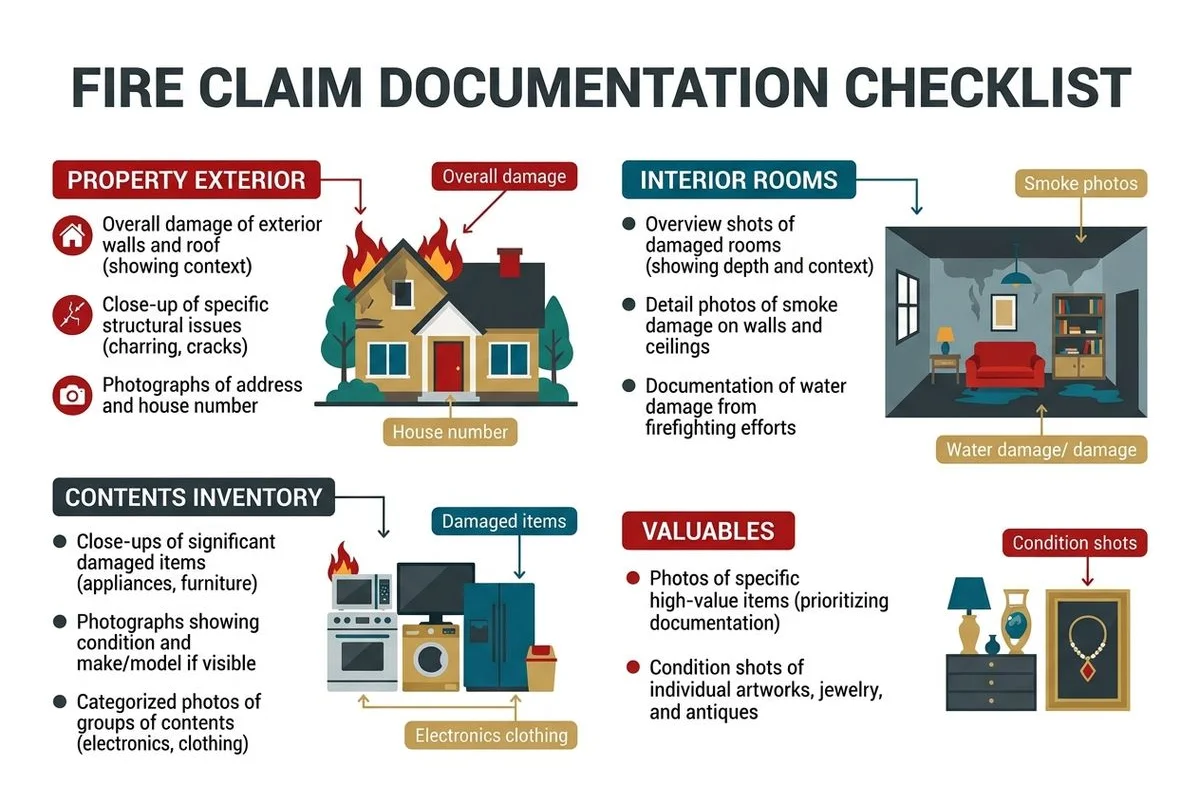
A complete claim file includes hundreds, and sometimes thousands, of photos. A standard kitchen fire easily requires 500 individual images to capture the full scope of soot spread. We rely on tools like Matterport Pro3 3D scanners to create an exact digital twin of your damaged home.
This technology prevents adjusters from arguing over room dimensions later. Nothing gets removed or replaced from the property without clear fire damage photo evidence first. Our process ensures every single phase gets captured perfectly.
You need visual proof across these critical milestones:
- Pre-mitigation: The property as found, before any cleanup begins.
- During mitigation: Board-up, water extraction, and content pack-out.
- Damage detail: Close-up shots of every affected surface.
- During restoration: Cleanup progress and demo conditions.
- During reconstruction: Framing, rough-in, and drywall stages.
- Final walkthrough: Completed work and items returned.
All these photos go into cloud-accessible folders shared with the adjuster. Programs like Encircle help automatically timestamp and label these files. This prevents the insurance company from claiming a photo was taken out of context.
Line-item contents inventory
Every single item from your home goes into a detailed digital inventory. Salvaged and non-salvaged belongings must be thoroughly cataloged. We use this line-item inventory to process the personal property portion of your claim.
State reports show a staggering 74% of homeowners affected by the 2021 Marshall Fire in Boulder County were underinsured. This lack of coverage often stems from failing to accurately document lost belongings. The adjuster requires specific data to authorize full replacement value.
Your digital contents log must include:
- Unique item ID numbers
- Specific categories (clothing, electronics, kitchenware)
- Clear photo evidence
- Pre-loss condition notes
- Post-loss condition notes
- Cleaning results for salvaged items
Without this exact breakdown, you will likely settle for a fraction of your real loss. You simply cannot expect a payout if you cannot prove what existed in the house. Our fire content restoration workflow generates this entire inventory automatically during the pack-out phase.
It removes the guesswork and forces the carrier to acknowledge your actual losses.
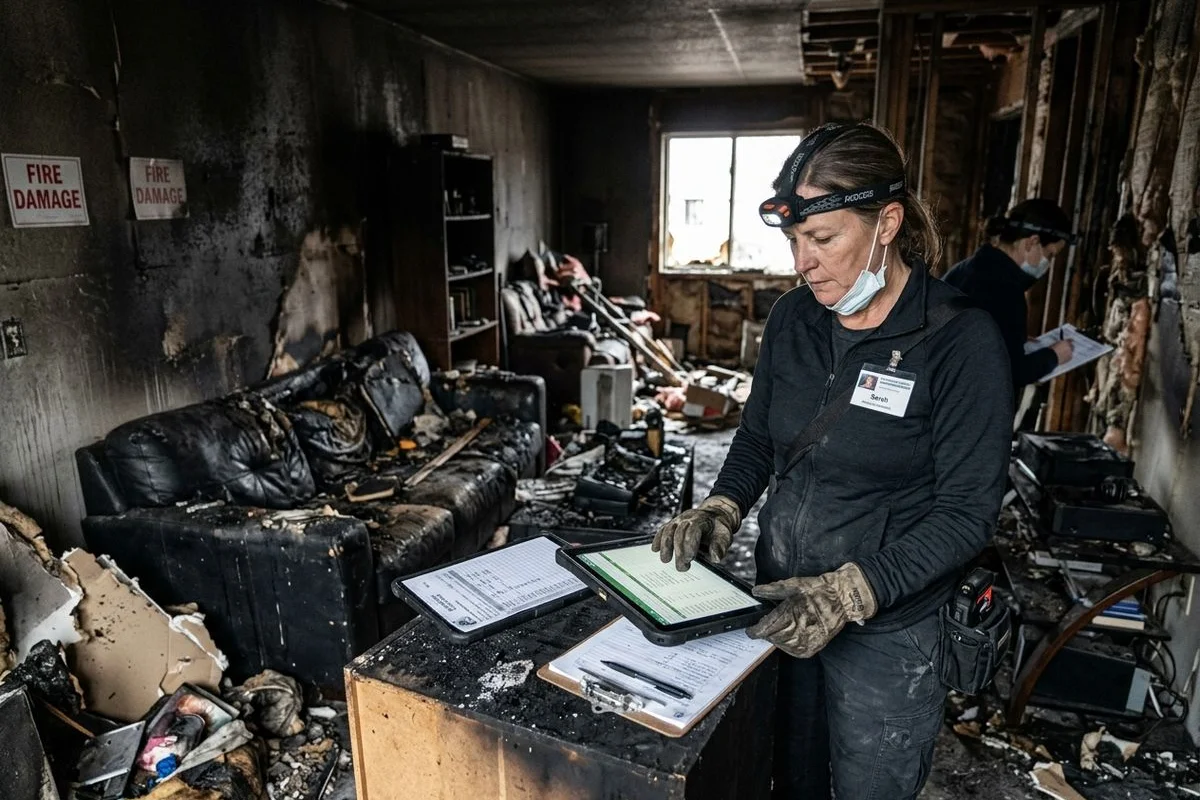
Xactimate scope of loss
The scope of work gets prepared in Xactimate. This is the exact same software the insurance adjuster uses to evaluate your property. We match every single line item directly to their internal catalog.
Pricing alignment is a critical step in avoiding long delays. Xactware updates its regional price lists every single month based on market surveys. Using the current 2026 Xactimate pricing database for the Boulder and Denver area ensures accuracy.
Our estimating team relies on these monthly updates to secure fair compensation. The system accounts for materials, labor, and overhead in real time. Newer XactAI features automatically label photos and recommend necessary line items.
| Estimation Method | Adjuster Reaction | Approval Speed |
|---|---|---|
| Standard Contractor Bid | Heavy scrutiny and rate disputes | Often delayed by weeks |
| Xactimate Scope | Immediate system alignment | Typically approved in days |
We present this standardized data to force immediate scope alignment on the first walkthrough. You avoid those frustrating delays where the carrier says they need to review the file. There is absolutely no dispute over the local labor rate.
Daily progress documentation
During active restoration work, daily photos and milestone notes go directly into the file. The property requires constant monitoring to prevent secondary complications. We log daily moisture readings to protect your long-term health and property value.
Firefighters use thousands of gallons of water to extinguish the flames. This massive volume creates an immediate risk for hidden structural damage. Our crews utilize FLIR E95 thermal imaging cameras to track this moisture behind intact drywall.
Without a clear daily record, insurers will almost always deny subsequent mold claims. For demolition tasks, every single discovered condition gets photographed before removal. We use this progress documentation to support three major project requirements.
- Schedule transparency for you and the adjuster.
- Scope justification for any conditions discovered mid-project that expand the scope.
- Mold prevention proof showing the exact dry-out timeline.
Signed change orders for any scope additions
When mid-project conditions require scope additions, the new work gets documented before anything happens. Hidden damage discovered during demolition demands formal adjustments. We execute every single addition using an electronic signature platform like DocuSign.
A formal change order must clearly outline:
- A detailed description of the newly discovered damage.
- The exact cost of the additional materials and labor.
- Three mandatory signatures from the homeowner, contractor, and adjuster.
This digital workflow speeds up authorization from weeks to hours. Construction industry studies reveal change orders are a leading cause of project cost overruns, accounting for up to 15% of total budgets. Our strict protocol prevents those ugly scope-creep disputes at close-out.
Proceeding without written authorization usually leaves the homeowner stuck with the final bill. Everything must be explicitly approved beforehand to protect your wallet. We guarantee your project timeline stays intact by handling this paperwork upfront.
What this looks like at claim close-out
At project completion, your entire documentation file acts as an undeniable record. The final package includes hundreds of photos, a full inventory, your Xactimate scope, and all signed change orders. We present this comprehensive package to force a fast, fair settlement.
The adjuster simply reviews the organized daily logs and signs off. Approvals happen quickly because hard data supports every single line item. Our approach typically reduces settlement timelines from a frustrating 90 days to fewer than 30 days.
“The difference between a smooth claim and a contested one is almost always documentation rigor.”
This rigorous method is especially critical now under the 2026 Colorado House Bill 1182 guidelines. The new legislation demands far more transparency in how carriers price risk and pay claims. You need perfect evidence to hold them accountable to these updated legal standards.
For the broader sequence on filing, see how to file a fire damage insurance claim in Colorado. Reach out to our local team today to get your property assessed and ensure you are documenting fire damage for insurance correctly.
Frequently asked questions
What documentation do I need for a fire claim? +
Photos at every stage, a line-item contents inventory, a professional scope of loss in Xactimate, daily progress documentation during restoration, and signed change orders for any scope additions. We provide all of these as part of the claim file.
What is Xactimate? +
Xactimate is the industry-standard insurance estimating software adjusters use to price restoration work. Contractor scopes in Xactimate align with the adjuster's pricing database, which means scope alignment happens fast and disputes are rare.
Does strong documentation actually increase payout? +
Yes — meaningfully. Light documentation invites adjuster scope reductions. Rigorous documentation supports the full scope of the loss and usually achieves a fair, complete settlement.
Need help with fire or smoke damage in Boulder?
24/7 emergency response with a 60-minute guarantee across Boulder County. Call our team — we'll secure your property and walk you through the next steps.