Restoring Cabinets and Appliances After a Kitchen Fire
After a kitchen fire — which cabinets, appliances, and countertops can be cleaned and saved, which need replacement, and how decisions are documented.
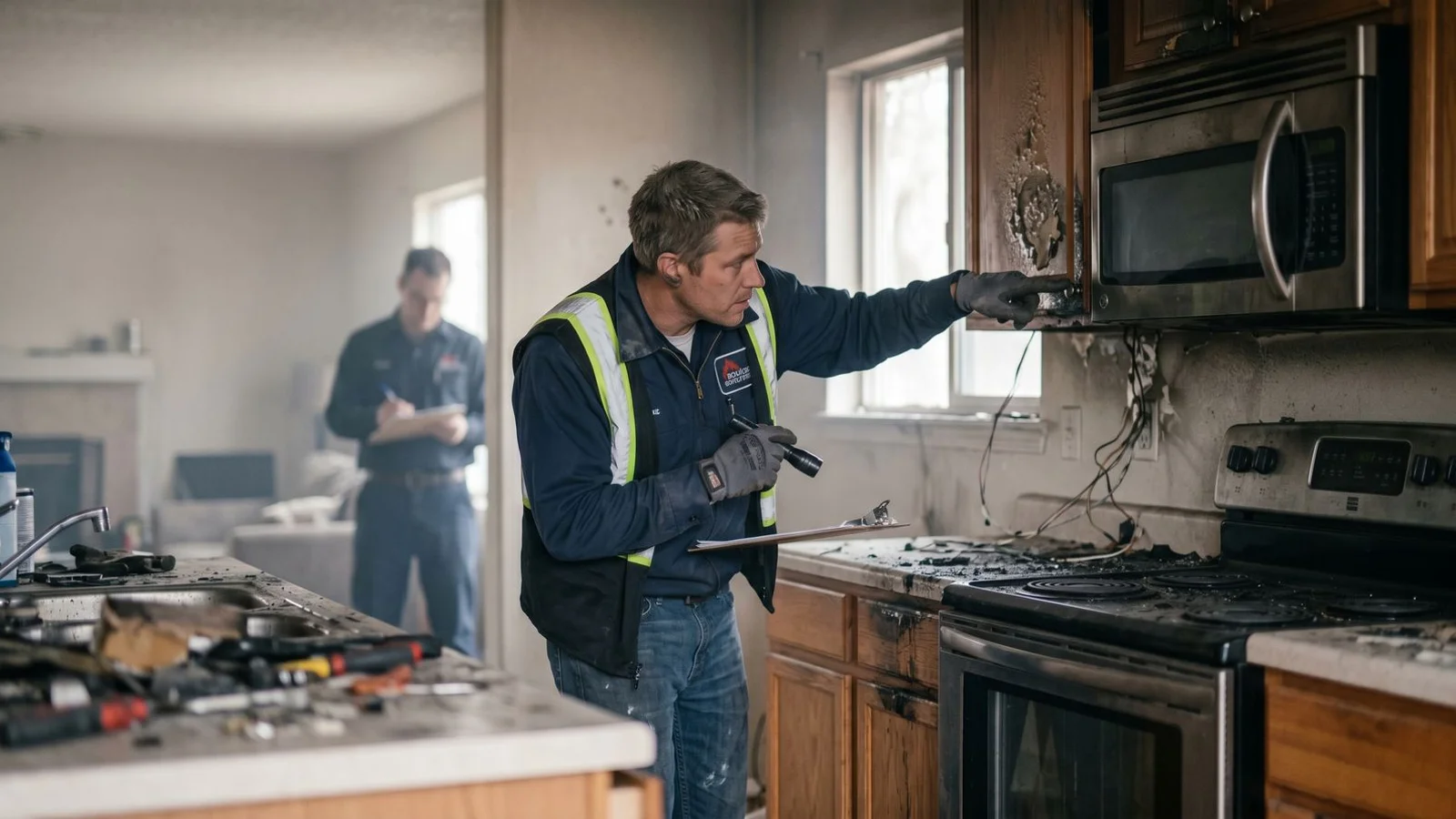
Most cabinets can be saved, solid wood especially
Our team at Boulder Fire Restoration Pros has spent over two decades helping Colorado Front Range homeowners recover from destructive events. The first question almost every client asks during kitchen cabinet fire damage restoration is whether their units can survive the heat.
We usually deliver some welcome news, because the honest answer is almost always yes.
These specific cabinet choices heavily influence the final insurance claim total and your entire project timeline. They are one piece of the broader kitchen fire restoration process, and they go hand in hand with understanding how kitchen fire damage spreads beyond the visible burn. We approach these restoration decisions methodically to save materials and speed up your recovery. Let’s look at the data, what the damage actually tells us, and detail a few practical ways to respond.
Cabinet decisions
Insurance adjusters evaluate cabinets individually, rather than treating the entire kitchen as a total loss. We evaluate several key factors to determine what stays and what goes.
Replacing an entire set of kitchen cabinets costs between $12,000 and $20,000 across the United States in 2026. We prioritize saving your existing structures because professional refinishing only averages $3,000 to $4,500, keeping thousands of dollars in your pocket.
A standard assessment depends on these critical details:
- Box material. Solid wood saves much more often than particleboard. Wood absorbs less smoke and refinishes beautifully, while particleboard absorbs odors deeply and often delaminates.
- Door material. Solid wood doors clean up incredibly well. Thermofoil and engineered wood doors usually warp and require full replacement.
- Smoke exposure depth. Cabinets near the fire source take on much more acidic residue. Remote cabinets often just need light, specialized cleaning.
- Interior contamination. Smoke easily gets inside cabinets through natural airflow. Interior cleaning requires far more effort than exterior wipe-downs.
- Heat damage. Cabinets showing severe heat-affected signs like warping, scorching, or bubbling finish almost always require replacement.
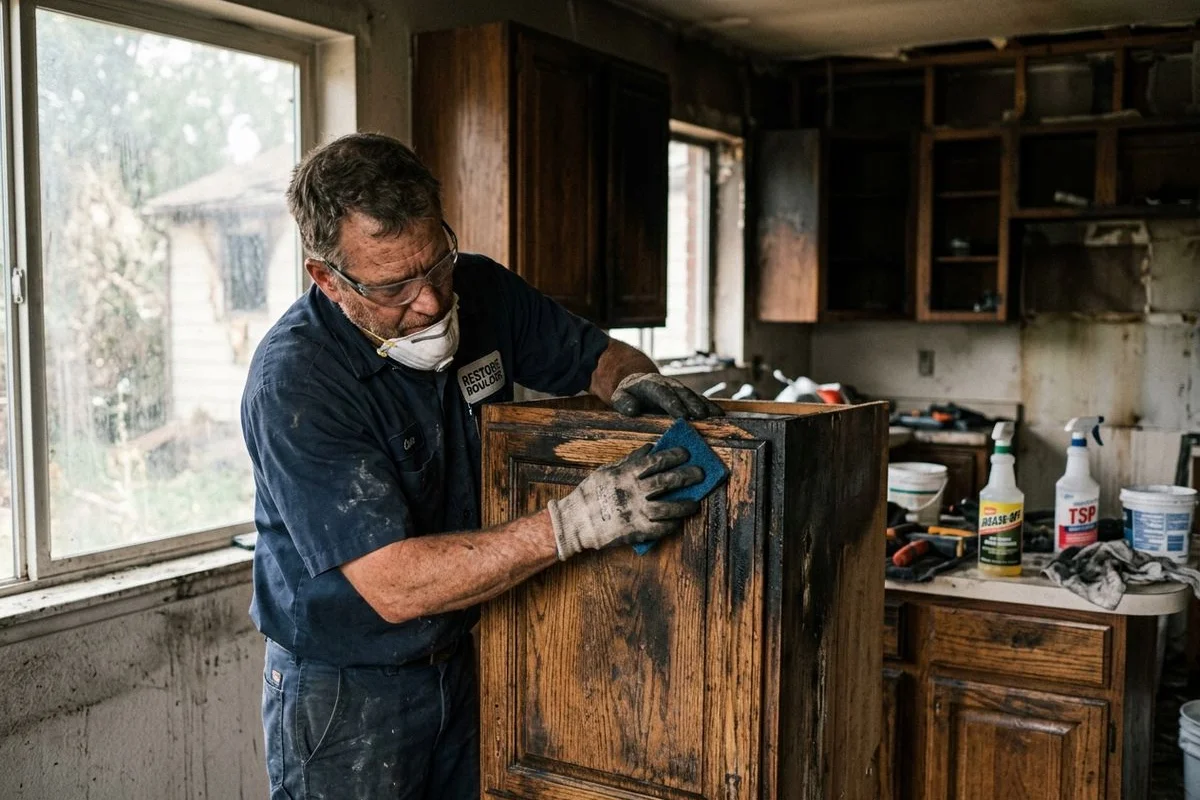
We highly recommend avoiding water or liquid degreasers on soot-covered wood. Professional restorers use vulcanized rubber dry cleaning sponges, often called soot erasers, to lift the dry residue first.
We see many homeowners make the mistake of wet cleaning early on, which simply pushes the acidic soot deeper into the wood grain. When you want to save cabinets after fire exposure, a typical grease fire scenario might preserve all cabinet boxes, refinish the doors on the cooktop wall, and dry-sponge the rest.
Our experience shows that whole-kitchen replacement is rarely necessary.
Appliance decisions
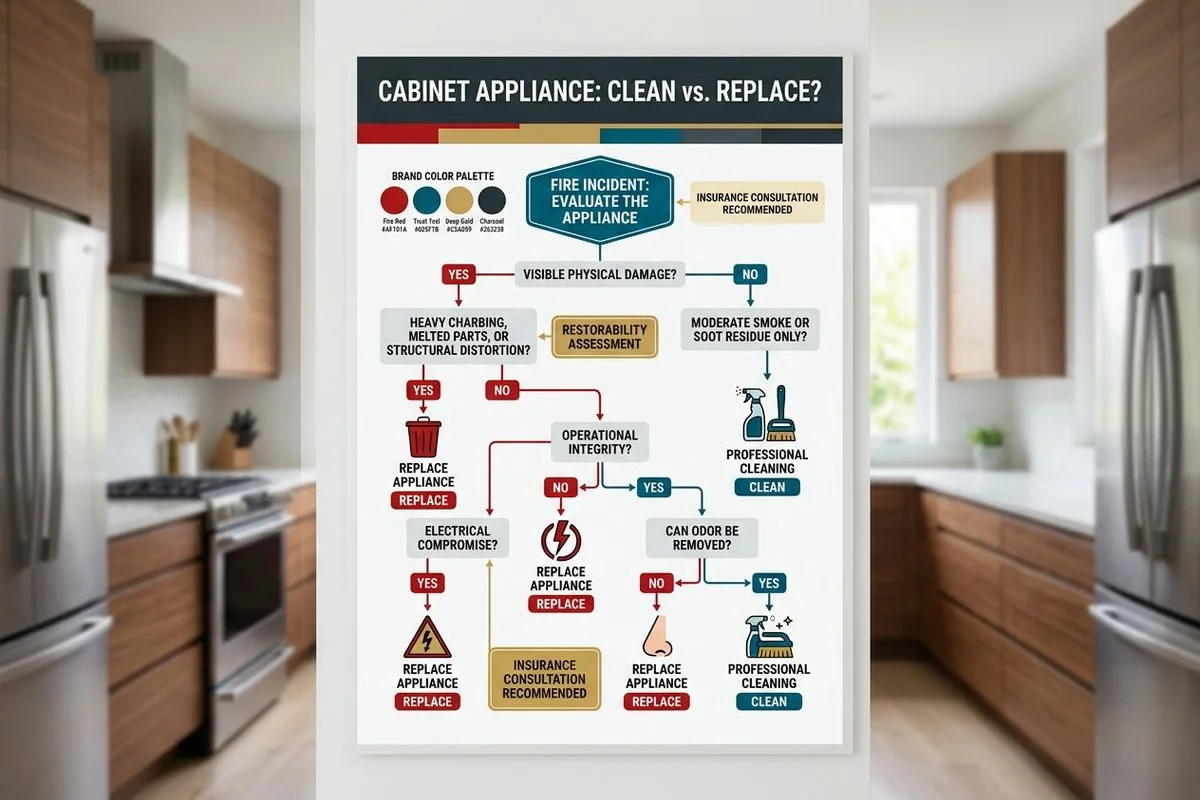
Assessing kitchen appliance fire damage reveals that each unit has its own typical outcome based on its location and material. We evaluate every unit individually to determine the safest and most cost-effective path forward.
Ultrasonic cleaning has become a major game-changer for metal components and small hardware. Our technicians use commercial 40kHz ultrasonic sound-wave baths to emulsify soot from grates, saving thousands in appliance replacements.
The specific appliance dictates the standard protocol:
- Range and cooktop. The range often requires replacement if the fire started on the burners. Wall ovens positioned away from the flames usually clean up nicely.
- Range hood. Internal components and filters cannot be fully decontaminated cost-effectively.
- Microwave. Direct heat exposure ruins units mounted over the stove, while remote units are easily cleaned.
- Refrigerator. Exterior panels usually wipe clean, but rubber gaskets quickly absorb smoke odors and require swapping. Food inside must be discarded immediately.
- Dishwasher. Internal seals sometimes need replacement to prevent future leaks. Heat-affected control panels mean the whole unit goes.
- Small appliances. Toasters and coffee makers usually end up in the trash. Cleaning costs far exceed the replacement value for most consumer-grade items.
We must emphasize one critical safety warning regarding your electronics. You should never power on smoke-exposed appliances until a professional assesses them. We have seen soot shorts ruin perfectly good refrigerators the moment they receive electricity.
Countertop decisions
Countertop material directly drives the final restoration outcome. We inspect these surfaces closely because heat changes the chemical structure of many common stones.
Natural quartz scorches and discolors permanently at temperatures above 300 degrees Fahrenheit. Our team uses cerium oxide polishing compounds to address minor discoloration, but direct flame exposure often forces a full replacement.
A simple surface test dictates the next steps:
- Natural stone. Granite, marble, and quartzite usually clean incredibly well. They may just require a fresh coat of professional sealant.
- Quartz and engineered stone. Minor smoke discoloration can sometimes be polished out by a professional.
- Laminate. The internal substrate absorbs moisture and the top surface delaminates under intense heat.
- Solid surface. Materials like Corian usually clean up well and respond beautifully to surface refinishing.
- Butcher block. Solid wood blocks refinish easily if the acidic smoke did not penetrate too deeply into the grain.
- Tile. The ceramic pieces usually survive the heat. Grout lines absorb heavy smoke and often require complete scraping and replacement.
We carefully document any cracks or thermal shock damage before finalizing the estimate. Heat fractures in stone might not become visible until days after the event. Our thorough inspections ensure you never pay for a broken slab down the road.
How decisions get documented
Every clean-versus-replace decision goes straight into the official insurance file with detailed photos and condition notes. We work directly with insurance adjusters to review the file and approve the proposed scope of work.
Proper documentation relies on knowing the difference between the two main types of insurance payouts. Our detailed inventory logs ensure you understand exactly how your policy covers the damage.
| Coverage Type | How It Pays Out | Why It Matters For Cabinets |
|---|---|---|
| Actual Cash Value (ACV) | Pays the current depreciated value of the item. | Older cabinets yield a smaller payout, making restoration highly attractive. |
| Replacement Cost Value (RCV) | Pays the exact cost to buy a brand new equivalent item today. | Fully funds new cabinets if the existing ones are completely unsalvageable. |
Doing this carefully prevents under-restoration, where items should have been replaced but were ignored. We also prevent over-restoration, keeping your claim clean and avoiding unnecessary replacements.
The rigorous paperwork process is a core part of what makes the fire damage insurance claims workflow effective. Our item-by-item documentation usually wins the scope dispute before it even starts.
When the kitchen needs a full rebuild
A small minority of fires burn hot enough to damage the structural framing, electrical, or plumbing hidden behind the cabinetry. We transition these severe projects into a full rebuild phase to ensure your home meets all modern safety codes.
Securing new building permits for structural repairs often extends a standard kitchen project by two to three months. Our team manages the following reconstruction phases directly:
- Structural framing. Removing and replacing charred wall studs and ceiling joists.
- Utility updates. Running fresh electrical wiring and replacing heat-damaged PVC plumbing.
- Finish selection. Guiding you through new cabinet, countertop, and appliance choices.
- Final installation. Mounting the new hardware and testing all systems for safety.
The extensive kitchen rebuild becomes a straightforward part of your larger fire damage reconstruction. We coordinate the material lead times and final appliance installations using the exact same crew that handled the initial cleanup.
One dedicated vendor means one clear timeline and zero miscommunication. We invite you to contact us today to schedule your professional kitchen assessment and secure your home.
Frequently asked questions
Can fire-damaged kitchen cabinets be saved? +
Often yes — especially solid-wood cabinet boxes. Doors and drawer fronts can be cleaned, refinished, or replaced individually. Particleboard cabinetry with deep grease or moisture exposure usually replaces. We document the cabinet-by-cabinet decision for your claim.
Are appliances safe to use after a kitchen fire? +
Not until professionally assessed. Heat and soot can damage internal electrical components. Don't power on smoke-exposed appliances until decontamination and assessment confirm they're safe. Range hoods almost always need replacement after a stovetop fire.
Who decides what's replaced vs cleaned? +
A documented assessment by the restoration team, reviewed with your insurance adjuster. The decision is documented item by item rather than defaulting to whole-kitchen replacement. This usually saves significant claim value.
Need help with fire or smoke damage in Boulder?
24/7 emergency response with a 60-minute guarantee across Boulder County. Call our team — we'll secure your property and walk you through the next steps.