The Structural Dry-Out Process After Firefighting
How structural dry-out works after a fire — water extraction, thermal moisture mapping, commercial dehumidification, and monitoring to a dry standard.
Structural dry out after fire is more science than instinct
We see it all the time after a residential fire is extinguished. The resulting water saturation leaves homeowners facing a massive secondary disaster. Our team at Boulder Fire Restoration Pros has served the Colorado Front Range for over two decades, specializing exclusively in fire and smoke damage restoration.
A proper structural dry out after fire follows the strict 2021 ANSI/IICRC S500 standard for professional water mitigation, and it begins the moment our firefighting water extraction crew pulls the standing water out. It requires precise measurement, constant monitoring, and verified documentation. We never rely on simply running a dehumidifier for a few days.
Skipping the documented science is exactly how hidden mold problems show up six months after a rebuild looks finished. Here is exactly how a proper dry-out process works.
Step 1: Standing water extraction
We begin extracting standing water within hours of receiving fire department clearance. Fast removal is critical because data from the Home Fire Sprinkler Coalition shows firefighters use an average of 2,935 gallons of water to control a residential fire. Drying out after fire hoses soak your property requires immediate action, as a single handline flows 150 to 250 gallons per minute into your home.
Our technicians deploy truck-mounted commercial extractors to remove deep pools from floors, soaked carpets, and flooded basements. Residential wet vacuums lack the horsepower to handle this immense volume of fluid. Speed matters immensely during this initial phase.
We prioritize rapid extraction to halt the absorption process in your subflooring and drywall. Every gallon removed physically is a gallon that does not need to be evaporated later.
Common extraction targets include:
- Saturated carpeting and padding
- Hardwood flooring crevices
- Basement concrete slabs
- Bottom tracks of drywall framing
Step 2: Moisture mapping
We map out the invisible water pathways using advanced diagnostic technology. Moisture hides behind drywall, under flooring, and soaked deep into structural framing where visual inspections completely miss it.
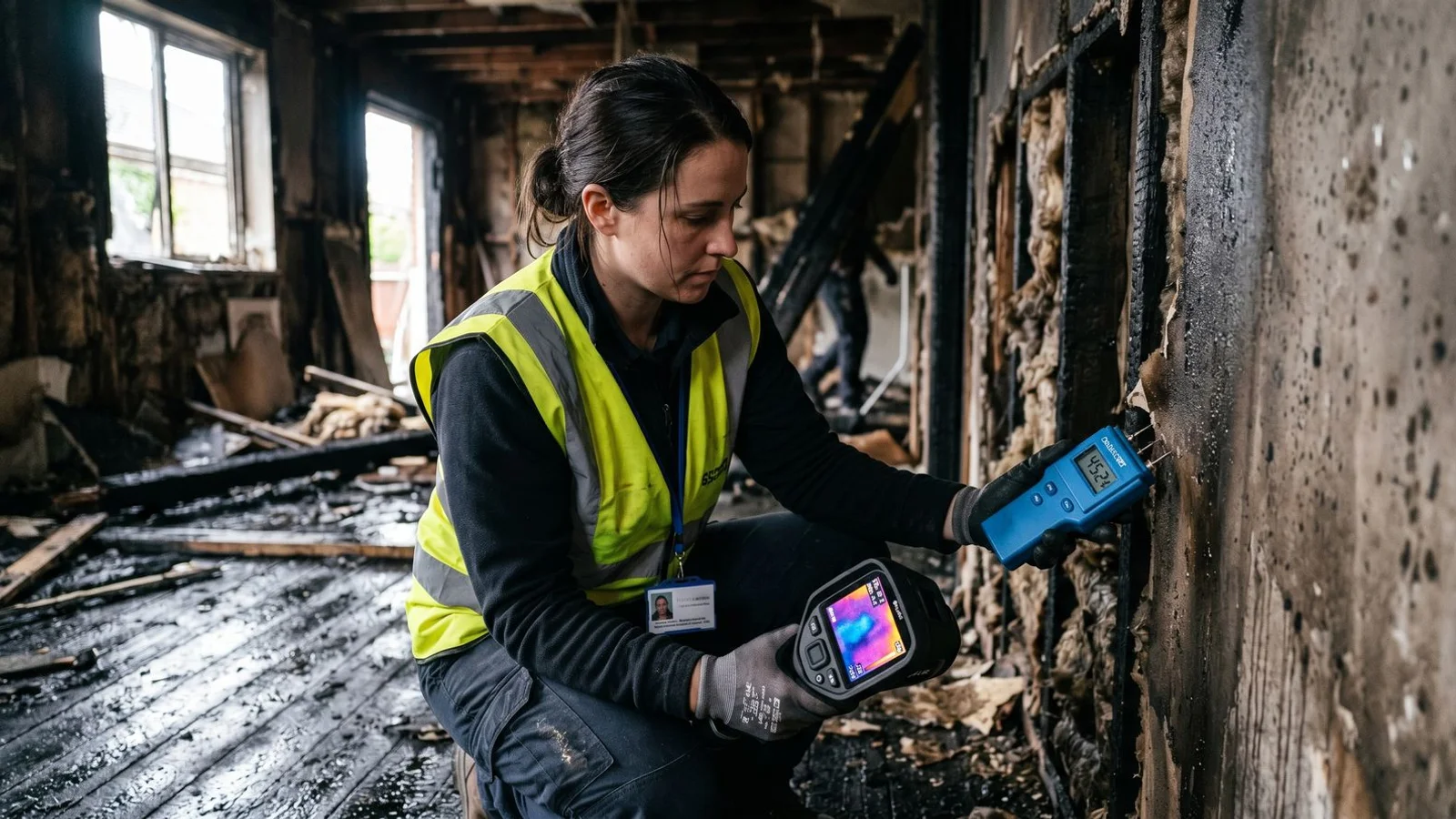
Our crews utilize FLIR MR265 thermal imaging cameras to scan your walls and ceilings. These infrared guided measurement tools detect cooler zones created by evaporating water. The thermal map instantly highlights the specific areas requiring immediate attention.
We then use penetrating tools like the Protimeter MMS3 moisture meter to confirm those thermal readings. These devices provide quantified moisture content percentages. Both tool readings go directly into your official documentation file.
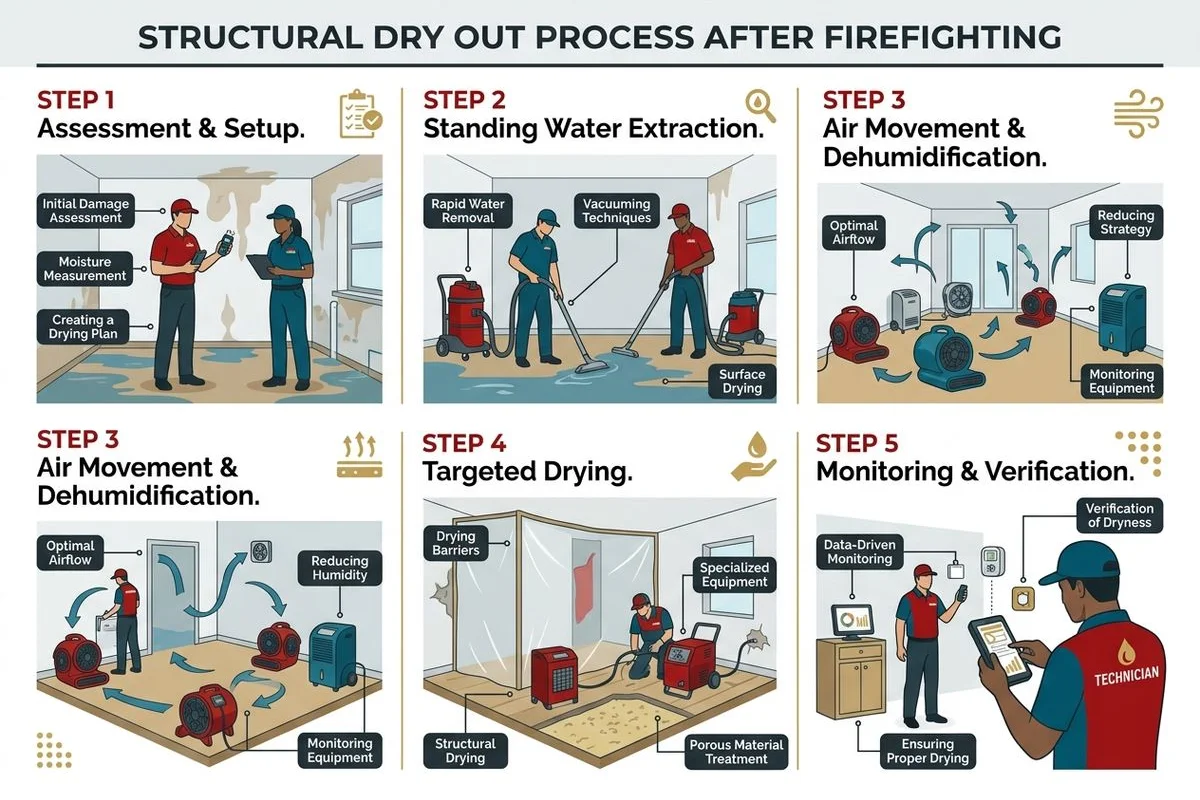
Step 3: Drying environment setup
We set up a highly controlled drying environment using commercial grade equipment. The primary goal is to lower the relative humidity below 50% across the structure and forcefully accelerate evaporation from wet materials.
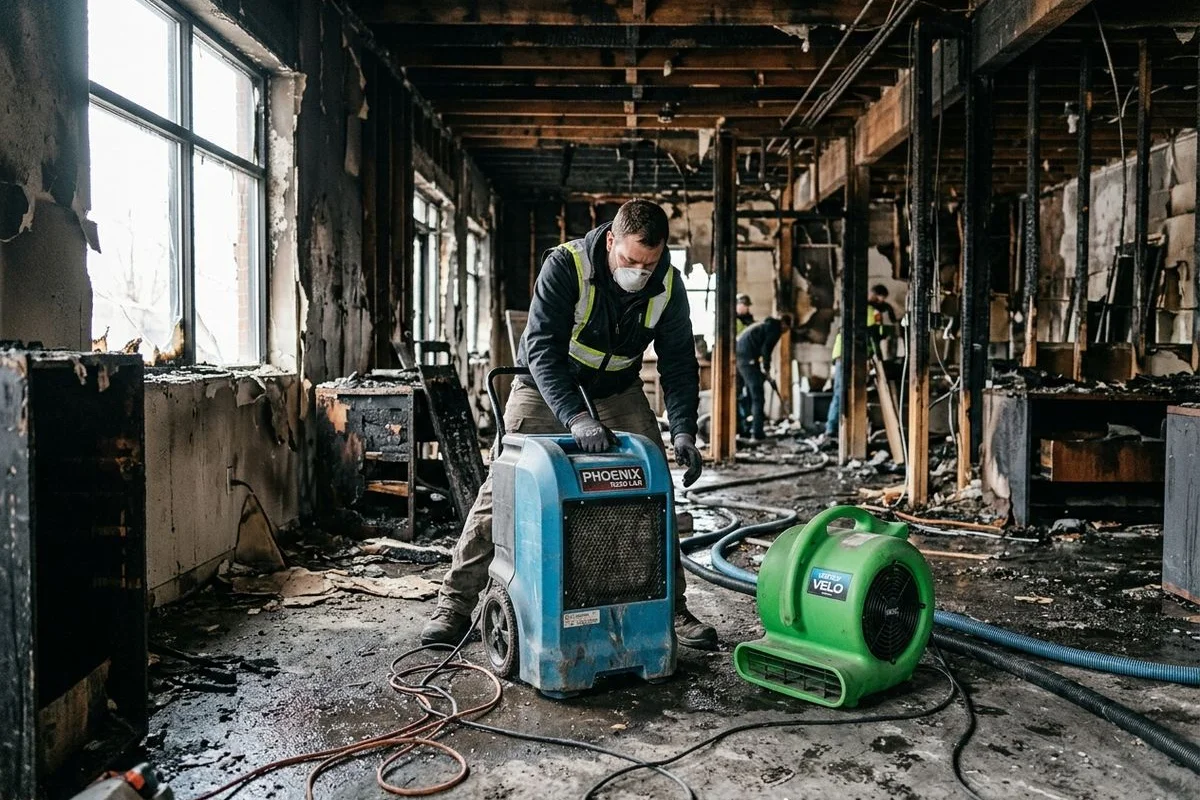
Our specialists deploy Low Grain Refrigerant (LGR) dehumidifiers capable of removing 10 to 15 gallons of water per day. These heavy duty machines achieve grain depression levels that consumer hardware store units cannot physically approach. They pull trapped moisture directly out of building materials rather than just treating the ambient room air.
- Low Grain Refrigerant Dehumidifiers sized precisely to the total cubic footage and saturation class.
- Commercial Air Movers pushing 2,000 to 3,000 CFM (cubic feet per minute) to sweep wet air away from surfaces.
- Targeted heat systems applied where the ambient temperature falls below the optimum evaporation range.
- Wall and floor inspection holes drilled where structural cavities require direct internal extraction.
We strategically position these air movers to create a continuous vortex of dry air. This engineered airflow maximizes the evaporation rate across every saturated surface.
Step 4: Daily monitoring
We monitor the drying process daily to ensure every structural component is actually shedding moisture. Moisture readings are taken every 24 hours on tracked materials like framing, drywall, and subfloors.
Our technicians adjust the air movers and dehumidifiers based on these specific, logged numbers. The process continues until every material hits its designated equilibrium moisture content (EMC). For interior wood framing in the US, industry consensus shows this target dry standard typically falls between 6% and 11%.
We track this progress carefully to prevent secondary damage.
| Tracked Material | Monitoring Tool Used | Target Dry Standard |
|---|---|---|
| Wood Framing | Pin Moisture Meter | 6% to 11% EMC |
| Drywall | Pinless Sensor | Baseline Match |
| Concrete Slabs | Thermo-hygrometer | Below 75% RH |
This daily log goes directly to your insurance file. It provides the verifiable proof the adjuster requires to sign off that the structure is genuinely dry before reconstruction begins.
Step 5: Antimicrobial treatment
We apply specific chemical treatments to prevent hazardous biological growth inside your home. Secondary microbial growth often starts within 48 to 72 hours after suppression water soaks a building.
Our protocols mandate the use of EPA-registered antimicrobial agents formulated specifically for the fire damage dry out process. These industrial fungicides suppress any colonies attempting to form on your framing, drywall, and subfloors.
Failure to treat compromised framing with EPA-registered antimicrobials within the first 72 hours drastically increases the risk of complete structural replacement.
We target areas where wet conditions ran past that critical 48 hour window. Treatment covers all structural surfaces that came into contact with affected materials. Standard consumer bleach is completely ineffective for this level of deep porous material sanitization.
Step 6: Documentation handoff to reconstruction
We deliver a comprehensive dry-out file to both the reconstruction team and the insurance adjuster. This complete package contains your critical mitigation records.
- Daily moisture mapping logs
- Equipment runtime records
- Thermal imaging proof
- Antimicrobial application sheets
Our strict documentation proves to the carrier that proper IICRC compliant mitigation was fully executed. Reconstruction simply cannot start until this documentation is complete and the structure is verified dry.
We understand that insurance carriers require this exact proof to release funds. Without a thorough drying log, adjusters have no verifiable basis for approving your mitigation claim. Proper paperwork eliminates disputes and keeps your rebuild schedule on track.
Why doing this right matters six months later
We know that a rebuild starting on damp framing looks fine for a few months. Then the musty smell appears, followed by staining on the new baseboards. Then the mold testing finds active colonies thriving inside the wall cavities.
Every hour invested in proper dry-out at the start saves weeks of remediation later.
Skipping professional mitigation is the fastest way to turn a manageable fire claim into an uncovered mold disaster.
Our crews make this trade-off on every single fire job. The entire rebuild has to be torn down to remediate the mold if the structural dry out after fire is rushed. This is exactly why fire damage causes water and mold damage in the long run.
We encourage you to review our full water mitigation scope on the service page. Call our response team today to schedule an immediate assessment and stop the damage from spreading.
Frequently asked questions
How long does structural dry-out take? +
Typically 3-7 days for most homes with commercial-grade equipment. Severely saturated structures, hardwood floors, and slabs can take longer. Daily moisture readings document progress until materials meet the dry standard.
How do you find hidden moisture? +
Thermal imaging cameras show wet zones as colder regions; penetrating moisture meters confirm and quantify the readings. Both tools document conditions for the insurance file.
Why dry out before rebuilding? +
Building on damp materials traps moisture inside the walls and creates mold problems that surface months later. ANSI/IICRC S500 requires a documented dry standard before reconstruction; we follow it strictly.
Need help with fire or smoke damage in Boulder?
24/7 emergency response with a 60-minute guarantee across Boulder County. Call our team — we'll secure your property and walk you through the next steps.