Types of Soot and How Each Is Cleaned
Dry, wet, protein, and oil soot each need different cleaning techniques. How soot type by fire source determines the right method.
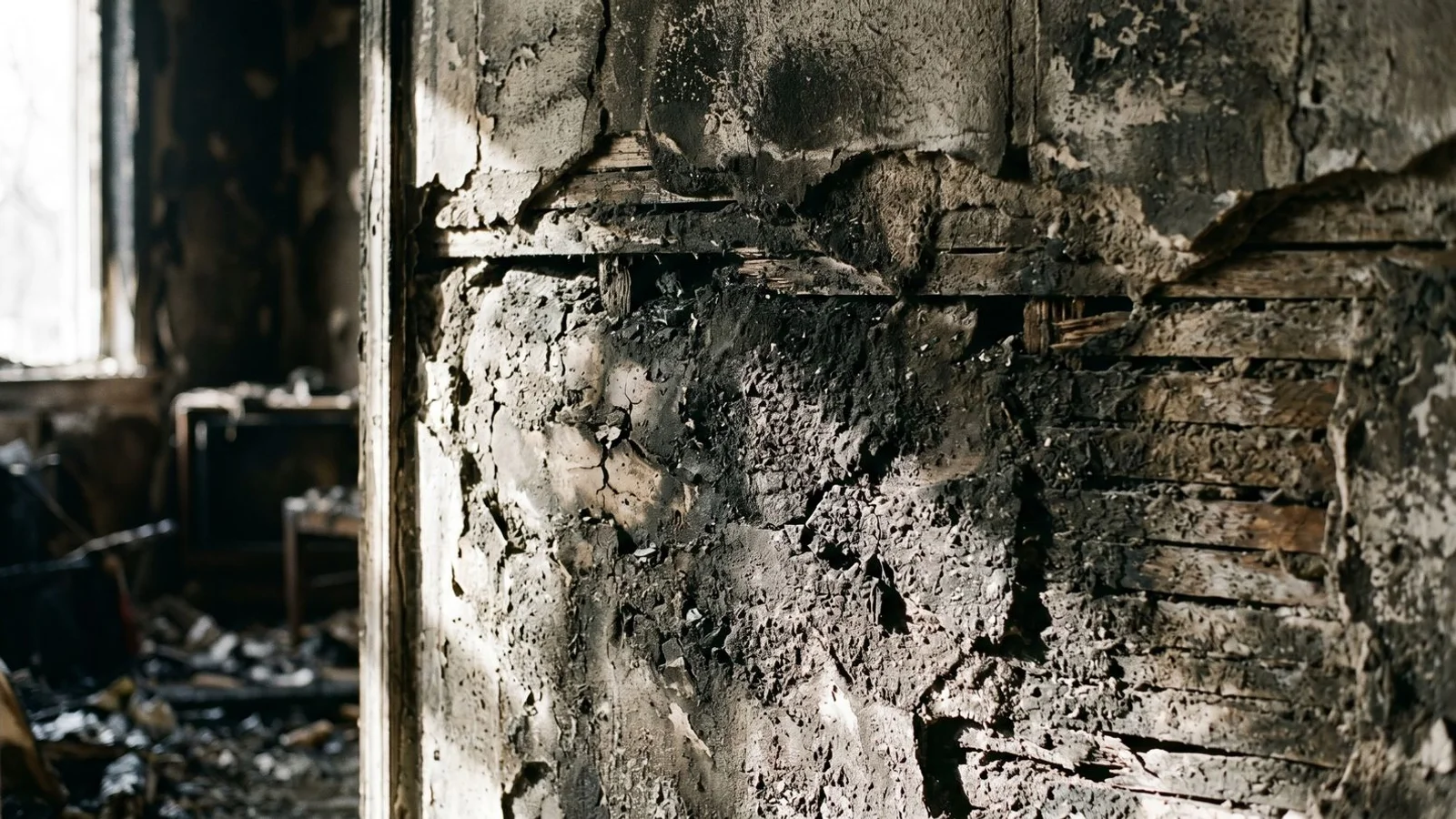
Soot is not one thing, it is four
You know how quickly a small fire incident turns into a massive cleanup headache. We see this specific problem constantly in our field assessments. Most homeowners think of soot as a single, uniform black powder that simply wipes away.
This assumption is exactly why so many DIY cleanup attempts fail. Treating a sticky synthetic residue like a dry wood powder will drive the stain permanently into your drywall.
Four distinct soot types fire damage incidents leave behind completely different chemical residues.
Our team will break down the chemistry behind dry, wet, protein, and oil soot. Then, I will outline the precise types of soot cleaning required to restore your property safely.
Dry soot
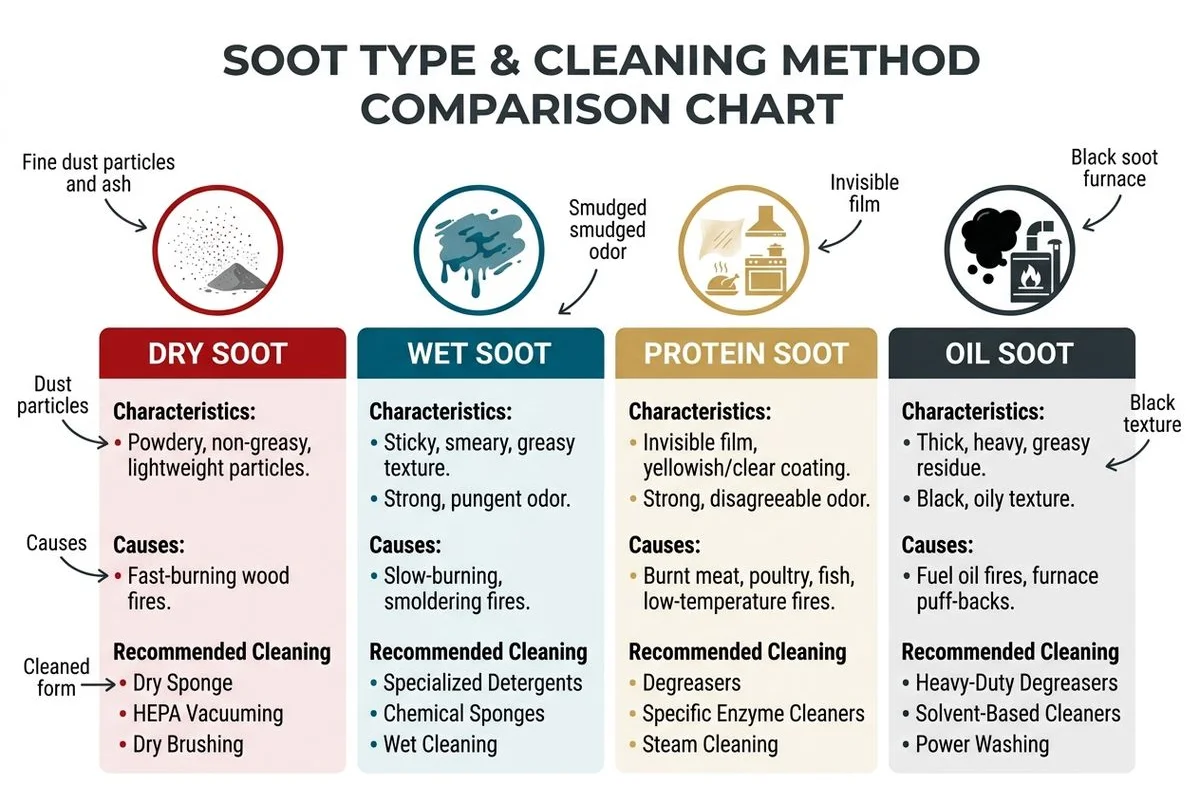
Dry soot requires immediate removal using specialized dry-cleaning tools before any moisture touches the surface. Fast-burning, high-temperature fires fueled by wood, paper, and natural materials create this powdery black residue.
- Source: Wood, paper, and natural materials burning at high temperatures.
- Characteristics: Powdery, dry, and black. It sits loosely on surfaces and carries a much lower acidity level than synthetic soot.
- Cleaning approach: The cleanup begins by vacuuming the area with HEPA filters rated to capture particles down to 0.3 microns. We wipe the remaining residue using vulcanized natural rubber sponges, such as the Absorene brand, which lift the soot without any liquid. Water is only introduced after 100 percent of the loose powder is captured.
- Difficulty: Lowest. This provides the fastest cleanup of the four types.
Adding water to this fine powder immediately creates a sludgy ink that absorbs into porous materials. To prevent permanent stains, technicians strictly follow this dry method.
Wet soot
Wet soot demands slow, methodical extraction using heavy-duty solvent degreasers. Low-temperature smoldering fires involving synthetic materials like plastics, rubber, and foam produce this thick sludge.
- Source: Low-temperature smoldering fires of synthetic materials, including plastics, rubber, and foam.
- Characteristics: Sticky, oily, and pungent. The melting plastics release complex chemical compounds like hydrogen chloride that adhere tightly to your home’s structural framing.
- Cleaning approach: Our technicians rely on specialized warm-water chemistry formulated specifically for synthetic greases, such as pH-balanced solvent degreasers. The process requires multiple careful passes to dissolve the oily film without spreading it further.
- Difficulty: Moderate to high. Slow, methodical cleaning is required because the associated odor work is usually heavier than the surface work.
This residue creates a unique set of challenges for restoration teams. The pungent chemical smell requires extensive air scrubbing and targeted deodorization.
Protein soot
Protein soot is best removed using specialized pH 10 to 13 alkaline degreasers that chemically saponify the baked-on grease. Kitchen fires involving cooking oils, meats, and fats produce this nearly invisible residue.
- Source: Kitchen and grease fires.
- Characteristics: Almost invisible, forming a thin greasy film. It spreads far beyond the visible burn area through your HVAC system and distributes the greasy film throughout the entire house.
- Cleaning approach: Technicians apply specialized alkaline builders and enzymatic degreasers in a specific sequence over multiple passes. The film must be broken down layer by layer to avoid trapping odors in the drywall. Ordinary cleaning methods will either fail entirely or smear the residue.
- Difficulty: High. This is often the hardest of the four to fully clean and deodorize.
We respond to these specific emergencies frequently, as the US National Fire Protection Association (NFPA) reports that cooking equipment causes 49 percent of all home structure fires annually. While the film is hard to see, it carries an intense, persistent odor that ruins indoor air quality.
Oil soot
Oil soot demands aggressive solvent chemistry and strict hazard protocols for safe removal. Furnace malfunctions, known as puffbacks, or direct fuel-oil fires create this incredibly dense, sticky black sludge.
- Source: Furnace puffbacks or direct fuel-oil fires.
- Characteristics: Heavy, sticky, and dark. The residue carries a strong fuel-oil odor and contains highly dangerous chemical compounds. The US Environmental Protection Agency notes that burning fuel oil creates polycyclic aromatic hydrocarbons (PAHs), including known Group 1 carcinogens.
- Cleaning approach: Industrial-strength solvent chemistry is necessary to break the heavy oil bonds. Our safety protocols require technicians to wear specialized PPE, including P100 particulate respirators and full Tyvek suits. Severely contaminated materials sometimes need complete replacement rather than surface cleaning.
- Difficulty: High and hazardous. Specialized PPE is required, and porous materials like carpets are often unsalvageable.
This type of contamination is especially common in older homes during the winter heating season. The heavy, dark residue permeates porous materials instantly, making the cleanup process hazardous and complex.
Why technique must match soot type
Matching your cleaning technique to the exact soot profile prevents you from permanently driving stains into your home’s structure. The single biggest reason DIY fire cleanup fails is using the wrong method on the wrong residue.
We constantly see the costly aftermath of well-intentioned cleaning mistakes. Once a surface is treated with the incorrect chemistry, professional restoration becomes exponentially harder.
| Incorrect Action | Immediate Result | Long-Term Consequence |
|---|---|---|
| Wiping wet soot with dry sponge | Smears sludge into the paper face of gypsum drywall | Requires complete drywall replacement |
| Applying a liquid solvent on dry soot | Creates dark, inky streaks | Permanent staining of paint and wood |
| Generic soap on protein soot | Spreads grease over a larger area | Traps intense odors in the room permanently |
In many cases, the surface material has to be torn out and replaced completely rather than cleaned.
What we do differently
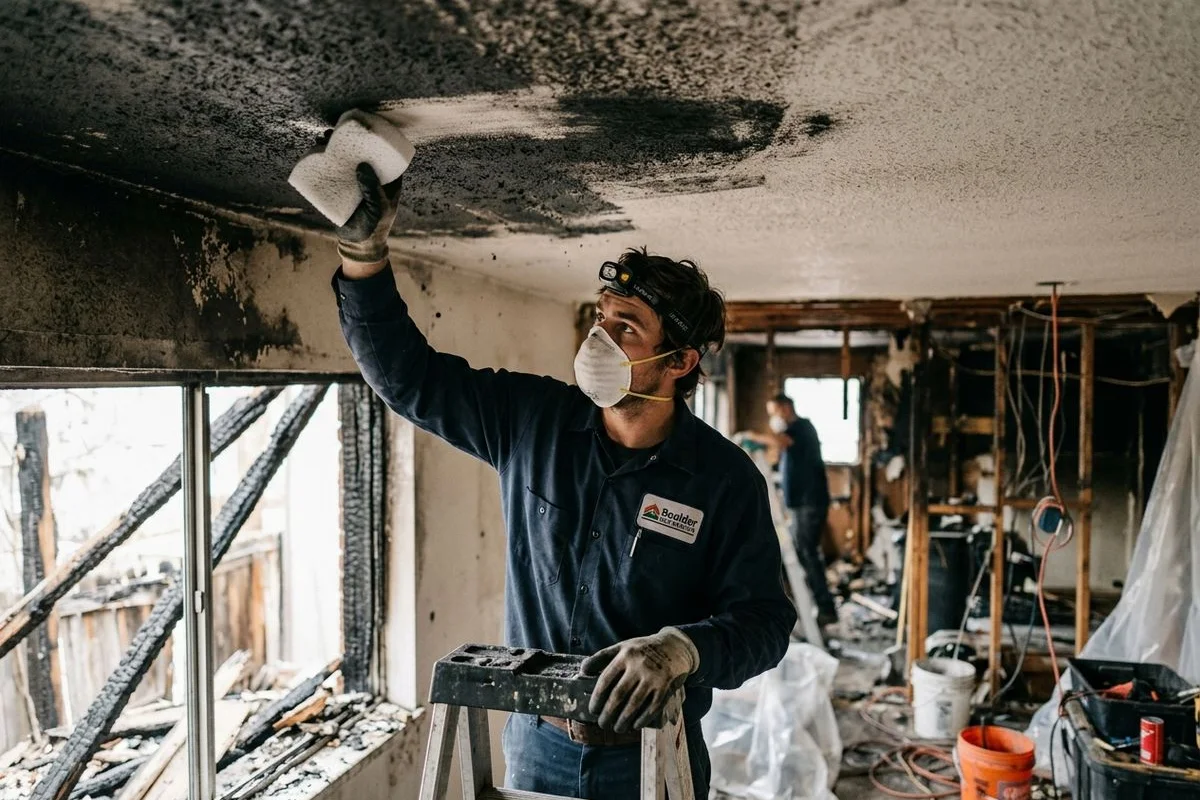
Every successful restoration project starts with precise soot-type identification. Boulder Fire Restoration Pros has served the Colorado Front Range for over two decades, and our experience dictates that specific types of soot cleaning must match the contamination exactly.
Our technicians know exactly what they are looking at upon arrival, so they reach for the correct commercial-grade chemistry and the specific tool required for each unique surface material. For severe contamination on exposed framing or masonry, standard cleaning agents are not enough.
We utilize specialized abrasive techniques, such as Armex soda blasting or dry-ice blasting, to strip the char and residue away without damaging the underlying structural integrity.
The following guides provide specific details for unique fire scenarios:
- For the full cleanup scope, the smoke damage cleanup service page covers our complete methodology.
- For specifics on kitchen fires, see grease fire and protein soot damage explained.
Conclusion
Properly addressing fire damage requires patience, precision, and the exact right chemistry. Attempting a quick fix with standard household cleaners almost always makes the situation worse.
Our team stands ready to evaluate your property and apply the correct types of soot cleaning for your specific situation. A professional assessment is the safest first step before you attempt any surface restoration on your own.
Contact us today to schedule an inspection and get your home safely back to normal.
Frequently asked questions
Why does soot type matter for cleaning? +
Each soot type has different chemistry — dry, oily, sticky, or protein-based. Using the wrong cleaning method on the wrong soot type either fails to remove it or smears it deeper into the surface, causing permanent staining.
What is protein soot? +
Protein soot is a nearly invisible greasy film from kitchen and grease fires. It carries an intense, persistent odor that ordinary cleaning misses. Specialty degreasers are required, and the cleaning has to be done in a specific sequence.
Can I wipe soot with a cloth? +
No. Soot is acidic and pressure-sensitive. Wiping with the wrong material grinds it into porous surfaces and spreads contamination. Different cleaning techniques apply to different soot types — DIY almost always makes the problem worse.
Need help with fire or smoke damage in Boulder?
24/7 emergency response with a 60-minute guarantee across Boulder County. Call our team — we'll secure your property and walk you through the next steps.